{"title":"Sustainable development through biomimicry: Enhancing circular economy practices for environmental sustainability","authors":"Mohammad Al Haj Eid, G. Al-Abdallah","doi":"10.1002/sd.3010","DOIUrl":null,"url":null,"abstract":"Responding to the urgent global need for sustainable development, this study investigates how biomimicry can be integrated with the circular economy to promote environmental sustainability. Through an extensive review of literature, existing research, and case studies, we critically examine the application of biomimicry principles in enhancing circular economy practices. Our methodology synthesises insights from across disciplines, employing a thematic and gap analyses to uncover prevalent trends and identify research deficits. Building on Janine Benyus' seminal biomimicry work, we introduce a novel framework derived from Life's Principles to evaluate the sustainability of circular economy efforts, focusing on their consistency with or deviation from biomimetic principles. Our research finds a significant correlation between the circular economy's emphasis on reducing waste and improving resource efficiency and biomimicry's focus on nature‐inspired sustainable design. We pinpoint “resource efficiency” and “eco‐friendly chemistry” as primary areas where circular economy measures reflect biomimetic ideals. However, our analysis also reveals a considerable gap in incorporating local socio‐economic factors into circular economy frameworks. This oversight highlights the necessity for in‐depth research into how circular economy initiatives can be tailored to enhance socio‐economic resilience and community well‐being. By underscoring these parallels and identifying key research opportunities, our article elucidates how biomimicry could drive more effective circular economy practices. We argue that future research should focus on bridging the identified gap by exploring how circular economy models can incorporate local socio‐economic considerations, thereby ensuring more impactful sustainability outcomes.","PeriodicalId":9,"journal":{"name":"ACS Catalysis ","volume":" 43","pages":""},"PeriodicalIF":13.1000,"publicationDate":"2024-04-19","publicationTypes":"Journal Article","fieldsOfStudy":null,"isOpenAccess":false,"openAccessPdf":"","citationCount":"0","resultStr":null,"platform":"Semanticscholar","paperid":null,"PeriodicalName":"ACS Catalysis ","FirstCategoryId":"93","ListUrlMain":"https://doi.org/10.1002/sd.3010","RegionNum":1,"RegionCategory":"化学","ArticlePicture":[],"TitleCN":null,"AbstractTextCN":null,"PMCID":null,"EPubDate":"","PubModel":"","JCR":"Q1","JCRName":"CHEMISTRY, PHYSICAL","Score":null,"Total":0}
引用次数: 0
Abstract
Responding to the urgent global need for sustainable development, this study investigates how biomimicry can be integrated with the circular economy to promote environmental sustainability. Through an extensive review of literature, existing research, and case studies, we critically examine the application of biomimicry principles in enhancing circular economy practices. Our methodology synthesises insights from across disciplines, employing a thematic and gap analyses to uncover prevalent trends and identify research deficits. Building on Janine Benyus' seminal biomimicry work, we introduce a novel framework derived from Life's Principles to evaluate the sustainability of circular economy efforts, focusing on their consistency with or deviation from biomimetic principles. Our research finds a significant correlation between the circular economy's emphasis on reducing waste and improving resource efficiency and biomimicry's focus on nature‐inspired sustainable design. We pinpoint “resource efficiency” and “eco‐friendly chemistry” as primary areas where circular economy measures reflect biomimetic ideals. However, our analysis also reveals a considerable gap in incorporating local socio‐economic factors into circular economy frameworks. This oversight highlights the necessity for in‐depth research into how circular economy initiatives can be tailored to enhance socio‐economic resilience and community well‐being. By underscoring these parallels and identifying key research opportunities, our article elucidates how biomimicry could drive more effective circular economy practices. We argue that future research should focus on bridging the identified gap by exploring how circular economy models can incorporate local socio‐economic considerations, thereby ensuring more impactful sustainability outcomes.
期刊介绍:
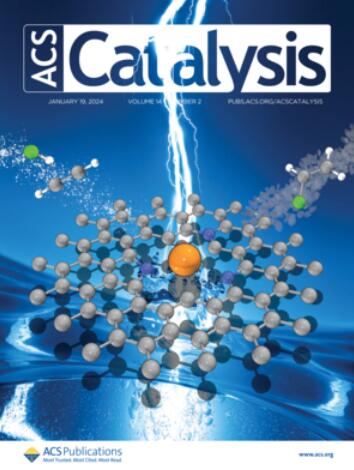
ACS Catalysis is an esteemed journal that publishes original research in the fields of heterogeneous catalysis, molecular catalysis, and biocatalysis. It offers broad coverage across diverse areas such as life sciences, organometallics and synthesis, photochemistry and electrochemistry, drug discovery and synthesis, materials science, environmental protection, polymer discovery and synthesis, and energy and fuels.
The scope of the journal is to showcase innovative work in various aspects of catalysis. This includes new reactions and novel synthetic approaches utilizing known catalysts, the discovery or modification of new catalysts, elucidation of catalytic mechanisms through cutting-edge investigations, practical enhancements of existing processes, as well as conceptual advances in the field. Contributions to ACS Catalysis can encompass both experimental and theoretical research focused on catalytic molecules, macromolecules, and materials that exhibit catalytic turnover.



 京公网安备 11010802042870号
京ICP备2023020795号-1
京公网安备 11010802042870号
京ICP备2023020795号-1

 分享
分享
 求助内容:
求助内容: 应助结果提醒方式:
 扫码关注我们
