{"title":"Formal Theories of Special Interest Influence","authors":"Keith E. Schnakenberg, Ian R. Turner","doi":"10.1146/annurev-polisci-051921-102335","DOIUrl":null,"url":null,"abstract":"The impact of money on politics—whether through campaign finance, lobbying, or independent expenditure—raises key normative questions about democratic representation and accountability. In recent years there has been a deluge of new data allowing researchers to study money in politics from new and exciting perspectives. As a complement to this trend, there has also been a resurgence of interest in developing formal models to provide new theoretical insights that can help us understand how, why, and when money influences politics and policy. We review several major themes in this literature, focusing specifically on exchange-based models, informational models, and subsidy-based models. We compare and contrast the key contributions, and limitations, of each approach in understanding the role of lobbying and campaign finance in politics. We also discuss future avenues for research that incorporate aspects of each approach, which, we believe, will introduce new theoretical insights for understanding special interest influence.","PeriodicalId":9,"journal":{"name":"ACS Catalysis ","volume":"96 5","pages":""},"PeriodicalIF":13.1000,"publicationDate":"2024-04-11","publicationTypes":"Journal Article","fieldsOfStudy":null,"isOpenAccess":false,"openAccessPdf":"","citationCount":"0","resultStr":null,"platform":"Semanticscholar","paperid":null,"PeriodicalName":"ACS Catalysis ","FirstCategoryId":"90","ListUrlMain":"https://doi.org/10.1146/annurev-polisci-051921-102335","RegionNum":1,"RegionCategory":"化学","ArticlePicture":[],"TitleCN":null,"AbstractTextCN":null,"PMCID":null,"EPubDate":"","PubModel":"","JCR":"Q1","JCRName":"CHEMISTRY, PHYSICAL","Score":null,"Total":0}
引用次数: 0
Abstract
The impact of money on politics—whether through campaign finance, lobbying, or independent expenditure—raises key normative questions about democratic representation and accountability. In recent years there has been a deluge of new data allowing researchers to study money in politics from new and exciting perspectives. As a complement to this trend, there has also been a resurgence of interest in developing formal models to provide new theoretical insights that can help us understand how, why, and when money influences politics and policy. We review several major themes in this literature, focusing specifically on exchange-based models, informational models, and subsidy-based models. We compare and contrast the key contributions, and limitations, of each approach in understanding the role of lobbying and campaign finance in politics. We also discuss future avenues for research that incorporate aspects of each approach, which, we believe, will introduce new theoretical insights for understanding special interest influence.
期刊介绍:
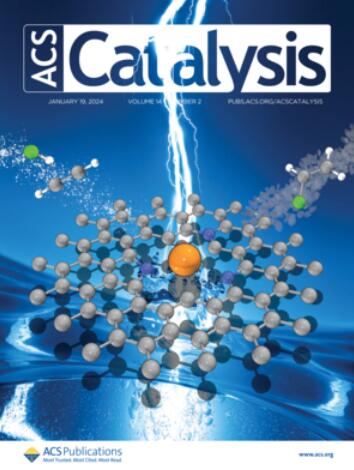
ACS Catalysis is an esteemed journal that publishes original research in the fields of heterogeneous catalysis, molecular catalysis, and biocatalysis. It offers broad coverage across diverse areas such as life sciences, organometallics and synthesis, photochemistry and electrochemistry, drug discovery and synthesis, materials science, environmental protection, polymer discovery and synthesis, and energy and fuels.
The scope of the journal is to showcase innovative work in various aspects of catalysis. This includes new reactions and novel synthetic approaches utilizing known catalysts, the discovery or modification of new catalysts, elucidation of catalytic mechanisms through cutting-edge investigations, practical enhancements of existing processes, as well as conceptual advances in the field. Contributions to ACS Catalysis can encompass both experimental and theoretical research focused on catalytic molecules, macromolecules, and materials that exhibit catalytic turnover.



 京公网安备 11010802042870号
京ICP备2023020795号-1
京公网安备 11010802042870号
京ICP备2023020795号-1

 分享
分享
 求助内容:
求助内容: 应助结果提醒方式:
 扫码关注我们
