{"title":"Going beyond the \"self\" in self-control: Interpersonal consequences of commitment strategies.","authors":"A. Kristal, Julian J. Zlatev","doi":"10.1037/pspa0000385","DOIUrl":null,"url":null,"abstract":"Commitment strategies are effective mechanisms individuals can use to overcome self-control problems. Across seven studies (and two supplemental studies), we explore the negative interpersonal consequences of commitment strategy choice and use. In Study 1, using an incentivized trust game, we demonstrate that individuals trust people who choose to use a commitment strategy less than those who choose to use willpower to achieve their goals. Study 2 shows this relationship holds across four domains and for integrity-based trust in particular. Study 3 provides evidence that it is the choice to use the strategy rather than strategy use itself that incurs this integrity penalty. In Studies 4-5b, we demonstrate that this effect is driven, at least in part, by the fact that people infer past performance from strategy choice. Finally, Study 6 provides evidence that people select commitment strategies more in private than in public, which is consistent with the notion that people anticipate the negative consequences of commitment strategy choice. Thus, we establish the role of willpower as a positive signal in impression formation as well as the negative interpersonal consequences of choosing to rely on external aides when faced with temptation. (PsycInfo Database Record (c) 2024 APA, all rights reserved).","PeriodicalId":6,"journal":{"name":"ACS Applied Nano Materials","volume":"9 3","pages":""},"PeriodicalIF":5.5000,"publicationDate":"2024-04-11","publicationTypes":"Journal Article","fieldsOfStudy":null,"isOpenAccess":false,"openAccessPdf":"","citationCount":"0","resultStr":null,"platform":"Semanticscholar","paperid":null,"PeriodicalName":"ACS Applied Nano Materials","FirstCategoryId":"102","ListUrlMain":"https://doi.org/10.1037/pspa0000385","RegionNum":2,"RegionCategory":"材料科学","ArticlePicture":[],"TitleCN":null,"AbstractTextCN":null,"PMCID":null,"EPubDate":"","PubModel":"","JCR":"Q2","JCRName":"MATERIALS SCIENCE, MULTIDISCIPLINARY","Score":null,"Total":0}
引用次数: 0
Abstract
Commitment strategies are effective mechanisms individuals can use to overcome self-control problems. Across seven studies (and two supplemental studies), we explore the negative interpersonal consequences of commitment strategy choice and use. In Study 1, using an incentivized trust game, we demonstrate that individuals trust people who choose to use a commitment strategy less than those who choose to use willpower to achieve their goals. Study 2 shows this relationship holds across four domains and for integrity-based trust in particular. Study 3 provides evidence that it is the choice to use the strategy rather than strategy use itself that incurs this integrity penalty. In Studies 4-5b, we demonstrate that this effect is driven, at least in part, by the fact that people infer past performance from strategy choice. Finally, Study 6 provides evidence that people select commitment strategies more in private than in public, which is consistent with the notion that people anticipate the negative consequences of commitment strategy choice. Thus, we establish the role of willpower as a positive signal in impression formation as well as the negative interpersonal consequences of choosing to rely on external aides when faced with temptation. (PsycInfo Database Record (c) 2024 APA, all rights reserved).
期刊介绍:
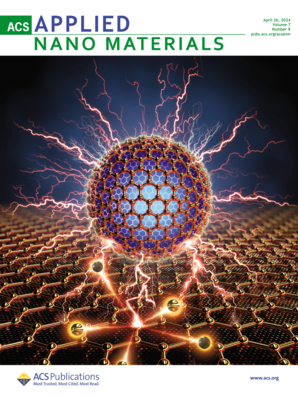
ACS Applied Nano Materials is an interdisciplinary journal publishing original research covering all aspects of engineering, chemistry, physics and biology relevant to applications of nanomaterials. The journal is devoted to reports of new and original experimental and theoretical research of an applied nature that integrate knowledge in the areas of materials, engineering, physics, bioscience, and chemistry into important applications of nanomaterials.



 京公网安备 11010802042870号
京ICP备2023020795号-1
京公网安备 11010802042870号
京ICP备2023020795号-1

 分享
分享
 求助内容:
求助内容: 应助结果提醒方式:
 扫码关注我们
