{"title":"Widening Educational Disparities in Health and Longevity","authors":"J. K. Montez, Erin M. Bisesti","doi":"10.1146/annurev-soc-071723-080605","DOIUrl":null,"url":null,"abstract":"Educational attainment level has long been a strong predictor of adult health and longevity in the United States. Interestingly, the association between education and these outcomes has strengthened in recent decades. Since the 1980s, higher-educated adults have experienced favorable trends in health and longevity, while lower-educated adults have experienced stagnation or unfavorable trends. Studies have provided important clues about why the association between education and health and longevity has strengthened over time. However, explanations remain incomplete and contested. This article discusses key findings and debates about why the association has become stronger and offers recommendations to advance robust explanations. Two key recommendations call for a fundamental shift in how researchers conceptualize and study the increasingly strong association. These include (a) reconsidering which education groups should be viewed as normative in analyses of the trends and (b) elevating attention on contexts, institutions, and actors that have had an outsized influence on the trends.","PeriodicalId":8,"journal":{"name":"ACS Biomaterials Science & Engineering","volume":"6 1","pages":""},"PeriodicalIF":5.5000,"publicationDate":"2024-04-09","publicationTypes":"Journal Article","fieldsOfStudy":null,"isOpenAccess":false,"openAccessPdf":"","citationCount":"0","resultStr":null,"platform":"Semanticscholar","paperid":null,"PeriodicalName":"ACS Biomaterials Science & Engineering","FirstCategoryId":"90","ListUrlMain":"https://doi.org/10.1146/annurev-soc-071723-080605","RegionNum":2,"RegionCategory":"医学","ArticlePicture":[],"TitleCN":null,"AbstractTextCN":null,"PMCID":null,"EPubDate":"","PubModel":"","JCR":"Q2","JCRName":"MATERIALS SCIENCE, BIOMATERIALS","Score":null,"Total":0}
引用次数: 0
Abstract
Educational attainment level has long been a strong predictor of adult health and longevity in the United States. Interestingly, the association between education and these outcomes has strengthened in recent decades. Since the 1980s, higher-educated adults have experienced favorable trends in health and longevity, while lower-educated adults have experienced stagnation or unfavorable trends. Studies have provided important clues about why the association between education and health and longevity has strengthened over time. However, explanations remain incomplete and contested. This article discusses key findings and debates about why the association has become stronger and offers recommendations to advance robust explanations. Two key recommendations call for a fundamental shift in how researchers conceptualize and study the increasingly strong association. These include (a) reconsidering which education groups should be viewed as normative in analyses of the trends and (b) elevating attention on contexts, institutions, and actors that have had an outsized influence on the trends.
期刊介绍:
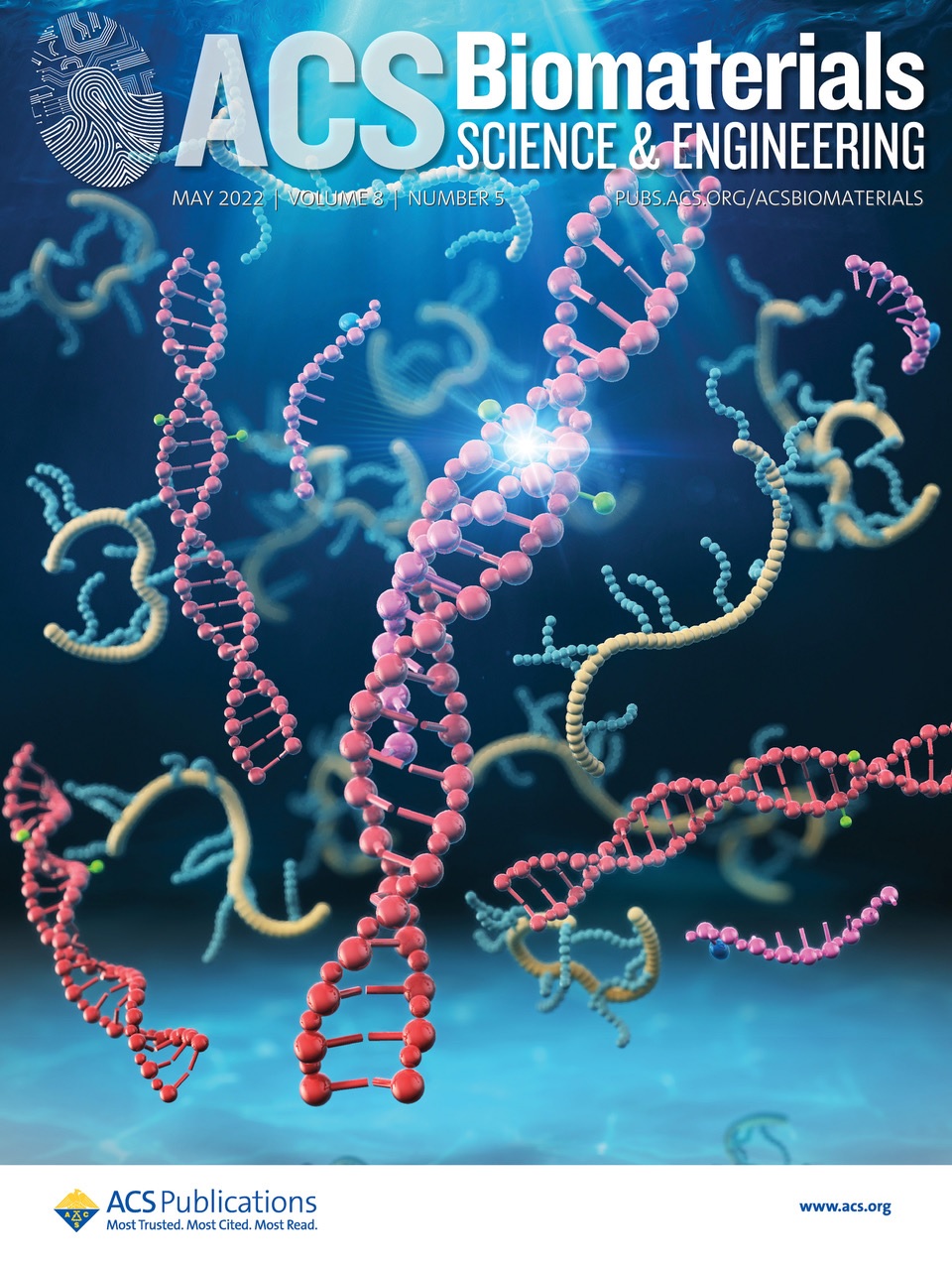
ACS Biomaterials Science & Engineering is the leading journal in the field of biomaterials, serving as an international forum for publishing cutting-edge research and innovative ideas on a broad range of topics:
Applications and Health – implantable tissues and devices, prosthesis, health risks, toxicology
Bio-interactions and Bio-compatibility – material-biology interactions, chemical/morphological/structural communication, mechanobiology, signaling and biological responses, immuno-engineering, calcification, coatings, corrosion and degradation of biomaterials and devices, biophysical regulation of cell functions
Characterization, Synthesis, and Modification – new biomaterials, bioinspired and biomimetic approaches to biomaterials, exploiting structural hierarchy and architectural control, combinatorial strategies for biomaterials discovery, genetic biomaterials design, synthetic biology, new composite systems, bionics, polymer synthesis
Controlled Release and Delivery Systems – biomaterial-based drug and gene delivery, bio-responsive delivery of regulatory molecules, pharmaceutical engineering
Healthcare Advances – clinical translation, regulatory issues, patient safety, emerging trends
Imaging and Diagnostics – imaging agents and probes, theranostics, biosensors, monitoring
Manufacturing and Technology – 3D printing, inks, organ-on-a-chip, bioreactor/perfusion systems, microdevices, BioMEMS, optics and electronics interfaces with biomaterials, systems integration
Modeling and Informatics Tools – scaling methods to guide biomaterial design, predictive algorithms for structure-function, biomechanics, integrating bioinformatics with biomaterials discovery, metabolomics in the context of biomaterials
Tissue Engineering and Regenerative Medicine – basic and applied studies, cell therapies, scaffolds, vascularization, bioartificial organs, transplantation and functionality, cellular agriculture



 京公网安备 11010802042870号
京ICP备2023020795号-1
京公网安备 11010802042870号
京ICP备2023020795号-1

 分享
分享
 求助内容:
求助内容: 应助结果提醒方式:
 扫码关注我们
