{"title":"Courts-First Federalism: How Model Legislation Becomes Impact Litigation","authors":"Dylan L. Yingling, Daniel J. Mallinson","doi":"10.1017/s1537592724000616","DOIUrl":null,"url":null,"abstract":"States and interest groups are facilitating a redistribution of government powers under a new courts-first federalism. States are working to claw back powers while interest groups drafting model laws strategically tailor them to skirt the limits of federal law and, once adopted by states, prompt federal courts to review them as parties litigate to clarify their rights. States do not need to be completely successful in litigation to shift the balance of state–national power. Testing this argument, we find that the US Supreme Court grants review to 17% of model laws in our sample produced by the American Legislative Exchange Council (ALEC), whereas merely 1% of other cases are granted certiorari. Ultimately, the states and ALEC were partly successful in constraining federal power. Thus, the combination of model legislation, impact litigation, and courts-first federalism becomes a tool for states to draw power to themselves and from the federal government.","PeriodicalId":4,"journal":{"name":"ACS Applied Energy Materials","volume":"68 5‐6","pages":""},"PeriodicalIF":5.5000,"publicationDate":"2024-04-04","publicationTypes":"Journal Article","fieldsOfStudy":null,"isOpenAccess":false,"openAccessPdf":"","citationCount":"0","resultStr":null,"platform":"Semanticscholar","paperid":null,"PeriodicalName":"ACS Applied Energy Materials","FirstCategoryId":"90","ListUrlMain":"https://doi.org/10.1017/s1537592724000616","RegionNum":3,"RegionCategory":"材料科学","ArticlePicture":[],"TitleCN":null,"AbstractTextCN":null,"PMCID":null,"EPubDate":"","PubModel":"","JCR":"Q2","JCRName":"CHEMISTRY, PHYSICAL","Score":null,"Total":0}
引用次数: 0
Abstract
States and interest groups are facilitating a redistribution of government powers under a new courts-first federalism. States are working to claw back powers while interest groups drafting model laws strategically tailor them to skirt the limits of federal law and, once adopted by states, prompt federal courts to review them as parties litigate to clarify their rights. States do not need to be completely successful in litigation to shift the balance of state–national power. Testing this argument, we find that the US Supreme Court grants review to 17% of model laws in our sample produced by the American Legislative Exchange Council (ALEC), whereas merely 1% of other cases are granted certiorari. Ultimately, the states and ALEC were partly successful in constraining federal power. Thus, the combination of model legislation, impact litigation, and courts-first federalism becomes a tool for states to draw power to themselves and from the federal government.
期刊介绍:
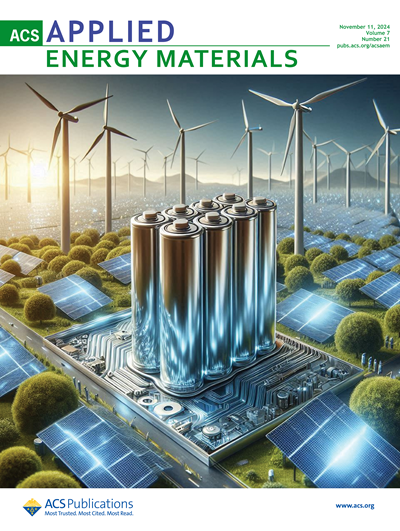
ACS Applied Energy Materials is an interdisciplinary journal publishing original research covering all aspects of materials, engineering, chemistry, physics and biology relevant to energy conversion and storage. The journal is devoted to reports of new and original experimental and theoretical research of an applied nature that integrate knowledge in the areas of materials, engineering, physics, bioscience, and chemistry into important energy applications.



 京公网安备 11010802042870号
京ICP备2023020795号-1
京公网安备 11010802042870号
京ICP备2023020795号-1

 分享
分享
 求助内容:
求助内容: 应助结果提醒方式:
 扫码关注我们
