Ekene ThankGod Emeka, Simplice A. Asongu, Yolande E. Ngoungou
{"title":"Gender economic inclusion, governance institutions and economic complexity in Africa","authors":"Ekene ThankGod Emeka, Simplice A. Asongu, Yolande E. Ngoungou","doi":"10.1002/sd.2992","DOIUrl":null,"url":null,"abstract":"This study examines the effects of gender economic inclusion on economic complexity in Africa, as well as the moderating role of governance institutions on the relationship between gender inclusion and economic complexity. The analysis was based on the pooled OLS and the system generalized method of moments (GMM) estimation techniques, with data from 34 African economies between 2010 and 2021. The analysis uncovered several important findings. First, from the most robust model (i.e., GMM), positive synergies are apparent because gender economic inclusion promotes economic complexity, and governance dynamics further enhance the positive effect of gender economic inclusion on economic complexity. Second, regardless of the adopted technique, a predominantly positive and statistically significant relationship was identified between gender economic inclusion and economic complexity. Third, it was observed that while governance institutions exhibit a negative relationship with economic complexity, they play a positive role in moderating the relationship between gender inclusion and economic complexity. Fourth, factors such as foreign direct investment inflow, trade openness, and international tourism were identified as potent drivers of economic complexity in Africa, while the impact of human capital appears to be relatively subdued. Consequently, the study emphasizes the need for institutional reforms to improve governance transparency, accountability, and efficiency, alongside advocating for gender‐inclusive policies and increased investment in education.","PeriodicalId":9,"journal":{"name":"ACS Catalysis ","volume":"12 8","pages":""},"PeriodicalIF":13.6000,"publicationDate":"2024-04-04","publicationTypes":"Journal Article","fieldsOfStudy":null,"isOpenAccess":false,"openAccessPdf":"","citationCount":"0","resultStr":null,"platform":"Semanticscholar","paperid":null,"PeriodicalName":"ACS Catalysis ","FirstCategoryId":"93","ListUrlMain":"https://doi.org/10.1002/sd.2992","RegionNum":1,"RegionCategory":"化学","ArticlePicture":[],"TitleCN":null,"AbstractTextCN":null,"PMCID":null,"EPubDate":"","PubModel":"","JCR":"Q1","JCRName":"CHEMISTRY, PHYSICAL","Score":null,"Total":0}
引用次数: 0
Abstract
This study examines the effects of gender economic inclusion on economic complexity in Africa, as well as the moderating role of governance institutions on the relationship between gender inclusion and economic complexity. The analysis was based on the pooled OLS and the system generalized method of moments (GMM) estimation techniques, with data from 34 African economies between 2010 and 2021. The analysis uncovered several important findings. First, from the most robust model (i.e., GMM), positive synergies are apparent because gender economic inclusion promotes economic complexity, and governance dynamics further enhance the positive effect of gender economic inclusion on economic complexity. Second, regardless of the adopted technique, a predominantly positive and statistically significant relationship was identified between gender economic inclusion and economic complexity. Third, it was observed that while governance institutions exhibit a negative relationship with economic complexity, they play a positive role in moderating the relationship between gender inclusion and economic complexity. Fourth, factors such as foreign direct investment inflow, trade openness, and international tourism were identified as potent drivers of economic complexity in Africa, while the impact of human capital appears to be relatively subdued. Consequently, the study emphasizes the need for institutional reforms to improve governance transparency, accountability, and efficiency, alongside advocating for gender‐inclusive policies and increased investment in education.
期刊介绍:
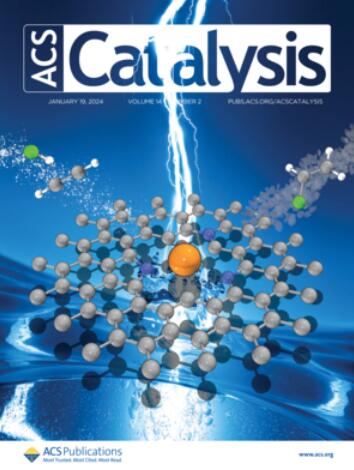
ACS Catalysis is an esteemed journal that publishes original research in the fields of heterogeneous catalysis, molecular catalysis, and biocatalysis. It offers broad coverage across diverse areas such as life sciences, organometallics and synthesis, photochemistry and electrochemistry, drug discovery and synthesis, materials science, environmental protection, polymer discovery and synthesis, and energy and fuels.
The scope of the journal is to showcase innovative work in various aspects of catalysis. This includes new reactions and novel synthetic approaches utilizing known catalysts, the discovery or modification of new catalysts, elucidation of catalytic mechanisms through cutting-edge investigations, practical enhancements of existing processes, as well as conceptual advances in the field. Contributions to ACS Catalysis can encompass both experimental and theoretical research focused on catalytic molecules, macromolecules, and materials that exhibit catalytic turnover.




 京公网安备 11010802042870号
京ICP备2023020795号-1
京公网安备 11010802042870号
京ICP备2023020795号-1

 分享
分享
 求助内容:
求助内容: 应助结果提醒方式:
 扫码关注我们
