{"title":"Isolation of Plant Growth-Promoting Microorganisms and Their Impact on Growth and Yield of Durum Wheat","authors":"B. Roy, N. Raghavendra, N. Gupta, A. Nighojkar","doi":"10.1134/S0003683824020169","DOIUrl":null,"url":null,"abstract":"<p>The current study was conducted to isolate, characterize and reveal the impact of native soil microorganisms on durum wheat cultivars (Tejas and Poshan). Three isolates, <i>Candida tropicalis</i> (PY1), <i>Actinomucor elegans</i> (PT1) and <i>Delftia lacustris</i> (IS5) were identified on the basis of cultural characteristics and gene sequencing. Strains possessed multiple plant growth-promoting traits (phytohormones, extracellular enzymes, siderophores and mineral solubilization). Isolates (IS5, PY1, PT1, MDRS14 (<i>Bacillus aryabhattai</i>) and MDSR34 (<i>Bacillus endophyticus</i>) were co-cultured and confirmed to be compatible. The microcosm experiment was conducted with microbial inoculant treatments MI<sub>1</sub>–MI<sub>10</sub>, under factorial randomized complete block design with three replications. When compared to the uninoculated control, inoculation of PT1+IS5 in Poshan and MDSR14+MDSR34 in Tejas significantly enhanced the rhizosphere soil characteristics, soil nutrient content, grain nutrient, crop growth parameters, crude protein content, and grain yield for 27.1 and 28.1% in Poshan and Tejas, respectively. On contrary, the phytic acid/Zn (<15) and Fe (<10) decreased in both cultivars. The principal component analysis showed MI<sub>5</sub>, MI<sub>6</sub>, MI<sub>7</sub>, MI<sub>8</sub> microbial inoculant treatments to be better for Poshan and MI<sub>7</sub> and MI<sub>8</sub> for Tejas. Cluster analysis confirmed seed inoculation of culturable microbial strains (MDSR 14 + MDSR 34 and PY1 + PT1) performed better in both cultivars and, thus, have the potential to be exploited as broad-spectrum biofertilizers for durum wheat. The strategy utilizing these isolated microorganisms could be vital to boost durum wheat yield and can be recommended to improve the wheat productivity.</p>","PeriodicalId":466,"journal":{"name":"Applied Biochemistry and Microbiology","volume":"60 2","pages":"315 - 330"},"PeriodicalIF":1.1000,"publicationDate":"2024-04-21","publicationTypes":"Journal Article","fieldsOfStudy":null,"isOpenAccess":false,"openAccessPdf":"","citationCount":"0","resultStr":null,"platform":"Semanticscholar","paperid":null,"PeriodicalName":"Applied Biochemistry and Microbiology","FirstCategoryId":"99","ListUrlMain":"https://link.springer.com/article/10.1134/S0003683824020169","RegionNum":4,"RegionCategory":"生物学","ArticlePicture":[],"TitleCN":null,"AbstractTextCN":null,"PMCID":null,"EPubDate":"","PubModel":"","JCR":"Q4","JCRName":"BIOTECHNOLOGY & APPLIED MICROBIOLOGY","Score":null,"Total":0}
引用次数: 0
Abstract
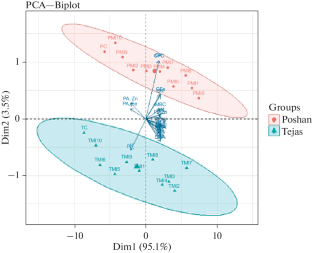
The current study was conducted to isolate, characterize and reveal the impact of native soil microorganisms on durum wheat cultivars (Tejas and Poshan). Three isolates, Candida tropicalis (PY1), Actinomucor elegans (PT1) and Delftia lacustris (IS5) were identified on the basis of cultural characteristics and gene sequencing. Strains possessed multiple plant growth-promoting traits (phytohormones, extracellular enzymes, siderophores and mineral solubilization). Isolates (IS5, PY1, PT1, MDRS14 (Bacillus aryabhattai) and MDSR34 (Bacillus endophyticus) were co-cultured and confirmed to be compatible. The microcosm experiment was conducted with microbial inoculant treatments MI1–MI10, under factorial randomized complete block design with three replications. When compared to the uninoculated control, inoculation of PT1+IS5 in Poshan and MDSR14+MDSR34 in Tejas significantly enhanced the rhizosphere soil characteristics, soil nutrient content, grain nutrient, crop growth parameters, crude protein content, and grain yield for 27.1 and 28.1% in Poshan and Tejas, respectively. On contrary, the phytic acid/Zn (<15) and Fe (<10) decreased in both cultivars. The principal component analysis showed MI5, MI6, MI7, MI8 microbial inoculant treatments to be better for Poshan and MI7 and MI8 for Tejas. Cluster analysis confirmed seed inoculation of culturable microbial strains (MDSR 14 + MDSR 34 and PY1 + PT1) performed better in both cultivars and, thus, have the potential to be exploited as broad-spectrum biofertilizers for durum wheat. The strategy utilizing these isolated microorganisms could be vital to boost durum wheat yield and can be recommended to improve the wheat productivity.
期刊介绍:
Applied Biochemistry and Microbiology is an international peer reviewed journal that publishes original articles on biochemistry and microbiology that have or may have practical applications. The studies include: enzymes and mechanisms of enzymatic reactions, biosynthesis of low and high molecular physiologically active compounds; the studies of their structure and properties; biogenesis and pathways of their regulation; metabolism of producers of biologically active compounds, biocatalysis in organic synthesis, applied genetics of microorganisms, applied enzymology; protein and metabolic engineering, biochemical bases of phytoimmunity, applied aspects of biochemical and immunochemical analysis; biodegradation of xenobiotics; biosensors; biomedical research (without clinical studies). Along with experimental works, the journal publishes descriptions of novel research techniques and reviews on selected topics.




 京公网安备 11010802042870号
京ICP备2023020795号-1
京公网安备 11010802042870号
京ICP备2023020795号-1

 分享
分享
 求助内容:
求助内容: 应助结果提醒方式:
 扫码关注我们
