E. Mavrogeorgis, Sophie Valkenburg, J. Siwy, A. Latosinska, G. Glorieux, H. Mischak, Joachim Jankowski
{"title":"Integration of Urinary Peptidome and Fecal Microbiome to Explore Patient Clustering in Chronic Kidney Disease","authors":"E. Mavrogeorgis, Sophie Valkenburg, J. Siwy, A. Latosinska, G. Glorieux, H. Mischak, Joachim Jankowski","doi":"10.3390/proteomes12020011","DOIUrl":null,"url":null,"abstract":"Millions of people worldwide currently suffer from chronic kidney disease (CKD), requiring kidney replacement therapy at the end stage. Endeavors to better understand CKD pathophysiology from an omics perspective have revealed major molecular players in several sample sources. Focusing on non-invasive sources, gut microbial communities appear to be disturbed in CKD, while numerous human urinary peptides are also dysregulated. Nevertheless, studies often focus on isolated omics techniques, thus potentially missing the complementary pathophysiological information that multidisciplinary approaches could provide. To this end, human urinary peptidome was analyzed and integrated with clinical and fecal microbiome (16S sequencing) data collected from 110 Non-CKD or CKD individuals (Early, Moderate, or Advanced CKD stage) that were not undergoing dialysis. Participants were visualized in a three-dimensional space using different combinations of clinical and molecular data. The most impactful clinical variables to discriminate patient groups in the reduced dataspace were, among others, serum urea, haemoglobin, total blood protein, urinary albumin, urinary erythrocytes, blood pressure, cholesterol measures, body mass index, Bristol stool score, and smoking; relevant variables were also microbial taxa, including Roseburia, Butyricicoccus, Flavonifractor, Burkholderiales, Holdemania, Synergistaceae, Enterorhabdus, and Senegalimassilia; urinary peptidome fragments were predominantly derived from proteins of collagen origin; among the non-collagen parental proteins were FXYD2, MGP, FGA, APOA1, and CD99. The urinary peptidome appeared to capture substantial variation in the CKD context. Integrating clinical and molecular data contributed to an improved cohort separation compared to clinical data alone, indicating, once again, the added value of this combined information in clinical practice.","PeriodicalId":4,"journal":{"name":"ACS Applied Energy Materials","volume":"301 1","pages":""},"PeriodicalIF":5.5000,"publicationDate":"2024-04-01","publicationTypes":"Journal Article","fieldsOfStudy":null,"isOpenAccess":false,"openAccessPdf":"","citationCount":"0","resultStr":null,"platform":"Semanticscholar","paperid":null,"PeriodicalName":"ACS Applied Energy Materials","FirstCategoryId":"1085","ListUrlMain":"https://doi.org/10.3390/proteomes12020011","RegionNum":3,"RegionCategory":"材料科学","ArticlePicture":[],"TitleCN":null,"AbstractTextCN":null,"PMCID":null,"EPubDate":"","PubModel":"","JCR":"Q2","JCRName":"CHEMISTRY, PHYSICAL","Score":null,"Total":0}
引用次数: 0
Abstract
Millions of people worldwide currently suffer from chronic kidney disease (CKD), requiring kidney replacement therapy at the end stage. Endeavors to better understand CKD pathophysiology from an omics perspective have revealed major molecular players in several sample sources. Focusing on non-invasive sources, gut microbial communities appear to be disturbed in CKD, while numerous human urinary peptides are also dysregulated. Nevertheless, studies often focus on isolated omics techniques, thus potentially missing the complementary pathophysiological information that multidisciplinary approaches could provide. To this end, human urinary peptidome was analyzed and integrated with clinical and fecal microbiome (16S sequencing) data collected from 110 Non-CKD or CKD individuals (Early, Moderate, or Advanced CKD stage) that were not undergoing dialysis. Participants were visualized in a three-dimensional space using different combinations of clinical and molecular data. The most impactful clinical variables to discriminate patient groups in the reduced dataspace were, among others, serum urea, haemoglobin, total blood protein, urinary albumin, urinary erythrocytes, blood pressure, cholesterol measures, body mass index, Bristol stool score, and smoking; relevant variables were also microbial taxa, including Roseburia, Butyricicoccus, Flavonifractor, Burkholderiales, Holdemania, Synergistaceae, Enterorhabdus, and Senegalimassilia; urinary peptidome fragments were predominantly derived from proteins of collagen origin; among the non-collagen parental proteins were FXYD2, MGP, FGA, APOA1, and CD99. The urinary peptidome appeared to capture substantial variation in the CKD context. Integrating clinical and molecular data contributed to an improved cohort separation compared to clinical data alone, indicating, once again, the added value of this combined information in clinical practice.
期刊介绍:
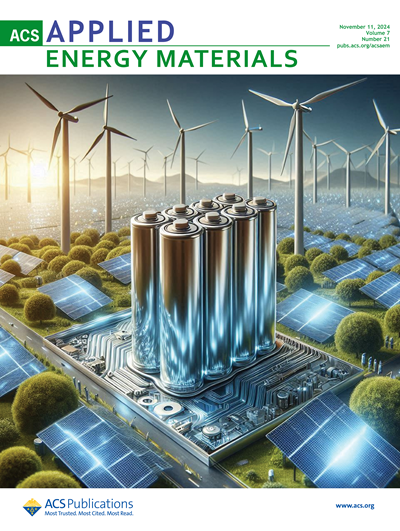
ACS Applied Energy Materials is an interdisciplinary journal publishing original research covering all aspects of materials, engineering, chemistry, physics and biology relevant to energy conversion and storage. The journal is devoted to reports of new and original experimental and theoretical research of an applied nature that integrate knowledge in the areas of materials, engineering, physics, bioscience, and chemistry into important energy applications.



 京公网安备 11010802042870号
京ICP备2023020795号-1
京公网安备 11010802042870号
京ICP备2023020795号-1

 分享
分享
 求助内容:
求助内容: 应助结果提醒方式:
 扫码关注我们
