{"title":"Improving the efficiency of estrus synchronization in cows.","authors":"Mardan Julanov, Kumis Jumatayeva, Kanat Koibagarov, Orynbay Tagayev, Yerbulat Baitlessov, Nursulu Julanova","doi":"10.5455/javar.2024.k753","DOIUrl":null,"url":null,"abstract":"<p><strong>Objective: </strong>This study aimed to determine the effects of biologically active substances and electrical stimulation of the uterus in cows on the effectiveness of estrus synchronization.</p><p><strong>Materials and methods: </strong>Ninety <i>(n</i> = 90) Kazakh white-headed cows were synchronized with two injections of gonadotropin-releasing hormone on days 0 and 9 and prostaglandin F2α on day 7. The cows were divided into six groups and, during the protocol, treated with biologically active substances (Tetramag, Selevetum, antiseptic-stimulator Dorogov 2 fraction, groups 2, 3, and 4). Cows in groups 5 and 6 were treated with the same substances but additionally had electrical stimulation of the uterus, while cows in group 1 were left untreated and served as a control.</p><p><strong>Results: </strong>The results have shown that on Day 0, no differences were observed in E2 concentrations between the groups. However, on the 10th day, a significant disparity was noted in the E2 level among cows in group 6 compared to groups 2, 3, 4, and the control group. Conversely, no significant differences were observed between groups 5 and 6. Likewise, the fertility rate in cows from group 6 was significantly higher compared to groups 2, 3, 4, and the control group, with no significant differences between groups 5 and 6.</p><p><strong>Conclusion: </strong>It can be concluded that the utilization of electrical stimulation of the uterus and the inclusion of certain biological substances during the estrus synchronization protocol demonstrate a positive effect on the reproductive performance of beef cattle in Kazakhstan.</p>","PeriodicalId":14892,"journal":{"name":"Journal of Advanced Veterinary and Animal Research","volume":"11 1","pages":"100-106"},"PeriodicalIF":1.5000,"publicationDate":"2024-03-31","publicationTypes":"Journal Article","fieldsOfStudy":null,"isOpenAccess":false,"openAccessPdf":"https://www.ncbi.nlm.nih.gov/pmc/articles/PMC11055597/pdf/","citationCount":"0","resultStr":null,"platform":"Semanticscholar","paperid":null,"PeriodicalName":"Journal of Advanced Veterinary and Animal Research","FirstCategoryId":"1085","ListUrlMain":"https://doi.org/10.5455/javar.2024.k753","RegionNum":0,"RegionCategory":null,"ArticlePicture":[],"TitleCN":null,"AbstractTextCN":null,"PMCID":null,"EPubDate":"2024/3/1 0:00:00","PubModel":"eCollection","JCR":"Q3","JCRName":"AGRICULTURE, DAIRY & ANIMAL SCIENCE","Score":null,"Total":0}
引用次数: 0
Abstract
Objective: This study aimed to determine the effects of biologically active substances and electrical stimulation of the uterus in cows on the effectiveness of estrus synchronization.
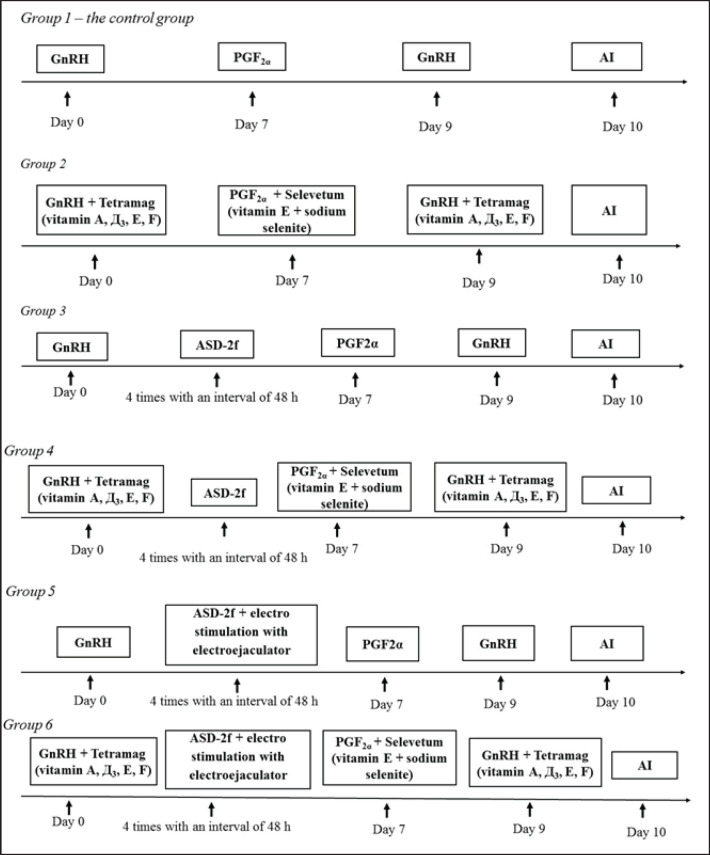
Materials and methods: Ninety (n = 90) Kazakh white-headed cows were synchronized with two injections of gonadotropin-releasing hormone on days 0 and 9 and prostaglandin F2α on day 7. The cows were divided into six groups and, during the protocol, treated with biologically active substances (Tetramag, Selevetum, antiseptic-stimulator Dorogov 2 fraction, groups 2, 3, and 4). Cows in groups 5 and 6 were treated with the same substances but additionally had electrical stimulation of the uterus, while cows in group 1 were left untreated and served as a control.
Results: The results have shown that on Day 0, no differences were observed in E2 concentrations between the groups. However, on the 10th day, a significant disparity was noted in the E2 level among cows in group 6 compared to groups 2, 3, 4, and the control group. Conversely, no significant differences were observed between groups 5 and 6. Likewise, the fertility rate in cows from group 6 was significantly higher compared to groups 2, 3, 4, and the control group, with no significant differences between groups 5 and 6.
Conclusion: It can be concluded that the utilization of electrical stimulation of the uterus and the inclusion of certain biological substances during the estrus synchronization protocol demonstrate a positive effect on the reproductive performance of beef cattle in Kazakhstan.






 京公网安备 11010802042870号
京ICP备2023020795号-1
京公网安备 11010802042870号
京ICP备2023020795号-1

 分享
分享
 求助内容:
求助内容: 应助结果提醒方式:
 扫码关注我们
