{"title":"Adeno-associated Virus-mediated Ezh2 Knockdown Reduced the Increment of Newborn Neurons Induced by Forebrain Ischemia in Gerbil Dentate Gyrus.","authors":"Yoshihide Sehara, Yuki Hashimotodani, Ryota Watano, Kenji Ohba, Ryosuke Uchibori, Kuniko Shimazaki, Kensuke Kawai, Hiroaki Mizukami","doi":"10.1007/s12035-024-04200-w","DOIUrl":null,"url":null,"abstract":"<p><p>It is established that neurogenesis of dentate gyrus is increased after ischemic insult, although the regulatory mechanisms have not yet been elucidated. In this study, we focused on Ezh2 which suppresses gene expression through catalyzing trimethylation of lysine 27 of histone 3. Male gerbils were injected with adeno-associated virus (AAV) carrying shRNA targeting to Ezh2 into right dentate gyrus 2 weeks prior to forebrain ischemia. One week after ischemia, animals were injected with thymidine analogue to label proliferating cells. Three weeks after ischemia, animals were killed for histological analysis. AAV-mediated knockdown of Ezh2 significantly decreased the ischemia-induced increment of proliferating cells, and the proliferated cells after ischemia showed significantly longer migration from subgranular zone (SGZ), compared to the control group. Furthermore, the number of neural stem cells in SGZ significantly decreased after ischemia with Ezh2 knockdown group. Of note, Ezh2 knockdown did not affect the number of proliferating cells or the migration from SGZ in the non-ischemic condition. Our data showed that, specifically after ischemia, Ezh2 knockdown shifted the balance between self-renewal and differentiation toward differentiation in adult dentate gyrus.</p>","PeriodicalId":18762,"journal":{"name":"Molecular Neurobiology","volume":" ","pages":"9623-9632"},"PeriodicalIF":4.3000,"publicationDate":"2024-11-01","publicationTypes":"Journal Article","fieldsOfStudy":null,"isOpenAccess":false,"openAccessPdf":"https://www.ncbi.nlm.nih.gov/pmc/articles/PMC11496322/pdf/","citationCount":"0","resultStr":null,"platform":"Semanticscholar","paperid":null,"PeriodicalName":"Molecular Neurobiology","FirstCategoryId":"3","ListUrlMain":"https://doi.org/10.1007/s12035-024-04200-w","RegionNum":2,"RegionCategory":"医学","ArticlePicture":[],"TitleCN":null,"AbstractTextCN":null,"PMCID":null,"EPubDate":"2024/4/27 0:00:00","PubModel":"Epub","JCR":"Q1","JCRName":"NEUROSCIENCES","Score":null,"Total":0}
引用次数: 0
Abstract
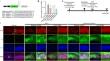
It is established that neurogenesis of dentate gyrus is increased after ischemic insult, although the regulatory mechanisms have not yet been elucidated. In this study, we focused on Ezh2 which suppresses gene expression through catalyzing trimethylation of lysine 27 of histone 3. Male gerbils were injected with adeno-associated virus (AAV) carrying shRNA targeting to Ezh2 into right dentate gyrus 2 weeks prior to forebrain ischemia. One week after ischemia, animals were injected with thymidine analogue to label proliferating cells. Three weeks after ischemia, animals were killed for histological analysis. AAV-mediated knockdown of Ezh2 significantly decreased the ischemia-induced increment of proliferating cells, and the proliferated cells after ischemia showed significantly longer migration from subgranular zone (SGZ), compared to the control group. Furthermore, the number of neural stem cells in SGZ significantly decreased after ischemia with Ezh2 knockdown group. Of note, Ezh2 knockdown did not affect the number of proliferating cells or the migration from SGZ in the non-ischemic condition. Our data showed that, specifically after ischemia, Ezh2 knockdown shifted the balance between self-renewal and differentiation toward differentiation in adult dentate gyrus.
期刊介绍:
Molecular Neurobiology is an exciting journal for neuroscientists needing to stay in close touch with progress at the forefront of molecular brain research today. It is an especially important periodical for graduate students and "postdocs," specifically designed to synthesize and critically assess research trends for all neuroscientists hoping to stay active at the cutting edge of this dramatically developing area. This journal has proven to be crucial in departmental libraries, serving as essential reading for every committed neuroscientist who is striving to keep abreast of all rapid developments in a forefront field. Most recent significant advances in experimental and clinical neuroscience have been occurring at the molecular level. Until now, there has been no journal devoted to looking closely at this fragmented literature in a critical, coherent fashion. Each submission is thoroughly analyzed by scientists and clinicians internationally renowned for their special competence in the areas treated.



 京公网安备 11010802042870号
京ICP备2023020795号-1
京公网安备 11010802042870号
京ICP备2023020795号-1

 分享
分享
 求助内容:
求助内容: 应助结果提醒方式:
 扫码关注我们
