Angelo Fassio, Stefano Andreola, Davide Gatti, Francesco Pollastri, Matteo Gatti, Paolo Fabbrini, Giovanni Gambaro, Pietro Manuel Ferraro, Chiara Caletti, Maurizio Rossini, Ombretta Viapiana, Riccardo Bixio, Giovanni Adami
{"title":"Long-Term Bone Mineral Density Changes in Kidney Transplant Recipients Treated with Denosumab: A Retrospective Study with Nonequivalent Control Group.","authors":"Angelo Fassio, Stefano Andreola, Davide Gatti, Francesco Pollastri, Matteo Gatti, Paolo Fabbrini, Giovanni Gambaro, Pietro Manuel Ferraro, Chiara Caletti, Maurizio Rossini, Ombretta Viapiana, Riccardo Bixio, Giovanni Adami","doi":"10.1007/s00223-024-01218-z","DOIUrl":null,"url":null,"abstract":"<p><p>Data on the effectiveness of denosumab on osteoporosis after kidney transplantation are limited. We investigated the long-term bone mineral density (BMD) changes in kidney transplant recipients (KTRs) treated with denosumab compared to untreated KTRs. We enrolled KTRs treated with denosumab 60 mg/6 months for 4 years. An untreated group of sex and age-matched KTRs with a 1:1 ratio was included. The primary outcome was BMD changes assessed by Dual-energy X-ray Absorptiometry over 4 years. Data on serum creatinine, alkaline phosphatase (ALP), parathyroid hormone, and 25-hydroxyvitamin D were collected. All patients received oral cholecalciferol and calcium supplementation. 23 denosumab-treated KTRs were enrolled, and 23 untreated KTRs. The median time from transplant to the start of denosumab was 4 years (range 0:24). The denosumab group showed a significant increase from baseline in BMD at the lumbar spine (LS) (9.0 ± 10.7%, p < 0.001), and total hip (TH) (3.8 ± 7.9%, p = 0.041). The untreated group showed a significant decrease at all sites (- 3.0 ± 7%, p = 0.041 at the LS; - 6.3 ± 9.2%, p = 0.003 at the TH; - 6.7 ± 9.3%, p = 0.003 at the FN). The between-group differences in percent BMD changes were statistically significant at all sites. Similar results were found for the respective Z-scores. The ALP serum levels significantly decreased from baseline only in the denosumab group, with a significant between-group difference (p = 0.032). No significant differences in serum creatinine, hypocalcaemic events or acute graft rejection rates were observed. Four years of denosumab therapy were associated with increased BMD in KTRs, while untreated KTRs showed significant BMD losses at all sites.</p>","PeriodicalId":9601,"journal":{"name":"Calcified Tissue International","volume":" ","pages":"23-30"},"PeriodicalIF":3.2000,"publicationDate":"2024-07-01","publicationTypes":"Journal Article","fieldsOfStudy":null,"isOpenAccess":false,"openAccessPdf":"https://www.ncbi.nlm.nih.gov/pmc/articles/PMC11153264/pdf/","citationCount":"0","resultStr":null,"platform":"Semanticscholar","paperid":null,"PeriodicalName":"Calcified Tissue International","FirstCategoryId":"3","ListUrlMain":"https://doi.org/10.1007/s00223-024-01218-z","RegionNum":3,"RegionCategory":"医学","ArticlePicture":[],"TitleCN":null,"AbstractTextCN":null,"PMCID":null,"EPubDate":"2024/5/10 0:00:00","PubModel":"Epub","JCR":"Q2","JCRName":"ENDOCRINOLOGY & METABOLISM","Score":null,"Total":0}
引用次数: 0
Abstract
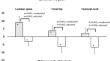
Data on the effectiveness of denosumab on osteoporosis after kidney transplantation are limited. We investigated the long-term bone mineral density (BMD) changes in kidney transplant recipients (KTRs) treated with denosumab compared to untreated KTRs. We enrolled KTRs treated with denosumab 60 mg/6 months for 4 years. An untreated group of sex and age-matched KTRs with a 1:1 ratio was included. The primary outcome was BMD changes assessed by Dual-energy X-ray Absorptiometry over 4 years. Data on serum creatinine, alkaline phosphatase (ALP), parathyroid hormone, and 25-hydroxyvitamin D were collected. All patients received oral cholecalciferol and calcium supplementation. 23 denosumab-treated KTRs were enrolled, and 23 untreated KTRs. The median time from transplant to the start of denosumab was 4 years (range 0:24). The denosumab group showed a significant increase from baseline in BMD at the lumbar spine (LS) (9.0 ± 10.7%, p < 0.001), and total hip (TH) (3.8 ± 7.9%, p = 0.041). The untreated group showed a significant decrease at all sites (- 3.0 ± 7%, p = 0.041 at the LS; - 6.3 ± 9.2%, p = 0.003 at the TH; - 6.7 ± 9.3%, p = 0.003 at the FN). The between-group differences in percent BMD changes were statistically significant at all sites. Similar results were found for the respective Z-scores. The ALP serum levels significantly decreased from baseline only in the denosumab group, with a significant between-group difference (p = 0.032). No significant differences in serum creatinine, hypocalcaemic events or acute graft rejection rates were observed. Four years of denosumab therapy were associated with increased BMD in KTRs, while untreated KTRs showed significant BMD losses at all sites.
期刊介绍:
Calcified Tissue International and Musculoskeletal Research publishes original research and reviews concerning the structure and function of bone, and other musculoskeletal tissues in living organisms and clinical studies of musculoskeletal disease. It includes studies of cell biology, molecular biology, intracellular signalling, and physiology, as well as research into the hormones, cytokines and other mediators that influence the musculoskeletal system. The journal also publishes clinical studies of relevance to bone disease, mineral metabolism, muscle function, and musculoskeletal interactions.



 京公网安备 11010802042870号
京ICP备2023020795号-1
京公网安备 11010802042870号
京ICP备2023020795号-1

 分享
分享
 求助内容:
求助内容: 应助结果提醒方式:
 扫码关注我们
