{"title":"Alps at risk: High-mountain lakes as reservoirs of persistent and emerging contaminants","authors":"Paolo Pastorino , Damià Barceló , Marino Prearo","doi":"10.1016/j.jconhyd.2024.104361","DOIUrl":null,"url":null,"abstract":"<div><p>Despite their remote locations, high-mountain lakes located in the Alps are vulnerable to chemical pollution. This discussion explores the important aspects of these lakes as repositories of Persistent Organic Pollutants (POPs) and Contaminants of Emerging Concern (CECs), elucidating their sources and implications for both the environment and human health. In terms of the presence of POPs in high-altitude lakes of the Alps, 14 studies have been identified examining the occurrence of polychlorinated biphenyls, dichlorodiphenyltrichloroethane an its metabolites, polybrominated diphenyl ethers, and polycyclic aromatic hydrocarbons. The bulk of research on POPs in high-mountain lakes is concentrated in the Italian Alps (63%), followed by Switzerland (22%), Austria (12%), and France (3%), respectively. Sediment is predominantly investigated (65%), followed by fish (33%) and water (2%). Similarly, in relation to the presence of CECs in high-mountain lakes of the Alps, six studies have been identified investigating the occurrence of musks, perfluorinated compounds, and microplastics. Investigations into CECs predominantly occur in Switzerland (42%), France (33%), and Italy (25%), with fish samples (muscle and liver) being the primary focus (46%), followed by sediment (17%) and water (17%). Other compartments like zooplankton, frog/tadpoles, and snow remain less explored. The discussion also shed light on various pathways through which pollutants reach these remote landscapes, including atmospheric transport, glacial meltwater, and human activities. Protecting these pristine peaks demands concerted efforts encompassing ongoing research, vigilant monitoring, and dedicated conservation initiatives.</p></div>","PeriodicalId":15530,"journal":{"name":"Journal of contaminant hydrology","volume":"264 ","pages":"Article 104361"},"PeriodicalIF":4.4000,"publicationDate":"2024-05-01","publicationTypes":"Journal Article","fieldsOfStudy":null,"isOpenAccess":false,"openAccessPdf":"","citationCount":"0","resultStr":null,"platform":"Semanticscholar","paperid":null,"PeriodicalName":"Journal of contaminant hydrology","FirstCategoryId":"93","ListUrlMain":"https://www.sciencedirect.com/science/article/pii/S0169772224000652","RegionNum":3,"RegionCategory":"环境科学与生态学","ArticlePicture":[],"TitleCN":null,"AbstractTextCN":null,"PMCID":null,"EPubDate":"2024/5/10 0:00:00","PubModel":"Epub","JCR":"Q2","JCRName":"ENVIRONMENTAL SCIENCES","Score":null,"Total":0}
引用次数: 0
Abstract
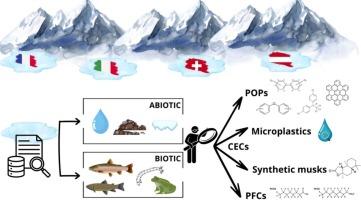
Despite their remote locations, high-mountain lakes located in the Alps are vulnerable to chemical pollution. This discussion explores the important aspects of these lakes as repositories of Persistent Organic Pollutants (POPs) and Contaminants of Emerging Concern (CECs), elucidating their sources and implications for both the environment and human health. In terms of the presence of POPs in high-altitude lakes of the Alps, 14 studies have been identified examining the occurrence of polychlorinated biphenyls, dichlorodiphenyltrichloroethane an its metabolites, polybrominated diphenyl ethers, and polycyclic aromatic hydrocarbons. The bulk of research on POPs in high-mountain lakes is concentrated in the Italian Alps (63%), followed by Switzerland (22%), Austria (12%), and France (3%), respectively. Sediment is predominantly investigated (65%), followed by fish (33%) and water (2%). Similarly, in relation to the presence of CECs in high-mountain lakes of the Alps, six studies have been identified investigating the occurrence of musks, perfluorinated compounds, and microplastics. Investigations into CECs predominantly occur in Switzerland (42%), France (33%), and Italy (25%), with fish samples (muscle and liver) being the primary focus (46%), followed by sediment (17%) and water (17%). Other compartments like zooplankton, frog/tadpoles, and snow remain less explored. The discussion also shed light on various pathways through which pollutants reach these remote landscapes, including atmospheric transport, glacial meltwater, and human activities. Protecting these pristine peaks demands concerted efforts encompassing ongoing research, vigilant monitoring, and dedicated conservation initiatives.
期刊介绍:
The Journal of Contaminant Hydrology is an international journal publishing scientific articles pertaining to the contamination of subsurface water resources. Emphasis is placed on investigations of the physical, chemical, and biological processes influencing the behavior and fate of organic and inorganic contaminants in the unsaturated (vadose) and saturated (groundwater) zones, as well as at groundwater-surface water interfaces. The ecological impacts of contaminants transported both from and to aquifers are of interest. Articles on contamination of surface water only, without a link to groundwater, are out of the scope. Broad latitude is allowed in identifying contaminants of interest, and include legacy and emerging pollutants, nutrients, nanoparticles, pathogenic microorganisms (e.g., bacteria, viruses, protozoa), microplastics, and various constituents associated with energy production (e.g., methane, carbon dioxide, hydrogen sulfide).
The journal''s scope embraces a wide range of topics including: experimental investigations of contaminant sorption, diffusion, transformation, volatilization and transport in the surface and subsurface; characterization of soil and aquifer properties only as they influence contaminant behavior; development and testing of mathematical models of contaminant behaviour; innovative techniques for restoration of contaminated sites; development of new tools or techniques for monitoring the extent of soil and groundwater contamination; transformation of contaminants in the hyporheic zone; effects of contaminants traversing the hyporheic zone on surface water and groundwater ecosystems; subsurface carbon sequestration and/or turnover; and migration of fluids associated with energy production into groundwater.



 京公网安备 11010802042870号
京ICP备2023020795号-1
京公网安备 11010802042870号
京ICP备2023020795号-1

 分享
分享
 求助内容:
求助内容: 应助结果提醒方式:
 扫码关注我们
