Electroacupuncture improves gastrointestinal motility through a central-cholinergic pathway-mediated GDNF releasing from intestinal glial cells to protect intestinal neurons in Parkinson's disease rats
{"title":"Electroacupuncture improves gastrointestinal motility through a central-cholinergic pathway-mediated GDNF releasing from intestinal glial cells to protect intestinal neurons in Parkinson's disease rats","authors":"","doi":"10.1016/j.neurot.2024.e00369","DOIUrl":null,"url":null,"abstract":"<div><p>Constipation symptoms of Parkinson's disease (PD) seriously reduce the quality of life of patients and aggravate the development of the disease, but current treatment options still cannot alleviate the progress of constipation. Electroacupuncture (EA) is a new method for the treatment of constipation, which can effectively treat the symptoms of constipation in PD patients. However, the specific regulatory mechanisms of EA in the treatment of constipation symptoms in PD remain unclear. The aim of this study is to investigate the therapeutic effect of EA on PD constipation rats and its regulatory mechanism. A rotenone (ROT)-induced gastrointestinal motility disorder model was used to simulate the pathological process of constipation in PD. The results showed that EA could effectively promote gastrointestinal peristalsis, reduce α-synuclein accumulation in substantia nigra and colon and colonic injury in rats after ROT administration. Mechanistically, EA activation of the central-cholinergic pathway increases acetylcholine release in the colon. At the same time, EA up-regulated the co-expression of enteric glial cells (EGCs) and α7 nicotinic acetylcholine receptor (α7nAChR). EA increased the expression of choline acetyltransferase (ChAT), neuronal nitric oxide synthase (nNOS), and tyrosine hydroxylase (TH) in the colon of PD rats. Further mechanistic studies showed that EA increased the expression of glial cell-derived neurotrophic factor (GDNF), GFRa1 and p-AKT in colon tissues. The present study confirmed that EA upregulates α7nAChR through a central-cholinergic mechanism to promote GDNF release from EGCs, thereby protecting intestinal neurons and thereby improving gastrointestinal motility.</p></div>","PeriodicalId":19159,"journal":{"name":"Neurotherapeutics","volume":"21 4","pages":"Article e00369"},"PeriodicalIF":6.9000,"publicationDate":"2024-07-01","publicationTypes":"Journal Article","fieldsOfStudy":null,"isOpenAccess":false,"openAccessPdf":"https://www.sciencedirect.com/science/article/pii/S1878747924000552/pdfft?md5=df876400aaeddf68c8c60dbff5e9ef1c&pid=1-s2.0-S1878747924000552-main.pdf","citationCount":"0","resultStr":null,"platform":"Semanticscholar","paperid":null,"PeriodicalName":"Neurotherapeutics","FirstCategoryId":"3","ListUrlMain":"https://www.sciencedirect.com/science/article/pii/S1878747924000552","RegionNum":2,"RegionCategory":"医学","ArticlePicture":[],"TitleCN":null,"AbstractTextCN":null,"PMCID":null,"EPubDate":"","PubModel":"","JCR":"Q1","JCRName":"CLINICAL NEUROLOGY","Score":null,"Total":0}
引用次数: 0
Abstract
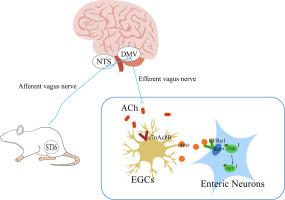
Constipation symptoms of Parkinson's disease (PD) seriously reduce the quality of life of patients and aggravate the development of the disease, but current treatment options still cannot alleviate the progress of constipation. Electroacupuncture (EA) is a new method for the treatment of constipation, which can effectively treat the symptoms of constipation in PD patients. However, the specific regulatory mechanisms of EA in the treatment of constipation symptoms in PD remain unclear. The aim of this study is to investigate the therapeutic effect of EA on PD constipation rats and its regulatory mechanism. A rotenone (ROT)-induced gastrointestinal motility disorder model was used to simulate the pathological process of constipation in PD. The results showed that EA could effectively promote gastrointestinal peristalsis, reduce α-synuclein accumulation in substantia nigra and colon and colonic injury in rats after ROT administration. Mechanistically, EA activation of the central-cholinergic pathway increases acetylcholine release in the colon. At the same time, EA up-regulated the co-expression of enteric glial cells (EGCs) and α7 nicotinic acetylcholine receptor (α7nAChR). EA increased the expression of choline acetyltransferase (ChAT), neuronal nitric oxide synthase (nNOS), and tyrosine hydroxylase (TH) in the colon of PD rats. Further mechanistic studies showed that EA increased the expression of glial cell-derived neurotrophic factor (GDNF), GFRa1 and p-AKT in colon tissues. The present study confirmed that EA upregulates α7nAChR through a central-cholinergic mechanism to promote GDNF release from EGCs, thereby protecting intestinal neurons and thereby improving gastrointestinal motility.
期刊介绍:
Neurotherapeutics® is the journal of the American Society for Experimental Neurotherapeutics (ASENT). Each issue provides critical reviews of an important topic relating to the treatment of neurological disorders written by international authorities.
The Journal also publishes original research articles in translational neuroscience including descriptions of cutting edge therapies that cross disciplinary lines and represent important contributions to neurotherapeutics for medical practitioners and other researchers in the field.
Neurotherapeutics ® delivers a multidisciplinary perspective on the frontiers of translational neuroscience, provides perspectives on current research and practice, and covers social and ethical as well as scientific issues.



 京公网安备 11010802042870号
京ICP备2023020795号-1
京公网安备 11010802042870号
京ICP备2023020795号-1

 分享
分享
 求助内容:
求助内容: 应助结果提醒方式:
 扫码关注我们
