Crosstalk among proximal tubular cells, macrophages, and fibroblasts in acute kidney injury: single-cell profiling from the perspective of ferroptosis.
{"title":"Crosstalk among proximal tubular cells, macrophages, and fibroblasts in acute kidney injury: single-cell profiling from the perspective of ferroptosis.","authors":"Yulin Wang, Ziyan Shen, Shaocong Mo, Han Zhang, Jing Chen, Cheng Zhu, Shiqi Lv, Di Zhang, Xinhui Huang, Yulu Gu, Xixi Yu, Xiaoqiang Ding, Xiaoyan Zhang","doi":"10.1007/s13577-024-01072-z","DOIUrl":null,"url":null,"abstract":"<p><p>The link between ferroptosis, a form of cell death mediated by iron and acute kidney injury (AKI) is recently gaining widespread attention. However, the mechanism of the crosstalk between cells in the pathogenesis and progression of acute kidney injury remains unexplored. In our research, we performed a non-negative matrix decomposition (NMF) algorithm on acute kidney injury single-cell RNA sequencing data based specifically focusing in ferroptosis-associated genes. Through a combination with pseudo-time analysis, cell-cell interaction analysis and SCENIC analysis, we discovered that proximal tubular cells, macrophages, and fibroblasts all showed associations with ferroptosis in different pathways and at various time. This involvement influenced cellular functions, enhancing cellular communication and activating multiple transcription factors. In addition, analyzing bulk expression profiles and marker genes of newly defined ferroptosis subtypes of cells, we have identified crucial cell subtypes, including Egr1 + PTC-C1, Jun + PTC-C3, Cxcl2 + Mac-C1 and Egr1 + Fib-C1. All these subtypes which were found in AKI mice kidneys and played significantly distinct roles from those of normal mice. Moreover, we verified the differential expression of Egr1, Jun, and Cxcl2 in the IRI mouse model and acute kidney injury human samples. Finally, our research presented a novel analysis of the crosstalk of proximal tubular cells, macrophages and fibroblasts in acute kidney injury targeting ferroptosis, therefore, contributing to better understanding the acute kidney injury pathogenesis, self-repairment and acute kidney injury-chronic kidney disease (AKI-CKD) progression.</p>","PeriodicalId":49194,"journal":{"name":"Human Cell","volume":" ","pages":"1039-1055"},"PeriodicalIF":3.1000,"publicationDate":"2024-07-01","publicationTypes":"Journal Article","fieldsOfStudy":null,"isOpenAccess":false,"openAccessPdf":"https://www.ncbi.nlm.nih.gov/pmc/articles/PMC11194220/pdf/","citationCount":"0","resultStr":null,"platform":"Semanticscholar","paperid":null,"PeriodicalName":"Human Cell","FirstCategoryId":"99","ListUrlMain":"https://doi.org/10.1007/s13577-024-01072-z","RegionNum":3,"RegionCategory":"生物学","ArticlePicture":[],"TitleCN":null,"AbstractTextCN":null,"PMCID":null,"EPubDate":"2024/5/16 0:00:00","PubModel":"Epub","JCR":"Q3","JCRName":"CELL BIOLOGY","Score":null,"Total":0}
引用次数: 0
Abstract
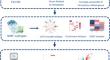
The link between ferroptosis, a form of cell death mediated by iron and acute kidney injury (AKI) is recently gaining widespread attention. However, the mechanism of the crosstalk between cells in the pathogenesis and progression of acute kidney injury remains unexplored. In our research, we performed a non-negative matrix decomposition (NMF) algorithm on acute kidney injury single-cell RNA sequencing data based specifically focusing in ferroptosis-associated genes. Through a combination with pseudo-time analysis, cell-cell interaction analysis and SCENIC analysis, we discovered that proximal tubular cells, macrophages, and fibroblasts all showed associations with ferroptosis in different pathways and at various time. This involvement influenced cellular functions, enhancing cellular communication and activating multiple transcription factors. In addition, analyzing bulk expression profiles and marker genes of newly defined ferroptosis subtypes of cells, we have identified crucial cell subtypes, including Egr1 + PTC-C1, Jun + PTC-C3, Cxcl2 + Mac-C1 and Egr1 + Fib-C1. All these subtypes which were found in AKI mice kidneys and played significantly distinct roles from those of normal mice. Moreover, we verified the differential expression of Egr1, Jun, and Cxcl2 in the IRI mouse model and acute kidney injury human samples. Finally, our research presented a novel analysis of the crosstalk of proximal tubular cells, macrophages and fibroblasts in acute kidney injury targeting ferroptosis, therefore, contributing to better understanding the acute kidney injury pathogenesis, self-repairment and acute kidney injury-chronic kidney disease (AKI-CKD) progression.
期刊介绍:
Human Cell is the official English-language journal of the Japan Human Cell Society. The journal serves as a forum for international research on all aspects of the human cell, encompassing not only cell biology but also pathology, cytology, and oncology, including clinical oncology. Embryonic stem cells derived from animals, regenerative medicine using animal cells, and experimental animal models with implications for human diseases are covered as well.
Submissions in any of the following categories will be considered: Research Articles, Cell Lines, Rapid Communications, Reviews, and Letters to the Editor. A brief clinical case report focusing on cellular responses to pathological insults in human studies may also be submitted as a Letter to the Editor in a concise and short format.
Not only basic scientists but also gynecologists, oncologists, and other clinical scientists are welcome to submit work expressing new ideas or research using human cells.



 京公网安备 11010802042870号
京ICP备2023020795号-1
京公网安备 11010802042870号
京ICP备2023020795号-1

 分享
分享
 求助内容:
求助内容: 应助结果提醒方式:
 扫码关注我们
