{"title":"Ultra-Broadband Polarization-Insensitive MXene-Based Surface Plasmon Resonance Solar Absorber for Solar Thermal Application","authors":"Khaled Aliqab, Raj Agravat, Dhruvik Agravat, Shobhit K. Patel, Meshari Alsharari, Ammar Armghan","doi":"10.1007/s11468-024-02336-y","DOIUrl":null,"url":null,"abstract":"<div><p>Solar energy harvesting is well-known in the past time and solar energy is a superlative source of renewable energy. Researchers have many surface plasmon resonance structures examined with different materials and prevent further losses. In this paper, we proposed MXene-based 2D material with a novel shape of resonator used in solar absorbers. The MXene-based solar absorber effectively captures the sunlight and converts it into heat for its strong optical surface plasmon resonance properties, this solar absorber is used as a solar water heating application. A three-layer solar absorber with a novel shape of resonator layer used of 2D material MXene is constructed to detect a perfect absorption level. The upper layer, or resonator, uses MXene, the centre layer, or dielectric layer, uses SiO<sub>2</sub>, and the bottom layer, or substrate layer, uses Silver (Ag). With the proposed structure, an average absorption of 94.62% can be attained at the ultra-broadband bandwidth range of 2800 nm. Absorption values exceed more than 92% at a 600 nm and 530 nm bandwidth and over more than 96% at a 400 nm wavelength. This proposed solar absorber achieved 99.99% maximum absorption and wide-angle with polarization-insensitive structure. It would be feasible to study AM performances and variations in parameters related to substrate thickness, resonator thickness, and dielectric layer thickness. Additionally, a 10° gap between the incidence angle changes from 0 to 70°. A proposed paper additionally includes sections on magnetic and electric intensity testing and the comparison table.</p></div>","PeriodicalId":736,"journal":{"name":"Plasmonics","volume":"20 2","pages":"879 - 890"},"PeriodicalIF":4.3000,"publicationDate":"2024-05-17","publicationTypes":"Journal Article","fieldsOfStudy":null,"isOpenAccess":false,"openAccessPdf":"","citationCount":"0","resultStr":null,"platform":"Semanticscholar","paperid":null,"PeriodicalName":"Plasmonics","FirstCategoryId":"101","ListUrlMain":"https://link.springer.com/article/10.1007/s11468-024-02336-y","RegionNum":4,"RegionCategory":"物理与天体物理","ArticlePicture":[],"TitleCN":null,"AbstractTextCN":null,"PMCID":null,"EPubDate":"","PubModel":"","JCR":"Q2","JCRName":"CHEMISTRY, PHYSICAL","Score":null,"Total":0}
引用次数: 0
Abstract
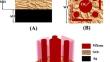
Solar energy harvesting is well-known in the past time and solar energy is a superlative source of renewable energy. Researchers have many surface plasmon resonance structures examined with different materials and prevent further losses. In this paper, we proposed MXene-based 2D material with a novel shape of resonator used in solar absorbers. The MXene-based solar absorber effectively captures the sunlight and converts it into heat for its strong optical surface plasmon resonance properties, this solar absorber is used as a solar water heating application. A three-layer solar absorber with a novel shape of resonator layer used of 2D material MXene is constructed to detect a perfect absorption level. The upper layer, or resonator, uses MXene, the centre layer, or dielectric layer, uses SiO2, and the bottom layer, or substrate layer, uses Silver (Ag). With the proposed structure, an average absorption of 94.62% can be attained at the ultra-broadband bandwidth range of 2800 nm. Absorption values exceed more than 92% at a 600 nm and 530 nm bandwidth and over more than 96% at a 400 nm wavelength. This proposed solar absorber achieved 99.99% maximum absorption and wide-angle with polarization-insensitive structure. It would be feasible to study AM performances and variations in parameters related to substrate thickness, resonator thickness, and dielectric layer thickness. Additionally, a 10° gap between the incidence angle changes from 0 to 70°. A proposed paper additionally includes sections on magnetic and electric intensity testing and the comparison table.
期刊介绍:
Plasmonics is an international forum for the publication of peer-reviewed leading-edge original articles that both advance and report our knowledge base and practice of the interactions of free-metal electrons, Plasmons.
Topics covered include notable advances in the theory, Physics, and applications of surface plasmons in metals, to the rapidly emerging areas of nanotechnology, biophotonics, sensing, biochemistry and medicine. Topics, including the theory, synthesis and optical properties of noble metal nanostructures, patterned surfaces or materials, continuous or grated surfaces, devices, or wires for their multifarious applications are particularly welcome. Typical applications might include but are not limited to, surface enhanced spectroscopic properties, such as Raman scattering or fluorescence, as well developments in techniques such as surface plasmon resonance and near-field scanning optical microscopy.



 京公网安备 11010802042870号
京ICP备2023020795号-1
京公网安备 11010802042870号
京ICP备2023020795号-1

 分享
分享
 求助内容:
求助内容: 应助结果提醒方式:
 扫码关注我们
