Selma M. H. Al-Jawad, Kahlaa H. Aboud, Natheer Jamal Imran, Sally Yakoob Taher
{"title":"Copper Doping of CdS Nanoflakes and Nanoflowers for Efficient Photocatalytic Degradation of MB and MV Dyes","authors":"Selma M. H. Al-Jawad, Kahlaa H. Aboud, Natheer Jamal Imran, Sally Yakoob Taher","doi":"10.1007/s11468-024-02316-2","DOIUrl":null,"url":null,"abstract":"<div><p>Nanoflowers and flakes CdS films were produced on glass substrates using a hydrothermal technique for 2 h at 150 °C utilizing basic ingredients. The films' structural, morphological, optical, and photocatalytic characteristics were investigated at various concentrations of 1%, 2%, 3%, 4%, and 5% Cu-doping. X-Ray diffraction investigations reveal that un-doped and doping films are polycrystalline, having hexagonal and cubic crystal formations. The films have highly preferred orientation along H(002)/C(111). The crystallite size of the deposited samples decreased from 10.7 to 5.2 nm as the Cu-doping concentration increased. The films' atomic force microscope imagery revealed morphological changes and an increase in surface roughness from 4.58 to 18 nm. The field-emission scanning electron microscopy micrographs showed shape development of the nanoflakes in the presence of copper. The transmittance and energy gap were measured and estimated at various doping concentrations. The results demonstrate that increasing the concentration of Cu doping reduced the energy gap from 2.38 to 1.98 eV. The Cu-doped cadmium sulfide films have shown photocatalytic activity for the degradation of methyl blue (MB) and methyl violet (MV) dyes due to their enhanced size, reduced energy gap, and efficient separation of charging characteristics. Also, 5% Cu:CdS sample showed high degradation up to 89% of the MB and 97% of the MV were degraded in 260 min.</p></div>","PeriodicalId":736,"journal":{"name":"Plasmonics","volume":"20 2","pages":"983 - 1002"},"PeriodicalIF":4.3000,"publicationDate":"2024-05-17","publicationTypes":"Journal Article","fieldsOfStudy":null,"isOpenAccess":false,"openAccessPdf":"","citationCount":"0","resultStr":null,"platform":"Semanticscholar","paperid":null,"PeriodicalName":"Plasmonics","FirstCategoryId":"101","ListUrlMain":"https://link.springer.com/article/10.1007/s11468-024-02316-2","RegionNum":4,"RegionCategory":"物理与天体物理","ArticlePicture":[],"TitleCN":null,"AbstractTextCN":null,"PMCID":null,"EPubDate":"","PubModel":"","JCR":"Q2","JCRName":"CHEMISTRY, PHYSICAL","Score":null,"Total":0}
引用次数: 0
Abstract
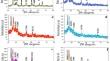
Nanoflowers and flakes CdS films were produced on glass substrates using a hydrothermal technique for 2 h at 150 °C utilizing basic ingredients. The films' structural, morphological, optical, and photocatalytic characteristics were investigated at various concentrations of 1%, 2%, 3%, 4%, and 5% Cu-doping. X-Ray diffraction investigations reveal that un-doped and doping films are polycrystalline, having hexagonal and cubic crystal formations. The films have highly preferred orientation along H(002)/C(111). The crystallite size of the deposited samples decreased from 10.7 to 5.2 nm as the Cu-doping concentration increased. The films' atomic force microscope imagery revealed morphological changes and an increase in surface roughness from 4.58 to 18 nm. The field-emission scanning electron microscopy micrographs showed shape development of the nanoflakes in the presence of copper. The transmittance and energy gap were measured and estimated at various doping concentrations. The results demonstrate that increasing the concentration of Cu doping reduced the energy gap from 2.38 to 1.98 eV. The Cu-doped cadmium sulfide films have shown photocatalytic activity for the degradation of methyl blue (MB) and methyl violet (MV) dyes due to their enhanced size, reduced energy gap, and efficient separation of charging characteristics. Also, 5% Cu:CdS sample showed high degradation up to 89% of the MB and 97% of the MV were degraded in 260 min.
期刊介绍:
Plasmonics is an international forum for the publication of peer-reviewed leading-edge original articles that both advance and report our knowledge base and practice of the interactions of free-metal electrons, Plasmons.
Topics covered include notable advances in the theory, Physics, and applications of surface plasmons in metals, to the rapidly emerging areas of nanotechnology, biophotonics, sensing, biochemistry and medicine. Topics, including the theory, synthesis and optical properties of noble metal nanostructures, patterned surfaces or materials, continuous or grated surfaces, devices, or wires for their multifarious applications are particularly welcome. Typical applications might include but are not limited to, surface enhanced spectroscopic properties, such as Raman scattering or fluorescence, as well developments in techniques such as surface plasmon resonance and near-field scanning optical microscopy.



 京公网安备 11010802042870号
京ICP备2023020795号-1
京公网安备 11010802042870号
京ICP备2023020795号-1

 分享
分享
 求助内容:
求助内容: 应助结果提醒方式:
 扫码关注我们
