Evaluation of turmeric (Curcuma longa L.) productivity and economics under Melia composita Willd. based agroforestry system in the mid-hills of Northwestern Himalayas: Effects of tree spacing and use of vegetative mulch
Kushagra Singh, D. R. Bhardwaj, Rajesh Kaushal, Praveen Kumar, Jatin Kumar, Prashant Sharma, Dhirender Kumar
{"title":"Evaluation of turmeric (Curcuma longa L.) productivity and economics under Melia composita Willd. based agroforestry system in the mid-hills of Northwestern Himalayas: Effects of tree spacing and use of vegetative mulch","authors":"Kushagra Singh, D. R. Bhardwaj, Rajesh Kaushal, Praveen Kumar, Jatin Kumar, Prashant Sharma, Dhirender Kumar","doi":"10.1007/s10457-024-01001-x","DOIUrl":null,"url":null,"abstract":"<div><p>Innovative practices like combining agroforestry with organic mulch can store carbon and enhance crop yields by regulating soil temperature, improving soil health and moisture. A study was conducted during 2022–23 in the mid-hills of the North-western Himalayas to evaluate the productivity of turmeric plants grown under different densities of <i>Melia composita</i> Willd. The research employed a split-plot design, utilizing different tree spacings (main plot)—8m × 5m (S<sub>1</sub>) and 8m × 4m (S<sub>2</sub>) of <i>Melia composita</i> trees and sole cropping, along with one control (T<sub>1</sub>) and nine distinct mulch treatments (sub-plots): T<sub>2</sub> (Farm yard manure (FYM)), T<sub>3</sub> (<i>Toona ciliata</i> + FYM + Recommended dose of fertilizer (RDF)), T<sub>4</sub> (<i>Artemis vulgaris</i> + FYM + RDF), T<sub>5</sub> (<i>Ulmus villosa</i> + FYM + RDF), T<sub>6</sub> (<i>Celtis australis</i> + FYM + RDF), T<sub>7</sub> (<i>Pinus roxburghii</i> + FYM + RDF), T<sub>8</sub> (<i>Pistacia integrimma</i> + FYM + RDF), T<sub>9</sub> (<i>Phyllostachys aurea</i> + FYM + RDF), T<sub>10</sub> (<i>Melia composita</i> + FYM + RDF). The results showed that higher biomass (301.54 Mg ha<sup>−1</sup>) and carbon density (143.24 Mg ha<sup>−1</sup>) were achieved with S<sub>2</sub> tree spacing than S<sub>1</sub>. However, for better turmeric growth and yield, S<sub>1</sub> tree spacing performed better. Among the different mulch treatments, T<sub>6</sub> produced the highest curcumin percentage, primary finger count, and mother rhizome weight. On the other hand, T<sub>10</sub> resulted in the highest primary finger weight and total yield. Using T<sub>3</sub> mulch enhanced the level of available N, P, K in soil and mulch used in T<sub>9</sub> improved the soil microbial characteristics. Turmeric intercropped with <i>M. composita</i> in 8m × 5m (S<sub>1</sub>) and 8m × 4m (S<sub>2</sub>) spacing resulted in net returns of $7948.44 ha<sup>−1</sup> and $7456.64 ha<sup>−1</sup> year<sup>−1</sup>, respectively, which were 23.74% and 16.07% increase compared to sole cropping (S<sub>3</sub>). This research provides valuable insights into optimizing tree spacing and mulch materials in an agroforestry system based on <i>M. composita</i>, which enhances turmeric crop productivity, soil health and economic viability.</p></div>","PeriodicalId":7610,"journal":{"name":"Agroforestry Systems","volume":"98 6","pages":"1303 - 1322"},"PeriodicalIF":2.2000,"publicationDate":"2024-05-17","publicationTypes":"Journal Article","fieldsOfStudy":null,"isOpenAccess":false,"openAccessPdf":"","citationCount":"0","resultStr":null,"platform":"Semanticscholar","paperid":null,"PeriodicalName":"Agroforestry Systems","FirstCategoryId":"97","ListUrlMain":"https://link.springer.com/article/10.1007/s10457-024-01001-x","RegionNum":3,"RegionCategory":"农林科学","ArticlePicture":[],"TitleCN":null,"AbstractTextCN":null,"PMCID":null,"EPubDate":"","PubModel":"","JCR":"Q2","JCRName":"AGRONOMY","Score":null,"Total":0}
引用次数: 0
Abstract
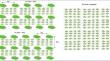
Innovative practices like combining agroforestry with organic mulch can store carbon and enhance crop yields by regulating soil temperature, improving soil health and moisture. A study was conducted during 2022–23 in the mid-hills of the North-western Himalayas to evaluate the productivity of turmeric plants grown under different densities of Melia composita Willd. The research employed a split-plot design, utilizing different tree spacings (main plot)—8m × 5m (S1) and 8m × 4m (S2) of Melia composita trees and sole cropping, along with one control (T1) and nine distinct mulch treatments (sub-plots): T2 (Farm yard manure (FYM)), T3 (Toona ciliata + FYM + Recommended dose of fertilizer (RDF)), T4 (Artemis vulgaris + FYM + RDF), T5 (Ulmus villosa + FYM + RDF), T6 (Celtis australis + FYM + RDF), T7 (Pinus roxburghii + FYM + RDF), T8 (Pistacia integrimma + FYM + RDF), T9 (Phyllostachys aurea + FYM + RDF), T10 (Melia composita + FYM + RDF). The results showed that higher biomass (301.54 Mg ha−1) and carbon density (143.24 Mg ha−1) were achieved with S2 tree spacing than S1. However, for better turmeric growth and yield, S1 tree spacing performed better. Among the different mulch treatments, T6 produced the highest curcumin percentage, primary finger count, and mother rhizome weight. On the other hand, T10 resulted in the highest primary finger weight and total yield. Using T3 mulch enhanced the level of available N, P, K in soil and mulch used in T9 improved the soil microbial characteristics. Turmeric intercropped with M. composita in 8m × 5m (S1) and 8m × 4m (S2) spacing resulted in net returns of $7948.44 ha−1 and $7456.64 ha−1 year−1, respectively, which were 23.74% and 16.07% increase compared to sole cropping (S3). This research provides valuable insights into optimizing tree spacing and mulch materials in an agroforestry system based on M. composita, which enhances turmeric crop productivity, soil health and economic viability.
期刊介绍:
Agroforestry Systems is an international scientific journal that publishes results of novel, high impact original research, critical reviews and short communications on any aspect of agroforestry. The journal particularly encourages contributions that demonstrate the role of agroforestry in providing commodity as well non-commodity benefits such as ecosystem services. Papers dealing with both biophysical and socioeconomic aspects are welcome. These include results of investigations of a fundamental or applied nature dealing with integrated systems involving trees and crops and/or livestock. Manuscripts that are purely descriptive in nature or confirmatory in nature of well-established findings, and with limited international scope are discouraged. To be acceptable for publication, the information presented must be relevant to a context wider than the specific location where the study was undertaken, and provide new insight or make a significant contribution to the agroforestry knowledge base



 京公网安备 11010802042870号
京ICP备2023020795号-1
京公网安备 11010802042870号
京ICP备2023020795号-1

 分享
分享
 求助内容:
求助内容: 应助结果提醒方式:
 扫码关注我们
