{"title":"Distant time: The future of urbanisation from ‘there’ and ‘then’","authors":"Ayona Datta","doi":"10.1177/20438206241253567","DOIUrl":null,"url":null,"abstract":"Recent geographical scholarship has mainly focussed on the disjunctures between linear and cyclical time in urban development. This paper proposes a notion of distant time as a metaphor of temporal power that keeps marginal citizens at a governable distance from the state. Taking the case of Shimla, an erstwhile Summer Capital of colonial India and a popular tourist town in the Himalayas, it argues that distant time emerges from the temporal reordering of ‘native’ settlement on a fragile ecological landscape ravaged by the colonial state, that is then repeated in postcolonial imaginaries of smart urban futures. Reading ‘along the grain’ of colonial archives of incremental housebuilding by the ‘natives’, as well as interviews with current working class residents of Shimla living under threat of demolition from proposed smart city projects, this paper suggests that distant time is also a space for marginal citizens to claim temporal justice. Even as the state engages in temporal distancing through post/colonial planning, marginal citizens use waiting, confusing, and circumventing as tools of temporal arbitrage. They highlight that aspirations for smart urban futures are not just produced in the ‘here and now’ of the present, but also from the ‘there and then’ of different pasts and futures.","PeriodicalId":8,"journal":{"name":"ACS Biomaterials Science & Engineering","volume":"58 7","pages":""},"PeriodicalIF":5.5000,"publicationDate":"2024-05-15","publicationTypes":"Journal Article","fieldsOfStudy":null,"isOpenAccess":false,"openAccessPdf":"","citationCount":"0","resultStr":null,"platform":"Semanticscholar","paperid":null,"PeriodicalName":"ACS Biomaterials Science & Engineering","FirstCategoryId":"96","ListUrlMain":"https://doi.org/10.1177/20438206241253567","RegionNum":2,"RegionCategory":"医学","ArticlePicture":[],"TitleCN":null,"AbstractTextCN":null,"PMCID":null,"EPubDate":"","PubModel":"","JCR":"Q2","JCRName":"MATERIALS SCIENCE, BIOMATERIALS","Score":null,"Total":0}
引用次数: 0
Abstract
Recent geographical scholarship has mainly focussed on the disjunctures between linear and cyclical time in urban development. This paper proposes a notion of distant time as a metaphor of temporal power that keeps marginal citizens at a governable distance from the state. Taking the case of Shimla, an erstwhile Summer Capital of colonial India and a popular tourist town in the Himalayas, it argues that distant time emerges from the temporal reordering of ‘native’ settlement on a fragile ecological landscape ravaged by the colonial state, that is then repeated in postcolonial imaginaries of smart urban futures. Reading ‘along the grain’ of colonial archives of incremental housebuilding by the ‘natives’, as well as interviews with current working class residents of Shimla living under threat of demolition from proposed smart city projects, this paper suggests that distant time is also a space for marginal citizens to claim temporal justice. Even as the state engages in temporal distancing through post/colonial planning, marginal citizens use waiting, confusing, and circumventing as tools of temporal arbitrage. They highlight that aspirations for smart urban futures are not just produced in the ‘here and now’ of the present, but also from the ‘there and then’ of different pasts and futures.
期刊介绍:
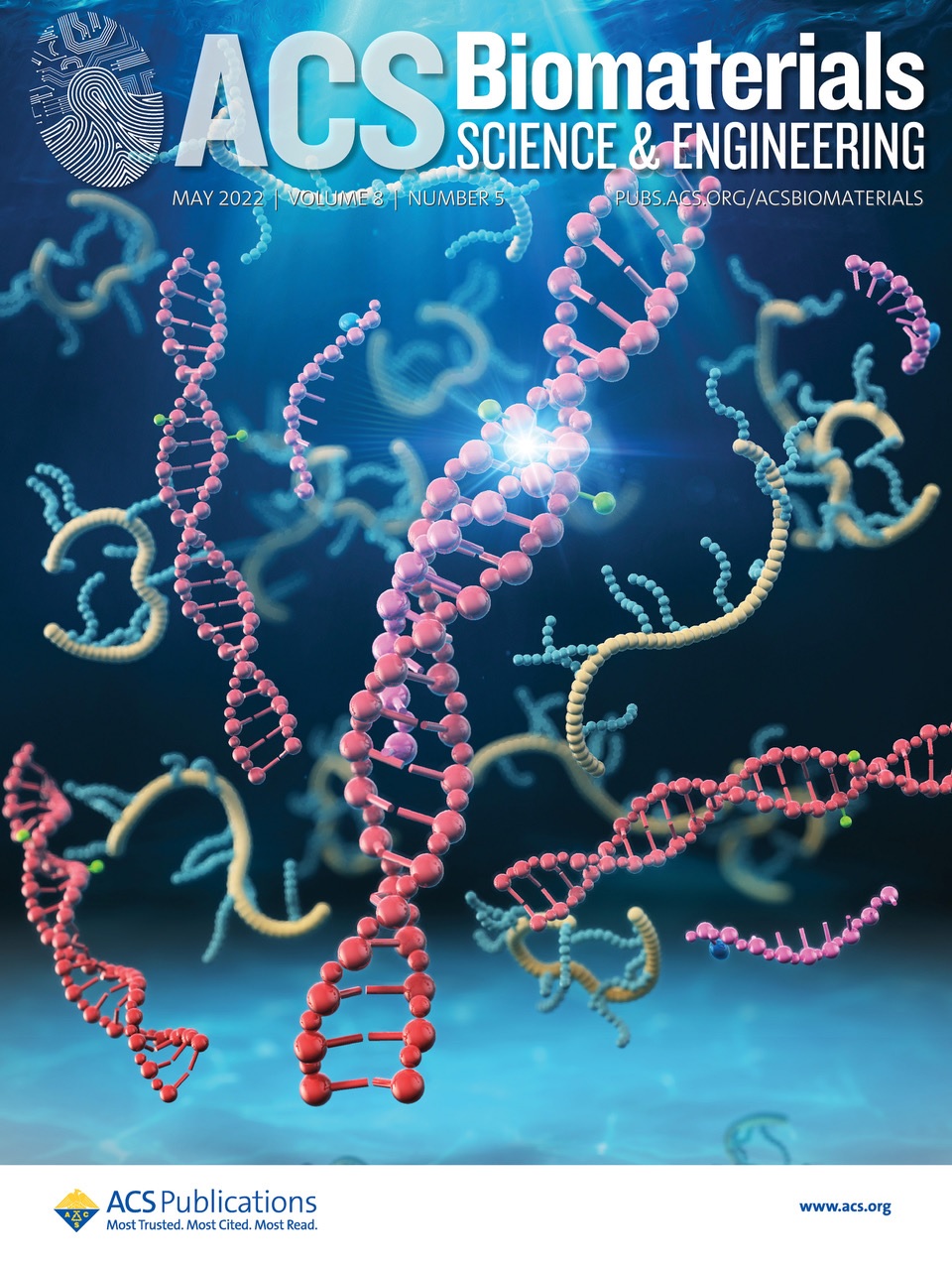
ACS Biomaterials Science & Engineering is the leading journal in the field of biomaterials, serving as an international forum for publishing cutting-edge research and innovative ideas on a broad range of topics:
Applications and Health – implantable tissues and devices, prosthesis, health risks, toxicology
Bio-interactions and Bio-compatibility – material-biology interactions, chemical/morphological/structural communication, mechanobiology, signaling and biological responses, immuno-engineering, calcification, coatings, corrosion and degradation of biomaterials and devices, biophysical regulation of cell functions
Characterization, Synthesis, and Modification – new biomaterials, bioinspired and biomimetic approaches to biomaterials, exploiting structural hierarchy and architectural control, combinatorial strategies for biomaterials discovery, genetic biomaterials design, synthetic biology, new composite systems, bionics, polymer synthesis
Controlled Release and Delivery Systems – biomaterial-based drug and gene delivery, bio-responsive delivery of regulatory molecules, pharmaceutical engineering
Healthcare Advances – clinical translation, regulatory issues, patient safety, emerging trends
Imaging and Diagnostics – imaging agents and probes, theranostics, biosensors, monitoring
Manufacturing and Technology – 3D printing, inks, organ-on-a-chip, bioreactor/perfusion systems, microdevices, BioMEMS, optics and electronics interfaces with biomaterials, systems integration
Modeling and Informatics Tools – scaling methods to guide biomaterial design, predictive algorithms for structure-function, biomechanics, integrating bioinformatics with biomaterials discovery, metabolomics in the context of biomaterials
Tissue Engineering and Regenerative Medicine – basic and applied studies, cell therapies, scaffolds, vascularization, bioartificial organs, transplantation and functionality, cellular agriculture



 京公网安备 11010802042870号
京ICP备2023020795号-1
京公网安备 11010802042870号
京ICP备2023020795号-1

 分享
分享
 求助内容:
求助内容: 应助结果提醒方式:
 扫码关注我们
