E. Daynes, Molly M Baldwin, M. Annals, N. Gardiner, E. Chaplin, S. Ward, N. J. Greening, Rachael A Evans, Sally J Singh
{"title":"Changes in fatigue symptoms following an exercise-based rehabilitation programme for patients with Long-COVID","authors":"E. Daynes, Molly M Baldwin, M. Annals, N. Gardiner, E. Chaplin, S. Ward, N. J. Greening, Rachael A Evans, Sally J Singh","doi":"10.1183/23120541.00089-2024","DOIUrl":null,"url":null,"abstract":"There is evidence to support COVID-19 rehabilitation programmes improving persistent COVID-19 symptoms; however, there is concern that therapies that include an exercise component may increase fatigue and post-exertional symptom exacerbation (PESE).To determine the effect of a 6 week COVID-19 rehabilitation programme on fatigue and PESE in individuals with on-going COVID-19 symptoms.After a routine medical assessment, individuals with persistent COVID-19 symptoms were enrolled on a 6-week COVID-19 specific rehabilitation programme. The programme included symptom-titrated exercise, education, and self-management advice. Fatigue was assessed pre- and post-programme using the Functional Assessment Chronic Illness Therapy-Fatigue questionnaire (FACIT). Exercise capacity (Incremental and Endurance Shuttle Walking Test; ISWT/ESWT) and PESE (DePaul Symptom Questionnaire; DSQ) were also assessed pre- and post-programme. Composite scores were calculated for the frequency and severity domains of the DSQ.148 patients (median [IQR] age 59[49–72] years, 82 (60%) female, 81(54%) hospitalised) completed the COVID-19 rehabilitation programme. FACIT score reduced pre- to post-programme by a mean[CI] change of −5[−7, −4];p<0.01. Exercise capacity increased by 82[65, 99] m for the ISWT and 398[333, 462]seconds for the ESWT (n=148). PESE was assessed in 44 patients. The DSQ frequency and severity composite score improved by 20[13, 28] and 19[13, 26] points, respectively (p<0.01, n=44).This data demonstrates the potential benefits of a COVID-19 rehabilitation programme on improving fatigue, exercise capacity, and symptom exacerbation, in those with persistent COVID-19 symptoms.","PeriodicalId":4,"journal":{"name":"ACS Applied Energy Materials","volume":" 12","pages":""},"PeriodicalIF":5.5000,"publicationDate":"2024-05-09","publicationTypes":"Journal Article","fieldsOfStudy":null,"isOpenAccess":false,"openAccessPdf":"","citationCount":"0","resultStr":null,"platform":"Semanticscholar","paperid":null,"PeriodicalName":"ACS Applied Energy Materials","FirstCategoryId":"3","ListUrlMain":"https://doi.org/10.1183/23120541.00089-2024","RegionNum":3,"RegionCategory":"材料科学","ArticlePicture":[],"TitleCN":null,"AbstractTextCN":null,"PMCID":null,"EPubDate":"","PubModel":"","JCR":"Q2","JCRName":"CHEMISTRY, PHYSICAL","Score":null,"Total":0}
引用次数: 0
Abstract
There is evidence to support COVID-19 rehabilitation programmes improving persistent COVID-19 symptoms; however, there is concern that therapies that include an exercise component may increase fatigue and post-exertional symptom exacerbation (PESE).To determine the effect of a 6 week COVID-19 rehabilitation programme on fatigue and PESE in individuals with on-going COVID-19 symptoms.After a routine medical assessment, individuals with persistent COVID-19 symptoms were enrolled on a 6-week COVID-19 specific rehabilitation programme. The programme included symptom-titrated exercise, education, and self-management advice. Fatigue was assessed pre- and post-programme using the Functional Assessment Chronic Illness Therapy-Fatigue questionnaire (FACIT). Exercise capacity (Incremental and Endurance Shuttle Walking Test; ISWT/ESWT) and PESE (DePaul Symptom Questionnaire; DSQ) were also assessed pre- and post-programme. Composite scores were calculated for the frequency and severity domains of the DSQ.148 patients (median [IQR] age 59[49–72] years, 82 (60%) female, 81(54%) hospitalised) completed the COVID-19 rehabilitation programme. FACIT score reduced pre- to post-programme by a mean[CI] change of −5[−7, −4];p<0.01. Exercise capacity increased by 82[65, 99] m for the ISWT and 398[333, 462]seconds for the ESWT (n=148). PESE was assessed in 44 patients. The DSQ frequency and severity composite score improved by 20[13, 28] and 19[13, 26] points, respectively (p<0.01, n=44).This data demonstrates the potential benefits of a COVID-19 rehabilitation programme on improving fatigue, exercise capacity, and symptom exacerbation, in those with persistent COVID-19 symptoms.
期刊介绍:
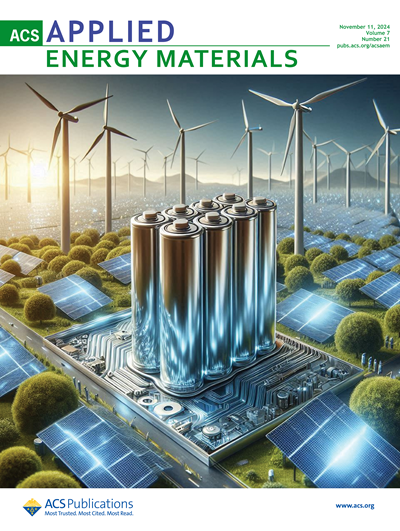
ACS Applied Energy Materials is an interdisciplinary journal publishing original research covering all aspects of materials, engineering, chemistry, physics and biology relevant to energy conversion and storage. The journal is devoted to reports of new and original experimental and theoretical research of an applied nature that integrate knowledge in the areas of materials, engineering, physics, bioscience, and chemistry into important energy applications.



 京公网安备 11010802042870号
京ICP备2023020795号-1
京公网安备 11010802042870号
京ICP备2023020795号-1

 分享
分享
 求助内容:
求助内容: 应助结果提醒方式:
 扫码关注我们
