{"title":"Philanthropic Cause Prioritization","authors":"Emily Oehlsen","doi":"10.1257/jep.38.2.63","DOIUrl":null,"url":null,"abstract":"Many foundations decide how much and where to give based on their founders' personal precommitments to specific issues, geographies, and/or institutions. If a grantmaking organization instead wanted to select problems based on a general measure of impact per dollar spent, how should it approach this goal? What tools could it use to identify promising cause areas (climate change, education, or health, for example) or to compare grants that achieve different results? This paper focuses on an approach followed by the grantmaking organization Open Philanthropy for its “Global Health and Wellbeing” portfolio, with an emphasis on two key frameworks: equalizing marginal philanthropic returns, as well as importance, neglectedness, and tractability. It describes measurement and comparability under the first framework, and then applies the second framework to the example of reducing exposure to lead. It concludes by considering critiques and areas for improvement.","PeriodicalId":6,"journal":{"name":"ACS Applied Nano Materials","volume":"38 19","pages":""},"PeriodicalIF":5.5000,"publicationDate":"2024-05-01","publicationTypes":"Journal Article","fieldsOfStudy":null,"isOpenAccess":false,"openAccessPdf":"","citationCount":"0","resultStr":null,"platform":"Semanticscholar","paperid":null,"PeriodicalName":"ACS Applied Nano Materials","FirstCategoryId":"96","ListUrlMain":"https://doi.org/10.1257/jep.38.2.63","RegionNum":2,"RegionCategory":"材料科学","ArticlePicture":[],"TitleCN":null,"AbstractTextCN":null,"PMCID":null,"EPubDate":"","PubModel":"","JCR":"Q2","JCRName":"MATERIALS SCIENCE, MULTIDISCIPLINARY","Score":null,"Total":0}
引用次数: 0
Abstract
Many foundations decide how much and where to give based on their founders' personal precommitments to specific issues, geographies, and/or institutions. If a grantmaking organization instead wanted to select problems based on a general measure of impact per dollar spent, how should it approach this goal? What tools could it use to identify promising cause areas (climate change, education, or health, for example) or to compare grants that achieve different results? This paper focuses on an approach followed by the grantmaking organization Open Philanthropy for its “Global Health and Wellbeing” portfolio, with an emphasis on two key frameworks: equalizing marginal philanthropic returns, as well as importance, neglectedness, and tractability. It describes measurement and comparability under the first framework, and then applies the second framework to the example of reducing exposure to lead. It concludes by considering critiques and areas for improvement.
期刊介绍:
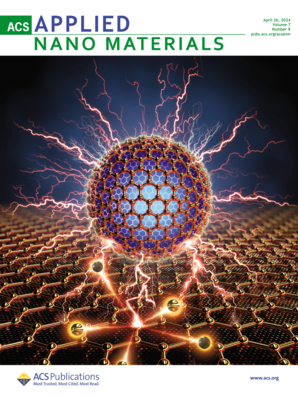
ACS Applied Nano Materials is an interdisciplinary journal publishing original research covering all aspects of engineering, chemistry, physics and biology relevant to applications of nanomaterials. The journal is devoted to reports of new and original experimental and theoretical research of an applied nature that integrate knowledge in the areas of materials, engineering, physics, bioscience, and chemistry into important applications of nanomaterials.



 京公网安备 11010802042870号
京ICP备2023020795号-1
京公网安备 11010802042870号
京ICP备2023020795号-1

 分享
分享
 求助内容:
求助内容: 应助结果提醒方式:
 扫码关注我们
