Safety and clinical effectiveness of peginterferon beta-1a for relapsing multiple sclerosis in a real-world setting: Final results from the Plegridy Observational Program.
Marco Salvetti, Sibyl Wray, Gereon Nelles, Nicholas Belviso, Achint Kumar, Thijs Koster, Wanda Castro-Borrero, Megan Vignos
{"title":"Safety and clinical effectiveness of peginterferon beta-1a for relapsing multiple sclerosis in a real-world setting: Final results from the Plegridy Observational Program.","authors":"Marco Salvetti, Sibyl Wray, Gereon Nelles, Nicholas Belviso, Achint Kumar, Thijs Koster, Wanda Castro-Borrero, Megan Vignos","doi":"10.1177/20552173241238632","DOIUrl":null,"url":null,"abstract":"<p><strong>Background: </strong>Interferon beta-1a remains an important treatment option for multiple sclerosis, particularly when safety or tolerability concerns may outweigh the benefits of higher-efficacy disease-modifying therapies. The five-year phase 4 Plegridy Observational Program (POP) study (NCT02230969) collected data on real-world safety and effectiveness of Plegridy® (peginterferon beta-1a) treatment in patients with relapsing multiple sclerosis.</p><p><strong>Objective: </strong>To explore the real-world safety and effectiveness of peginterferon beta-1a in patients with relapsing multiple sclerosis, including factors influencing treatment discontinuation.</p><p><strong>Methods: </strong>Data were collected prospectively from patients ≥ 18 years old with relapsing multiple sclerosis for overall population analysis and for subpopulations including newly/previously diagnosed patients, age, and experience with peginterferon beta-1a. Outcome measures included annualized relapse rates, adverse events, and predictors of time to treatment discontinuation.</p><p><strong>Results: </strong>Mean (SD) treatment duration in the overall population (<i>N</i> = 1172) was 896.0 (733.15) days. Incidence of adverse events was higher in new than experienced users (79.4% vs. 57.0%). New users were more likely than experienced users to discontinue (hazard ratio = 1.60; <i>P </i>< 0.0001). The adjusted annualized relapse rate was 0.09, and at the end of 5 years, 77.1% of patients were relapse-free.</p><p><strong>Conclusions: </strong>Peginterferon beta-1a is an effective therapy for managing relapsing multiple sclerosis. The identification of predictors of discontinuation can help inform strategies to enhance treatment persistence.</p>","PeriodicalId":18961,"journal":{"name":"Multiple Sclerosis Journal - Experimental, Translational and Clinical","volume":"10 2","pages":"20552173241238632"},"PeriodicalIF":2.3000,"publicationDate":"2024-05-23","publicationTypes":"Journal Article","fieldsOfStudy":null,"isOpenAccess":false,"openAccessPdf":"https://www.ncbi.nlm.nih.gov/pmc/articles/PMC11113050/pdf/","citationCount":"0","resultStr":null,"platform":"Semanticscholar","paperid":null,"PeriodicalName":"Multiple Sclerosis Journal - Experimental, Translational and Clinical","FirstCategoryId":"1085","ListUrlMain":"https://doi.org/10.1177/20552173241238632","RegionNum":0,"RegionCategory":null,"ArticlePicture":[],"TitleCN":null,"AbstractTextCN":null,"PMCID":null,"EPubDate":"2024/4/1 0:00:00","PubModel":"eCollection","JCR":"Q2","JCRName":"CLINICAL NEUROLOGY","Score":null,"Total":0}
引用次数: 0
Abstract
Background: Interferon beta-1a remains an important treatment option for multiple sclerosis, particularly when safety or tolerability concerns may outweigh the benefits of higher-efficacy disease-modifying therapies. The five-year phase 4 Plegridy Observational Program (POP) study (NCT02230969) collected data on real-world safety and effectiveness of Plegridy® (peginterferon beta-1a) treatment in patients with relapsing multiple sclerosis.
Objective: To explore the real-world safety and effectiveness of peginterferon beta-1a in patients with relapsing multiple sclerosis, including factors influencing treatment discontinuation.
Methods: Data were collected prospectively from patients ≥ 18 years old with relapsing multiple sclerosis for overall population analysis and for subpopulations including newly/previously diagnosed patients, age, and experience with peginterferon beta-1a. Outcome measures included annualized relapse rates, adverse events, and predictors of time to treatment discontinuation.
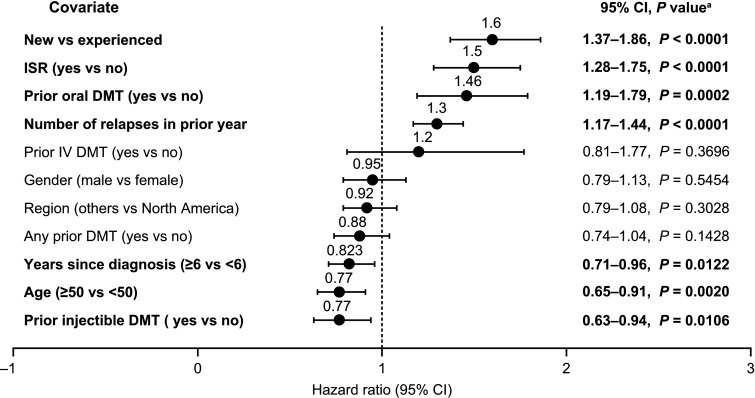
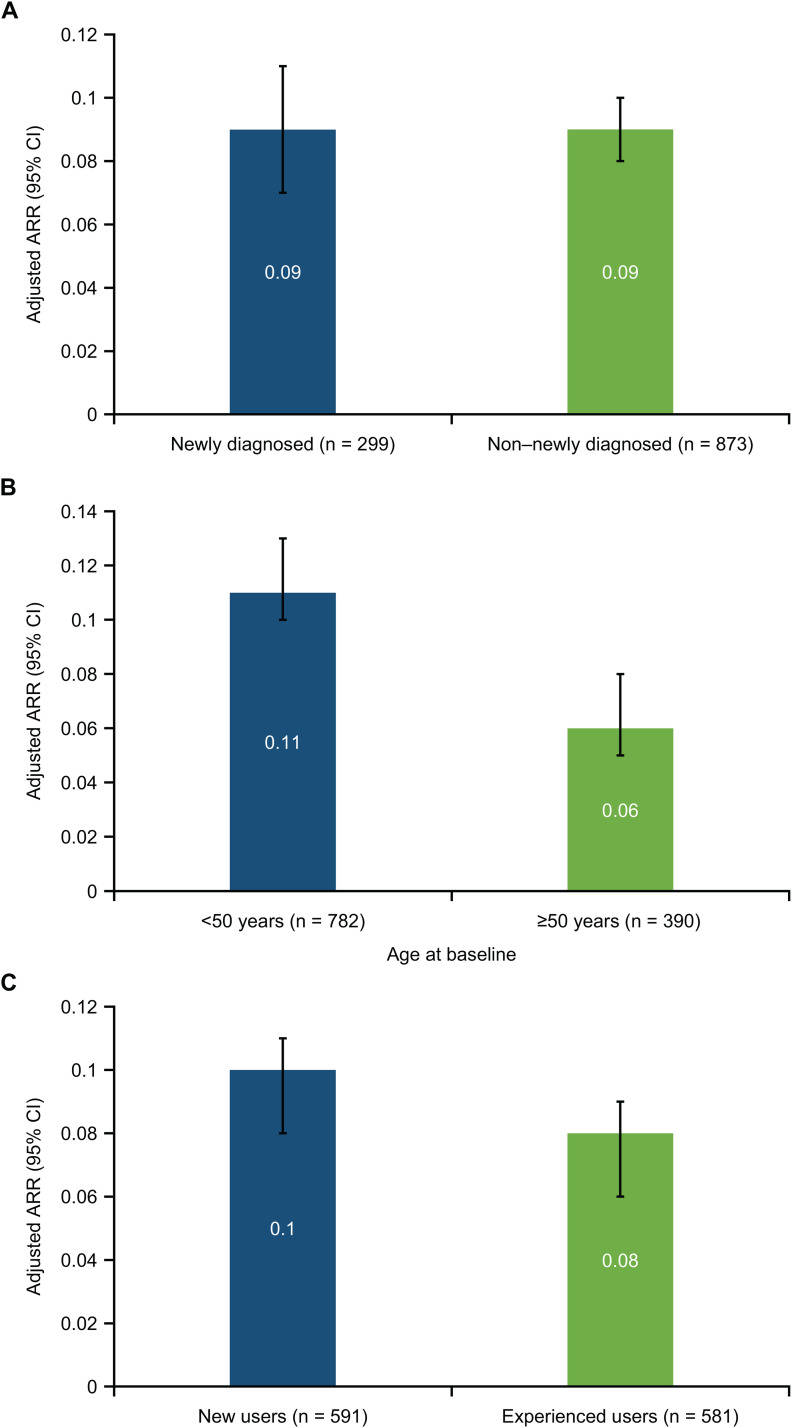
Results: Mean (SD) treatment duration in the overall population (N = 1172) was 896.0 (733.15) days. Incidence of adverse events was higher in new than experienced users (79.4% vs. 57.0%). New users were more likely than experienced users to discontinue (hazard ratio = 1.60; P < 0.0001). The adjusted annualized relapse rate was 0.09, and at the end of 5 years, 77.1% of patients were relapse-free.
Conclusions: Peginterferon beta-1a is an effective therapy for managing relapsing multiple sclerosis. The identification of predictors of discontinuation can help inform strategies to enhance treatment persistence.




 京公网安备 11010802042870号
京ICP备2023020795号-1
京公网安备 11010802042870号
京ICP备2023020795号-1

 分享
分享
 求助内容:
求助内容: 应助结果提醒方式:
 扫码关注我们
