{"title":"Carbon Nanotube–Polymer Composite Coating on the Anode Surface for Enhancing the Performance of Zn-Ion Batteries","authors":"Hyeonjun Lee, Sung-Oong Kang, Geon-Hyoung An","doi":"10.1007/s11814-024-00190-6","DOIUrl":null,"url":null,"abstract":"<div><p>Despite their outstanding safety, longevity, environmental friendliness, and high energy storage capabilities, the deterioration and damage of the Zn anode of Zn-ion batteries (ZIBs), their inadequate wettability, and a lack of sufficient nucleation points for Zn plating have hindered the further development of ZIBs. Thus, research efforts are focused on improving safety by coating Zn anodes with protective materials, such as carbon, ceramics, or polymers. This study coated the surface of Zn anode with a protective composite consisting of poly(vinylidene fluoride) (PVDF) and carbon nanotubes (CNTs) to protect it and improve its electrochemical performance. The PVDF coating functioned as an effective barrier against Zn dissolution and corrosion, while the CNTs enriched the anode with abundant sites for Zn deposition and significantly diminished the surface resistance of the electrode. The ZIB fabricated using the coated Zn anode exhibited an enhanced specific capacity of 253 mA h g<sup>–1</sup> at 0.3 A g<sup>–1</sup>, maintaining a specific capacity of 91 mA h g<sup>–1</sup> over 500 cycles at 0.5 A g<sup>–1</sup>. The results suggest that employing a composite protective layer made of PVDF and CNT is a promising method for enhancing the energy storage potential of ZIBs.</p></div>","PeriodicalId":684,"journal":{"name":"Korean Journal of Chemical Engineering","volume":"42 7","pages":"1517 - 1527"},"PeriodicalIF":3.2000,"publicationDate":"2024-05-24","publicationTypes":"Journal Article","fieldsOfStudy":null,"isOpenAccess":false,"openAccessPdf":"","citationCount":"0","resultStr":null,"platform":"Semanticscholar","paperid":null,"PeriodicalName":"Korean Journal of Chemical Engineering","FirstCategoryId":"5","ListUrlMain":"https://link.springer.com/article/10.1007/s11814-024-00190-6","RegionNum":4,"RegionCategory":"工程技术","ArticlePicture":[],"TitleCN":null,"AbstractTextCN":null,"PMCID":null,"EPubDate":"","PubModel":"","JCR":"Q2","JCRName":"CHEMISTRY, MULTIDISCIPLINARY","Score":null,"Total":0}
引用次数: 0
Abstract
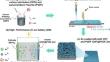
Despite their outstanding safety, longevity, environmental friendliness, and high energy storage capabilities, the deterioration and damage of the Zn anode of Zn-ion batteries (ZIBs), their inadequate wettability, and a lack of sufficient nucleation points for Zn plating have hindered the further development of ZIBs. Thus, research efforts are focused on improving safety by coating Zn anodes with protective materials, such as carbon, ceramics, or polymers. This study coated the surface of Zn anode with a protective composite consisting of poly(vinylidene fluoride) (PVDF) and carbon nanotubes (CNTs) to protect it and improve its electrochemical performance. The PVDF coating functioned as an effective barrier against Zn dissolution and corrosion, while the CNTs enriched the anode with abundant sites for Zn deposition and significantly diminished the surface resistance of the electrode. The ZIB fabricated using the coated Zn anode exhibited an enhanced specific capacity of 253 mA h g–1 at 0.3 A g–1, maintaining a specific capacity of 91 mA h g–1 over 500 cycles at 0.5 A g–1. The results suggest that employing a composite protective layer made of PVDF and CNT is a promising method for enhancing the energy storage potential of ZIBs.
尽管锌离子电池具有优异的安全性、寿命、环保性和高能量存储能力,但锌阳极的劣化和损伤、润湿性不足以及缺乏足够的镀锌成核点等问题阻碍了锌离子电池的进一步发展。因此,研究工作的重点是通过在锌阳极上涂上保护材料(如碳、陶瓷或聚合物)来提高安全性。本研究在锌阳极表面涂覆由聚偏氟乙烯(PVDF)和碳纳米管(CNTs)组成的保护复合材料,以保护锌阳极并提高其电化学性能。PVDF涂层可以有效地防止Zn的溶解和腐蚀,而CNTs可以使阳极具有丰富的Zn沉积位点,并显著降低电极的表面电阻。在0.3 A g-1下,镀锌阳极制备的ZIB的比容量增加了253 mA h g-1,在0.5 A g-1下,500次循环的比容量保持在91 mA h g-1。结果表明,采用PVDF和碳纳米管制成的复合保护层是提高ZIBs储能潜力的一种有前途的方法。
期刊介绍:
The Korean Journal of Chemical Engineering provides a global forum for the dissemination of research in chemical engineering. The Journal publishes significant research results obtained in the Asia-Pacific region, and simultaneously introduces recent technical progress made in other areas of the world to this region. Submitted research papers must be of potential industrial significance and specifically concerned with chemical engineering. The editors will give preference to papers having a clearly stated practical scope and applicability in the areas of chemical engineering, and to those where new theoretical concepts are supported by new experimental details. The Journal also regularly publishes featured reviews on emerging and industrially important subjects of chemical engineering as well as selected papers presented at international conferences on the subjects.




 京公网安备 11010802042870号
京ICP备2023020795号-1
京公网安备 11010802042870号
京ICP备2023020795号-1

 分享
分享
 求助内容:
求助内容: 应助结果提醒方式:
 扫码关注我们
