{"title":"Deep symbolic regression for numerical formulation of fundamental period in concentrically steel-braced RC frames","authors":"Taimur Rahman, Shamima Sultana, Tanjir Ahmed, Md. Farhad Momin, Afra Anam Provasha","doi":"10.1007/s42107-024-01076-y","DOIUrl":null,"url":null,"abstract":"<div><p>This research explores the use of Deep Symbolic Regression (DSR) to develop a sophisticated predictive model for the fundamental period of vibration in concentrically steel-braced reinforced concrete (RC) frames. Traditional empirical models often overlook complex interactions within structural dynamics during seismic events, a gap this study addresses by deriving tailored equations for various bracing configurations such as Cross bracing, Diagonal bracing, and Chevron bracing. The model development incorporates an iterative refinement process utilizing DSR techniques to enhance accuracy and applicability in predicting seismic responses. Further refinement and optimization are achieved using the L-BFGS-B algorithm, ensuring robustness and adherence to safety standards. Validation against actual structural data reveals that our proposed equations achieve high predictive accuracy, with R-squared values up to 0.8247 and RMSE values as low as 0.2119, consistently presenting lower error metrics across various configurations compared to those found in established seismic design standards, such as ASCE, Eurocode, and Japan’s Building Standards. Comparative analyses and Bland–Altman plots confirm that the models not only match but often surpass the accuracy of traditional formulas, validating their potential as reliable tools in structural engineering for earthquake resilience planning. The findings demonstrate DSR’s potential to revolutionize traditional practices in formulating empirical equations, offering a scientifically rigorous, data-driven methodology for more accurately predicting the dynamic responses of structures under seismic loads.</p></div>","PeriodicalId":8513,"journal":{"name":"Asian Journal of Civil Engineering","volume":"25 6","pages":"4725 - 4744"},"PeriodicalIF":0.0000,"publicationDate":"2024-05-23","publicationTypes":"Journal Article","fieldsOfStudy":null,"isOpenAccess":false,"openAccessPdf":"","citationCount":"0","resultStr":null,"platform":"Semanticscholar","paperid":null,"PeriodicalName":"Asian Journal of Civil Engineering","FirstCategoryId":"1085","ListUrlMain":"https://link.springer.com/article/10.1007/s42107-024-01076-y","RegionNum":0,"RegionCategory":null,"ArticlePicture":[],"TitleCN":null,"AbstractTextCN":null,"PMCID":null,"EPubDate":"","PubModel":"","JCR":"Q2","JCRName":"Engineering","Score":null,"Total":0}
引用次数: 0
Abstract
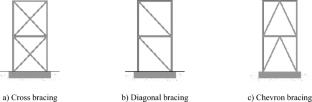
This research explores the use of Deep Symbolic Regression (DSR) to develop a sophisticated predictive model for the fundamental period of vibration in concentrically steel-braced reinforced concrete (RC) frames. Traditional empirical models often overlook complex interactions within structural dynamics during seismic events, a gap this study addresses by deriving tailored equations for various bracing configurations such as Cross bracing, Diagonal bracing, and Chevron bracing. The model development incorporates an iterative refinement process utilizing DSR techniques to enhance accuracy and applicability in predicting seismic responses. Further refinement and optimization are achieved using the L-BFGS-B algorithm, ensuring robustness and adherence to safety standards. Validation against actual structural data reveals that our proposed equations achieve high predictive accuracy, with R-squared values up to 0.8247 and RMSE values as low as 0.2119, consistently presenting lower error metrics across various configurations compared to those found in established seismic design standards, such as ASCE, Eurocode, and Japan’s Building Standards. Comparative analyses and Bland–Altman plots confirm that the models not only match but often surpass the accuracy of traditional formulas, validating their potential as reliable tools in structural engineering for earthquake resilience planning. The findings demonstrate DSR’s potential to revolutionize traditional practices in formulating empirical equations, offering a scientifically rigorous, data-driven methodology for more accurately predicting the dynamic responses of structures under seismic loads.
期刊介绍:
The Asian Journal of Civil Engineering (Building and Housing) welcomes articles and research contributions on topics such as:- Structural analysis and design - Earthquake and structural engineering - New building materials and concrete technology - Sustainable building and energy conservation - Housing and planning - Construction management - Optimal design of structuresPlease note that the journal will not accept papers in the area of hydraulic or geotechnical engineering, traffic/transportation or road making engineering, and on materials relevant to non-structural buildings, e.g. materials for road making and asphalt. Although the journal will publish authoritative papers on theoretical and experimental research works and advanced applications, it may also feature, when appropriate: a) tutorial survey type papers reviewing some fields of civil engineering; b) short communications and research notes; c) book reviews and conference announcements.



 京公网安备 11010802042870号
京ICP备2023020795号-1
京公网安备 11010802042870号
京ICP备2023020795号-1

 分享
分享
 求助内容:
求助内容: 应助结果提醒方式:
 扫码关注我们
