Bhishma Karki, Partha Sarkar, K. H. Mahmoud, A. SA. Alsubaie, Manoj Sharma
{"title":"Detection of Organic Material Using Tungsten Ditelluride Based Surface Plasmon Resonance Sensor","authors":"Bhishma Karki, Partha Sarkar, K. H. Mahmoud, A. SA. Alsubaie, Manoj Sharma","doi":"10.1007/s11468-024-02356-8","DOIUrl":null,"url":null,"abstract":"<div><p>To detect organic materials such as pentane, n-hexane, n-heptane, and n-octane by the proposed sensor. Even with this development, real-time analysis and high performance remain challenges for the sensor. To solve the problems, the current work suggests a numerical investigation for developing a surface plasmon resonance (SPR) sensor. This comprehensive study’s targeted sensitivity was attained by applying tungsten ditelluride (WTe<sub>2</sub>) onto a metal layer. Theoretically, organic materials are detected with a high sensitivity of 185.58 deg. RIU<sup>−1</sup>, 202.42 deg. RIU<sup>−1</sup>, 208 deg. RIU<sup>−1</sup>, and 213.75 deg. RIU<sup>−1</sup>. The Ag metal layer is the most suitable for the Kretschmann configuration based on the achieved sensitivity. Due to its potential for physical realization, the Kretschmann configuration is employed in this study. The MATLAB simulations were used to optimize the layers’ thicknesses to achieve high sensitivity. The proposed sensor is found to be most suitable for the stated application after its performance is also evaluated against that of previous research.</p></div>","PeriodicalId":736,"journal":{"name":"Plasmonics","volume":"20 3","pages":"1157 - 1167"},"PeriodicalIF":4.3000,"publicationDate":"2024-05-22","publicationTypes":"Journal Article","fieldsOfStudy":null,"isOpenAccess":false,"openAccessPdf":"","citationCount":"0","resultStr":null,"platform":"Semanticscholar","paperid":null,"PeriodicalName":"Plasmonics","FirstCategoryId":"101","ListUrlMain":"https://link.springer.com/article/10.1007/s11468-024-02356-8","RegionNum":4,"RegionCategory":"物理与天体物理","ArticlePicture":[],"TitleCN":null,"AbstractTextCN":null,"PMCID":null,"EPubDate":"","PubModel":"","JCR":"Q2","JCRName":"CHEMISTRY, PHYSICAL","Score":null,"Total":0}
引用次数: 0
Abstract
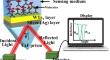
To detect organic materials such as pentane, n-hexane, n-heptane, and n-octane by the proposed sensor. Even with this development, real-time analysis and high performance remain challenges for the sensor. To solve the problems, the current work suggests a numerical investigation for developing a surface plasmon resonance (SPR) sensor. This comprehensive study’s targeted sensitivity was attained by applying tungsten ditelluride (WTe2) onto a metal layer. Theoretically, organic materials are detected with a high sensitivity of 185.58 deg. RIU−1, 202.42 deg. RIU−1, 208 deg. RIU−1, and 213.75 deg. RIU−1. The Ag metal layer is the most suitable for the Kretschmann configuration based on the achieved sensitivity. Due to its potential for physical realization, the Kretschmann configuration is employed in this study. The MATLAB simulations were used to optimize the layers’ thicknesses to achieve high sensitivity. The proposed sensor is found to be most suitable for the stated application after its performance is also evaluated against that of previous research.
期刊介绍:
Plasmonics is an international forum for the publication of peer-reviewed leading-edge original articles that both advance and report our knowledge base and practice of the interactions of free-metal electrons, Plasmons.
Topics covered include notable advances in the theory, Physics, and applications of surface plasmons in metals, to the rapidly emerging areas of nanotechnology, biophotonics, sensing, biochemistry and medicine. Topics, including the theory, synthesis and optical properties of noble metal nanostructures, patterned surfaces or materials, continuous or grated surfaces, devices, or wires for their multifarious applications are particularly welcome. Typical applications might include but are not limited to, surface enhanced spectroscopic properties, such as Raman scattering or fluorescence, as well developments in techniques such as surface plasmon resonance and near-field scanning optical microscopy.



 京公网安备 11010802042870号
京ICP备2023020795号-1
京公网安备 11010802042870号
京ICP备2023020795号-1

 分享
分享
 求助内容:
求助内容: 应助结果提醒方式:
 扫码关注我们
