{"title":"Efficient Unbiased Terahertz Photomixer Based on Photon Confinement in Plasmonic Nano-resonators","authors":"Mohammad Javad Mohammad-Zamani, Alireza Azimi","doi":"10.1007/s11468-024-02351-z","DOIUrl":null,"url":null,"abstract":"<div><p>The development of bias-free terahertz (THz) photoconductive antenna (PCA) emitters is crucial for various telecommunication and biomedical uses. However, these emitters face a primary challenge in their limited terahertz emission power, resulting in lower efficiency compared to biased THz PCAs. This paper introduces a novel design for an antenna-coupled unbiased continuous-wave (CW) THz photomixer emitter array that operates in the optical near-field range without any voltage bias. This unbiased design incorporates a plasmonic nano-resonator to enhance the conversion efficiency of input optical power into photo-generated carriers that contribute to THz photocurrent. The nano-resonator consists of plasmonic nano-electrodes and a distributed Bragg reflector structure strategically positioned above and below the photoconductive material in the active region of the emitter. In the optimally designed PCA, the first plasmonic mode in the nano-gap cavity between nano-electrodes efficiently channels maximal optical power into the photoconductive material. A well-designed DBR beneath this material reflects the optical beam into the GaAs layer, ensuring maximum absorption near the nano-electrodes, where the high built-in electric field accelerates the photocarriers to generate a THz photocurrent. The simulation results for this plasmonic nano-resonator-based emitter predicts a peak THz power of 838 µW with a remarkable conversion efficiency of 2% at a 0.5-THz frequency, setting a new benchmark that surpasses previous bias-free emitters in terms of THz power output and conversion efficiency. The enhanced capabilities of the proposed photomixer show great promise for various biomedical applications, including bioimaging, with the potential to improve patient safety by eliminating risky external biasing circuits.</p></div>","PeriodicalId":736,"journal":{"name":"Plasmonics","volume":"20 3","pages":"1143 - 1155"},"PeriodicalIF":4.3000,"publicationDate":"2024-05-22","publicationTypes":"Journal Article","fieldsOfStudy":null,"isOpenAccess":false,"openAccessPdf":"","citationCount":"0","resultStr":null,"platform":"Semanticscholar","paperid":null,"PeriodicalName":"Plasmonics","FirstCategoryId":"101","ListUrlMain":"https://link.springer.com/article/10.1007/s11468-024-02351-z","RegionNum":4,"RegionCategory":"物理与天体物理","ArticlePicture":[],"TitleCN":null,"AbstractTextCN":null,"PMCID":null,"EPubDate":"","PubModel":"","JCR":"Q2","JCRName":"CHEMISTRY, PHYSICAL","Score":null,"Total":0}
引用次数: 0
Abstract
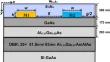
The development of bias-free terahertz (THz) photoconductive antenna (PCA) emitters is crucial for various telecommunication and biomedical uses. However, these emitters face a primary challenge in their limited terahertz emission power, resulting in lower efficiency compared to biased THz PCAs. This paper introduces a novel design for an antenna-coupled unbiased continuous-wave (CW) THz photomixer emitter array that operates in the optical near-field range without any voltage bias. This unbiased design incorporates a plasmonic nano-resonator to enhance the conversion efficiency of input optical power into photo-generated carriers that contribute to THz photocurrent. The nano-resonator consists of plasmonic nano-electrodes and a distributed Bragg reflector structure strategically positioned above and below the photoconductive material in the active region of the emitter. In the optimally designed PCA, the first plasmonic mode in the nano-gap cavity between nano-electrodes efficiently channels maximal optical power into the photoconductive material. A well-designed DBR beneath this material reflects the optical beam into the GaAs layer, ensuring maximum absorption near the nano-electrodes, where the high built-in electric field accelerates the photocarriers to generate a THz photocurrent. The simulation results for this plasmonic nano-resonator-based emitter predicts a peak THz power of 838 µW with a remarkable conversion efficiency of 2% at a 0.5-THz frequency, setting a new benchmark that surpasses previous bias-free emitters in terms of THz power output and conversion efficiency. The enhanced capabilities of the proposed photomixer show great promise for various biomedical applications, including bioimaging, with the potential to improve patient safety by eliminating risky external biasing circuits.
期刊介绍:
Plasmonics is an international forum for the publication of peer-reviewed leading-edge original articles that both advance and report our knowledge base and practice of the interactions of free-metal electrons, Plasmons.
Topics covered include notable advances in the theory, Physics, and applications of surface plasmons in metals, to the rapidly emerging areas of nanotechnology, biophotonics, sensing, biochemistry and medicine. Topics, including the theory, synthesis and optical properties of noble metal nanostructures, patterned surfaces or materials, continuous or grated surfaces, devices, or wires for their multifarious applications are particularly welcome. Typical applications might include but are not limited to, surface enhanced spectroscopic properties, such as Raman scattering or fluorescence, as well developments in techniques such as surface plasmon resonance and near-field scanning optical microscopy.



 京公网安备 11010802042870号
京ICP备2023020795号-1
京公网安备 11010802042870号
京ICP备2023020795号-1

 分享
分享
 求助内容:
求助内容: 应助结果提醒方式:
 扫码关注我们
