Assunta Di Vaio, Giuseppe Dell’Amura, Meghna Chhabra, Antonio Garofalo
{"title":"Circular economy and waste production models for sustainable development goals 12 and 14: Evidence from cruise sustainability reporting","authors":"Assunta Di Vaio, Giuseppe Dell’Amura, Meghna Chhabra, Antonio Garofalo","doi":"10.1002/sd.3051","DOIUrl":null,"url":null,"abstract":"The relationship between the practices and initiatives governing “waste production models” (sustainable development goal [SDG]12) and marine biodiversity goals (SDG14) is relatively unexplored. Aiming to bridge this gap by drawing on stakeholder and legitimacy theories, this study examines onboard cruise ships' circular economy (CE)‐based waste management practices and initiatives, correlating SGDs 12 and 14. Consequently, Carnival Corporation Plc's 2020–2022 sustainability reports are analyzed using content analysis by both Leximancer software (ver. 5.0) and manual methods. The results highlight the corporation's increasing commitment to green technologies for “waste production models” to achieve SDG14. However, its sustainability reports provide unclear evidence of the impact on marine biodiversity. Findings implies that practitioners should partner and invest in green technologies for “waste production models” to achieve SDG14. Besides being the first to explore the link between the two SDGs within the CE framework, this study advances insights into waste management within “waste production models,” enhancing the understanding of sustainable practices.","PeriodicalId":9,"journal":{"name":"ACS Catalysis ","volume":"33 1","pages":""},"PeriodicalIF":13.1000,"publicationDate":"2024-05-22","publicationTypes":"Journal Article","fieldsOfStudy":null,"isOpenAccess":false,"openAccessPdf":"","citationCount":"0","resultStr":null,"platform":"Semanticscholar","paperid":null,"PeriodicalName":"ACS Catalysis ","FirstCategoryId":"93","ListUrlMain":"https://doi.org/10.1002/sd.3051","RegionNum":1,"RegionCategory":"化学","ArticlePicture":[],"TitleCN":null,"AbstractTextCN":null,"PMCID":null,"EPubDate":"","PubModel":"","JCR":"Q1","JCRName":"CHEMISTRY, PHYSICAL","Score":null,"Total":0}
引用次数: 0
Abstract
The relationship between the practices and initiatives governing “waste production models” (sustainable development goal [SDG]12) and marine biodiversity goals (SDG14) is relatively unexplored. Aiming to bridge this gap by drawing on stakeholder and legitimacy theories, this study examines onboard cruise ships' circular economy (CE)‐based waste management practices and initiatives, correlating SGDs 12 and 14. Consequently, Carnival Corporation Plc's 2020–2022 sustainability reports are analyzed using content analysis by both Leximancer software (ver. 5.0) and manual methods. The results highlight the corporation's increasing commitment to green technologies for “waste production models” to achieve SDG14. However, its sustainability reports provide unclear evidence of the impact on marine biodiversity. Findings implies that practitioners should partner and invest in green technologies for “waste production models” to achieve SDG14. Besides being the first to explore the link between the two SDGs within the CE framework, this study advances insights into waste management within “waste production models,” enhancing the understanding of sustainable practices.
期刊介绍:
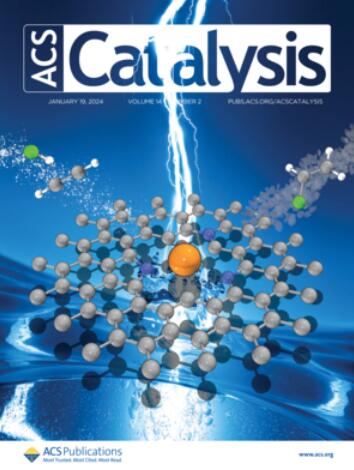
ACS Catalysis is an esteemed journal that publishes original research in the fields of heterogeneous catalysis, molecular catalysis, and biocatalysis. It offers broad coverage across diverse areas such as life sciences, organometallics and synthesis, photochemistry and electrochemistry, drug discovery and synthesis, materials science, environmental protection, polymer discovery and synthesis, and energy and fuels.
The scope of the journal is to showcase innovative work in various aspects of catalysis. This includes new reactions and novel synthetic approaches utilizing known catalysts, the discovery or modification of new catalysts, elucidation of catalytic mechanisms through cutting-edge investigations, practical enhancements of existing processes, as well as conceptual advances in the field. Contributions to ACS Catalysis can encompass both experimental and theoretical research focused on catalytic molecules, macromolecules, and materials that exhibit catalytic turnover.



 京公网安备 11010802042870号
京ICP备2023020795号-1
京公网安备 11010802042870号
京ICP备2023020795号-1

 分享
分享
 求助内容:
求助内容: 应助结果提醒方式:
 扫码关注我们
