{"title":"Ecosystem services from agroforestry parklands in the rural area of the Sahelo-Sudanian zone in Niger","authors":"Abdel Nassirou Yahaya Seydou, Moussa Soulé","doi":"10.1007/s10457-024-00981-0","DOIUrl":null,"url":null,"abstract":"<div><p>Several studies have been carried out in the West Africa Sahel; however, there is limited data on agroforestry studies in two distinct ecosystems. Moreover, livelihoods are facing growing uncertainties due to climate change and extensive anthropogenic activities. The majority of the population relies heavily on ecosystem services. The aim of this study was to determine the services provided by agroforestry parklands in two distinct villages. Initially, a survey involved 131 individual farmers (68 in Dan Saga and 63 in Sekoukou village) to highlight the benefits derived from agroforestry parklands for rural communities. Subsequently, a forest inventory employed a systematic random sampling approach along transects, including 40 plots in Dan Saga and 32 plots in Sekoukou (each. Finally, the study utilized the Normalized Difference Vegetation Index (NDVI). The study documented 25 different woody species in Dan Saga and 24 in Sekoukou village. There was a greater prevalence of species from the Fabaceae and Balanitaceae family, followed by Anacardiaceae and Combretaceae. Dendrometric surveys revealed a relatively low tree density (23 stems/ha in Dan Saga and 14 stems/ha in Sekoukou), a bell-shaped diameter distribution indicating a significant dominance of intermediate diameter trees ([20 cm; 30 cm[), and a limited representation of trees with extreme diameters ([0; 10 cm[ and [70 cm; → [). The analysis of variances revealed a significant distinction (P-value < 0.05) in all dendrometric parameters and carbon content, excluding tree density and diameter. The Shannon–Wiener index (reflecting intra-ecosystem diversity) and the Pielou equitability index were relatively low but comparable to the mean Sørensen index. The NDVI of both areas fluctuated between 0 and 1 from 2001 to 2013, illustrating evolving vegetation (biomass) dynamics. This evolution was characterized by minimal vegetation cover in 2001, which subsequently increased by 2013 in both villages. The importance of land restoration in Niger has become a crucial and beneficial activity for the population in recent years.</p></div>","PeriodicalId":7610,"journal":{"name":"Agroforestry Systems","volume":"98 6","pages":"1721 - 1730"},"PeriodicalIF":2.2000,"publicationDate":"2024-05-20","publicationTypes":"Journal Article","fieldsOfStudy":null,"isOpenAccess":false,"openAccessPdf":"","citationCount":"0","resultStr":null,"platform":"Semanticscholar","paperid":null,"PeriodicalName":"Agroforestry Systems","FirstCategoryId":"97","ListUrlMain":"https://link.springer.com/article/10.1007/s10457-024-00981-0","RegionNum":3,"RegionCategory":"农林科学","ArticlePicture":[],"TitleCN":null,"AbstractTextCN":null,"PMCID":null,"EPubDate":"","PubModel":"","JCR":"Q2","JCRName":"AGRONOMY","Score":null,"Total":0}
引用次数: 0
Abstract
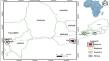
Several studies have been carried out in the West Africa Sahel; however, there is limited data on agroforestry studies in two distinct ecosystems. Moreover, livelihoods are facing growing uncertainties due to climate change and extensive anthropogenic activities. The majority of the population relies heavily on ecosystem services. The aim of this study was to determine the services provided by agroforestry parklands in two distinct villages. Initially, a survey involved 131 individual farmers (68 in Dan Saga and 63 in Sekoukou village) to highlight the benefits derived from agroforestry parklands for rural communities. Subsequently, a forest inventory employed a systematic random sampling approach along transects, including 40 plots in Dan Saga and 32 plots in Sekoukou (each. Finally, the study utilized the Normalized Difference Vegetation Index (NDVI). The study documented 25 different woody species in Dan Saga and 24 in Sekoukou village. There was a greater prevalence of species from the Fabaceae and Balanitaceae family, followed by Anacardiaceae and Combretaceae. Dendrometric surveys revealed a relatively low tree density (23 stems/ha in Dan Saga and 14 stems/ha in Sekoukou), a bell-shaped diameter distribution indicating a significant dominance of intermediate diameter trees ([20 cm; 30 cm[), and a limited representation of trees with extreme diameters ([0; 10 cm[ and [70 cm; → [). The analysis of variances revealed a significant distinction (P-value < 0.05) in all dendrometric parameters and carbon content, excluding tree density and diameter. The Shannon–Wiener index (reflecting intra-ecosystem diversity) and the Pielou equitability index were relatively low but comparable to the mean Sørensen index. The NDVI of both areas fluctuated between 0 and 1 from 2001 to 2013, illustrating evolving vegetation (biomass) dynamics. This evolution was characterized by minimal vegetation cover in 2001, which subsequently increased by 2013 in both villages. The importance of land restoration in Niger has become a crucial and beneficial activity for the population in recent years.
期刊介绍:
Agroforestry Systems is an international scientific journal that publishes results of novel, high impact original research, critical reviews and short communications on any aspect of agroforestry. The journal particularly encourages contributions that demonstrate the role of agroforestry in providing commodity as well non-commodity benefits such as ecosystem services. Papers dealing with both biophysical and socioeconomic aspects are welcome. These include results of investigations of a fundamental or applied nature dealing with integrated systems involving trees and crops and/or livestock. Manuscripts that are purely descriptive in nature or confirmatory in nature of well-established findings, and with limited international scope are discouraged. To be acceptable for publication, the information presented must be relevant to a context wider than the specific location where the study was undertaken, and provide new insight or make a significant contribution to the agroforestry knowledge base



 京公网安备 11010802042870号
京ICP备2023020795号-1
京公网安备 11010802042870号
京ICP备2023020795号-1

 分享
分享
 求助内容:
求助内容: 应助结果提醒方式:
 扫码关注我们
