W. M. L. Finlay, J. Cattier, K. Donois, L. Goodings, E. Kaminskiy, C. Owen, L. Storey, V. Swami
{"title":"Norms concerning the recognition of victimhood in postconflict societies: An analysis of “whatabouteries” in online sectarian arguments","authors":"W. M. L. Finlay, J. Cattier, K. Donois, L. Goodings, E. Kaminskiy, C. Owen, L. Storey, V. Swami","doi":"10.1111/pops.12988","DOIUrl":null,"url":null,"abstract":"Acknowledging the victims on both sides of a conflict is crucial to peacebuilding and reconciliation. However, recognizing the victims of one community can challenge an opposing group's conflict narrative, particularly when their own group is seen as the primary victim. Suggestions of inclusive victimhood and blame can also threaten the sense of distinctiveness of each group's experience, leading to resistance. This article examines the conflict that arose when historical victimhood was discussed in the online comments sections of U.K. newspapers in response to the 2021 Coroner's Inquest into the Ballymurphy massacre. We focus on one common turn in sectarian argument in Northern Ireland: “Whatabouteries,” and the conflict that arises when whatabouteries appear in discussions. We describe the variety of forms whatabouteries—and responses to them—can take and analyze two extended conflict sequences in which they occur. Responses to such posts often invoke an implicit norm in these discussions: That when the victims of one group are publicly recognized in truth‐finding mechanisms, raising the issue of the opposing group's victims is illegitimate and can be treated as an act of provocation. This illustrates the need for sensitivity and an understanding of local, context‐specific norms when discussing victimhood and violence.","PeriodicalId":4,"journal":{"name":"ACS Applied Energy Materials","volume":" 4","pages":""},"PeriodicalIF":5.5000,"publicationDate":"2024-05-17","publicationTypes":"Journal Article","fieldsOfStudy":null,"isOpenAccess":false,"openAccessPdf":"","citationCount":"0","resultStr":null,"platform":"Semanticscholar","paperid":null,"PeriodicalName":"ACS Applied Energy Materials","FirstCategoryId":"90","ListUrlMain":"https://doi.org/10.1111/pops.12988","RegionNum":3,"RegionCategory":"材料科学","ArticlePicture":[],"TitleCN":null,"AbstractTextCN":null,"PMCID":null,"EPubDate":"","PubModel":"","JCR":"Q2","JCRName":"CHEMISTRY, PHYSICAL","Score":null,"Total":0}
引用次数: 0
Abstract
Acknowledging the victims on both sides of a conflict is crucial to peacebuilding and reconciliation. However, recognizing the victims of one community can challenge an opposing group's conflict narrative, particularly when their own group is seen as the primary victim. Suggestions of inclusive victimhood and blame can also threaten the sense of distinctiveness of each group's experience, leading to resistance. This article examines the conflict that arose when historical victimhood was discussed in the online comments sections of U.K. newspapers in response to the 2021 Coroner's Inquest into the Ballymurphy massacre. We focus on one common turn in sectarian argument in Northern Ireland: “Whatabouteries,” and the conflict that arises when whatabouteries appear in discussions. We describe the variety of forms whatabouteries—and responses to them—can take and analyze two extended conflict sequences in which they occur. Responses to such posts often invoke an implicit norm in these discussions: That when the victims of one group are publicly recognized in truth‐finding mechanisms, raising the issue of the opposing group's victims is illegitimate and can be treated as an act of provocation. This illustrates the need for sensitivity and an understanding of local, context‐specific norms when discussing victimhood and violence.
期刊介绍:
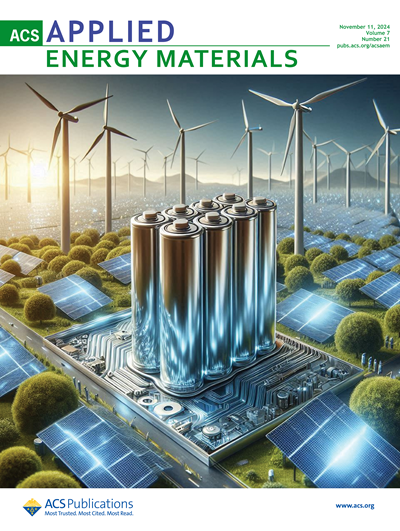
ACS Applied Energy Materials is an interdisciplinary journal publishing original research covering all aspects of materials, engineering, chemistry, physics and biology relevant to energy conversion and storage. The journal is devoted to reports of new and original experimental and theoretical research of an applied nature that integrate knowledge in the areas of materials, engineering, physics, bioscience, and chemistry into important energy applications.



 京公网安备 11010802042870号
京ICP备2023020795号-1
京公网安备 11010802042870号
京ICP备2023020795号-1

 分享
分享
 求助内容:
求助内容: 应助结果提醒方式:
 扫码关注我们
