Zhiwei Feng, Bingrui Zhou, Qizhi Shuai, Yunliang Wei, Ning Jin, Xiaoling Wang, Hong Zhao, Zhizhen Liu, Jun Xu, Jianbing Mu, Jun Xie
{"title":"Development of an alcoholic liver disease model for drug evaluation from human induced pluripotent stem cell-derived liver organoids.","authors":"Zhiwei Feng, Bingrui Zhou, Qizhi Shuai, Yunliang Wei, Ning Jin, Xiaoling Wang, Hong Zhao, Zhizhen Liu, Jun Xu, Jianbing Mu, Jun Xie","doi":"10.3724/abbs.2024074","DOIUrl":null,"url":null,"abstract":"<p><p>Alcoholic liver disease (ALD) poses a significant health challenge, so comprehensive research efforts to improve our understanding and treatment strategies are needed. However, the development of effective treatments is hindered by the limitation of existing liver disease models. Liver organoids, characterized by their cellular complexity and three-dimensional (3D) tissue structure closely resembling the human liver, hold promise as ideal models for liver disease research. In this study, we use a meticulously designed protocol involving the differentiation of human induced pluripotent stem cells (hiPSCs) into liver organoids. This process incorporates a precise combination of cytokines and small molecule compounds within a 3D culture system to guide the differentiation process. Subsequently, these differentiated liver organoids are subject to ethanol treatment to induce ALD, thus establishing a disease model. A rigorous assessment through a series of experiments reveals that this model partially recapitulates key pathological features observed in clinical ALD, including cellular mitochondrial damage, elevated cellular reactive oxygen species (ROS) levels, fatty liver, and hepatocyte necrosis. In addition, this model offers potential use in screening drugs for ALD treatment. Overall, the liver organoid model of ALD, which is derived from hiPSC differentiation, has emerged as an invaluable platform for advancing our understanding and management of ALD in clinical settings.</p>","PeriodicalId":6978,"journal":{"name":"Acta biochimica et biophysica Sinica","volume":" ","pages":"1460-1472"},"PeriodicalIF":3.4000,"publicationDate":"2024-05-30","publicationTypes":"Journal Article","fieldsOfStudy":null,"isOpenAccess":false,"openAccessPdf":"https://www.ncbi.nlm.nih.gov/pmc/articles/PMC11532202/pdf/","citationCount":"0","resultStr":null,"platform":"Semanticscholar","paperid":null,"PeriodicalName":"Acta biochimica et biophysica Sinica","FirstCategoryId":"99","ListUrlMain":"https://doi.org/10.3724/abbs.2024074","RegionNum":2,"RegionCategory":"生物学","ArticlePicture":[],"TitleCN":null,"AbstractTextCN":null,"PMCID":null,"EPubDate":"","PubModel":"","JCR":"Q2","JCRName":"BIOCHEMISTRY & MOLECULAR BIOLOGY","Score":null,"Total":0}
引用次数: 0
Abstract
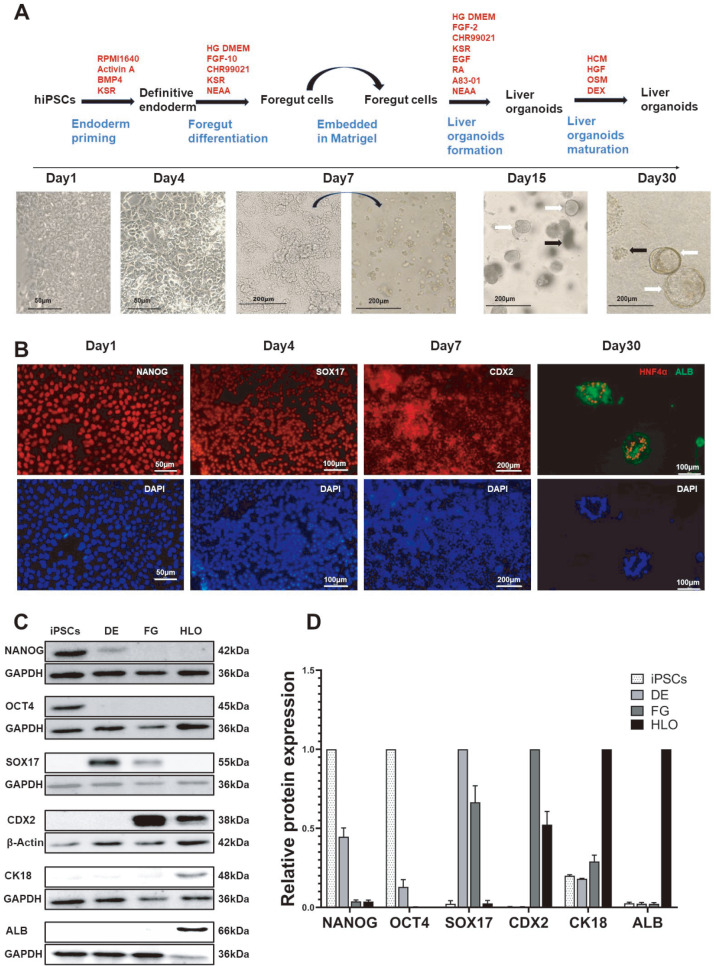
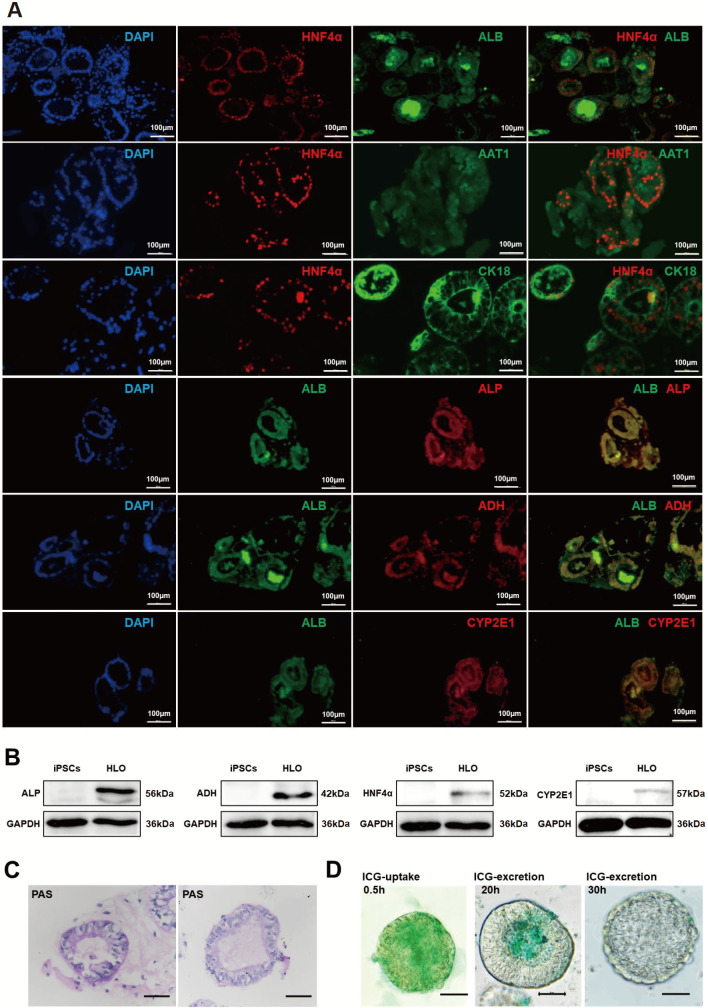
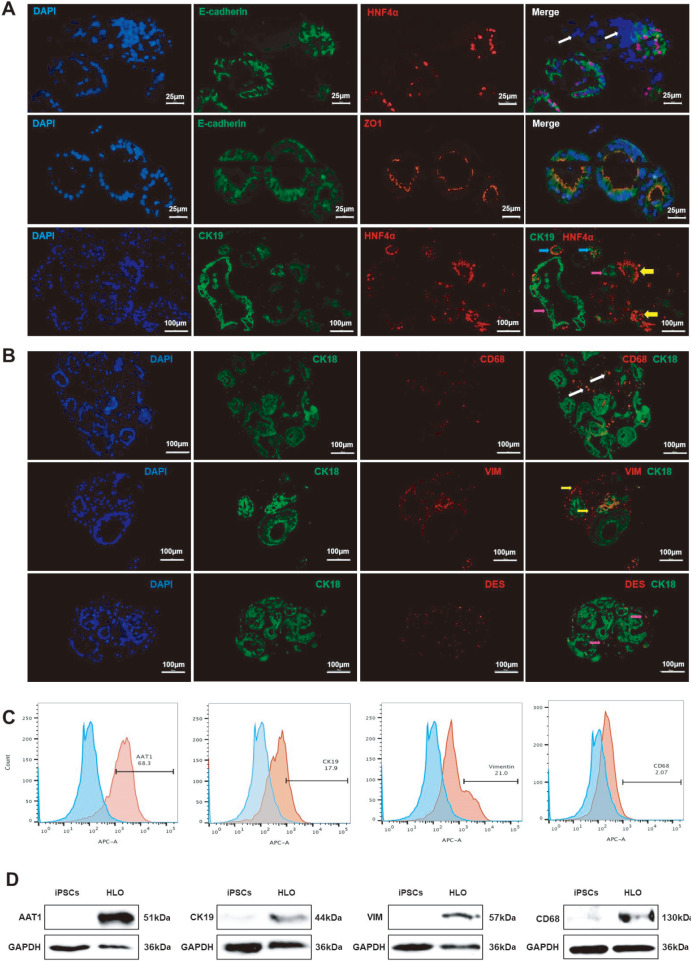
Alcoholic liver disease (ALD) poses a significant health challenge, so comprehensive research efforts to improve our understanding and treatment strategies are needed. However, the development of effective treatments is hindered by the limitation of existing liver disease models. Liver organoids, characterized by their cellular complexity and three-dimensional (3D) tissue structure closely resembling the human liver, hold promise as ideal models for liver disease research. In this study, we use a meticulously designed protocol involving the differentiation of human induced pluripotent stem cells (hiPSCs) into liver organoids. This process incorporates a precise combination of cytokines and small molecule compounds within a 3D culture system to guide the differentiation process. Subsequently, these differentiated liver organoids are subject to ethanol treatment to induce ALD, thus establishing a disease model. A rigorous assessment through a series of experiments reveals that this model partially recapitulates key pathological features observed in clinical ALD, including cellular mitochondrial damage, elevated cellular reactive oxygen species (ROS) levels, fatty liver, and hepatocyte necrosis. In addition, this model offers potential use in screening drugs for ALD treatment. Overall, the liver organoid model of ALD, which is derived from hiPSC differentiation, has emerged as an invaluable platform for advancing our understanding and management of ALD in clinical settings.
期刊介绍:
Acta Biochimica et Biophysica Sinica (ABBS) is an internationally peer-reviewed journal sponsored by the Shanghai Institute of Biochemistry and Cell Biology (CAS). ABBS aims to publish original research articles and review articles in diverse fields of biochemical research including Protein Science, Nucleic Acids, Molecular Biology, Cell Biology, Biophysics, Immunology, and Signal Transduction, etc.



 京公网安备 11010802042870号
京ICP备2023020795号-1
京公网安备 11010802042870号
京ICP备2023020795号-1

 分享
分享
 求助内容:
求助内容: 应助结果提醒方式:
 扫码关注我们
