Gladys Honein-AbouHaidar, Lama Bou-Karroum, Sarah E Parkinson, Rima Majed, Sabine Salameh, Najla Daher, Nour Hemadi, Fouad M Fouad, Fadi El-Jardali
{"title":"Integrating Syrian refugees into Lebanon's healthcare system 2011-2022: a mixed-method study.","authors":"Gladys Honein-AbouHaidar, Lama Bou-Karroum, Sarah E Parkinson, Rima Majed, Sabine Salameh, Najla Daher, Nour Hemadi, Fouad M Fouad, Fadi El-Jardali","doi":"10.1186/s13031-024-00600-w","DOIUrl":null,"url":null,"abstract":"<p><strong>Introduction: </strong>The Lebanese government estimates the number of Syrian refugees to be 1.5 million, representing 25% of the population. Refugee healthcare services have been integrated into the existing Lebanese health system. This study aims to describe the integration of Syrian refugee health services into the Lebanese national health system from 2011 to 2022, amid an ongoing economic crisis since 2019 and the COVID-19 pandemic.</p><p><strong>Methods: </strong>This paper employs a mixed-methods approach drawing upon different data sources including: 1- document review (policies, legislation, laws, etc.); 2- semi-structured interviews with policymakers, stakeholders, and health workers; 3- focus group discussions with patients from both host and refugee populations; and 4- health systems and care seeking indicators.</p><p><strong>Results: </strong>Although the demand for primary health care increased due to the Syrian refugee crisis, the provision of primary health care services was maintained. The infusion of international funding over time allowed primary health care centers to expand their resources to accommodate increased demand. The oversupply of physicians in Lebanon allowed the system to maintain a relatively high density of physicians even after the massive influx of refugees. The highly privatized, fragmented and expensive healthcare system has impeded Syrian refugees' access to secondary and tertiary healthcare services. The economic crisis further exacerbated limits on access for both the host and refugee populations and caused tension between the two populations. Our findings showed that the funds are not channeled through the government, fragmentation across multiple financing sources and reliance on international funding. Common medications and vaccines were available in the public system for both refugee and host communities and were reported to be affordable. The economic crisis hindered both communities' access to medications due to shortages and dramatic price increases.</p><p><strong>Conclusion: </strong>Integrating refugees in national health systems is essential to achieve sustainable development goals, in particular universal health coverage. Although it can strengthen the capacity of national health systems, the integration of refugees in low-resource settings can be challenging due to existing health system arrangements (e.g., heavily privatized care, curative-oriented, high out-of-pocket, fragmentation across multiple financing sources, and system vulnerability to economic shocks).</p>","PeriodicalId":54287,"journal":{"name":"Conflict and Health","volume":"18 Suppl 1","pages":"43"},"PeriodicalIF":3.4000,"publicationDate":"2024-05-31","publicationTypes":"Journal Article","fieldsOfStudy":null,"isOpenAccess":false,"openAccessPdf":"https://www.ncbi.nlm.nih.gov/pmc/articles/PMC11143570/pdf/","citationCount":"0","resultStr":null,"platform":"Semanticscholar","paperid":null,"PeriodicalName":"Conflict and Health","FirstCategoryId":"3","ListUrlMain":"https://doi.org/10.1186/s13031-024-00600-w","RegionNum":2,"RegionCategory":"医学","ArticlePicture":[],"TitleCN":null,"AbstractTextCN":null,"PMCID":null,"EPubDate":"","PubModel":"","JCR":"Q2","JCRName":"PUBLIC, ENVIRONMENTAL & OCCUPATIONAL HEALTH","Score":null,"Total":0}
引用次数: 0
Abstract
Introduction: The Lebanese government estimates the number of Syrian refugees to be 1.5 million, representing 25% of the population. Refugee healthcare services have been integrated into the existing Lebanese health system. This study aims to describe the integration of Syrian refugee health services into the Lebanese national health system from 2011 to 2022, amid an ongoing economic crisis since 2019 and the COVID-19 pandemic.
Methods: This paper employs a mixed-methods approach drawing upon different data sources including: 1- document review (policies, legislation, laws, etc.); 2- semi-structured interviews with policymakers, stakeholders, and health workers; 3- focus group discussions with patients from both host and refugee populations; and 4- health systems and care seeking indicators.
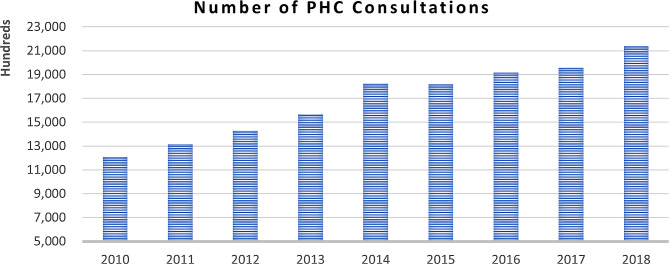
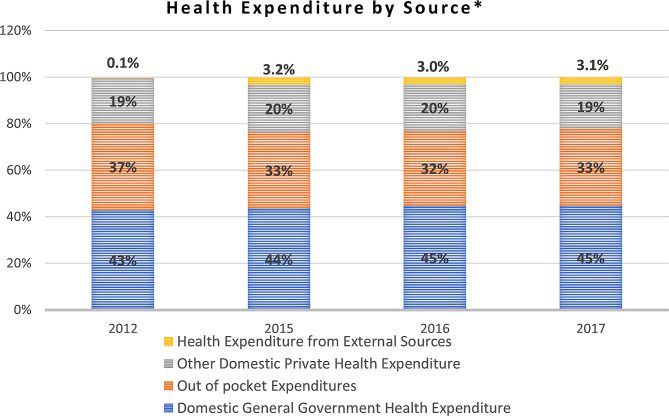
Results: Although the demand for primary health care increased due to the Syrian refugee crisis, the provision of primary health care services was maintained. The infusion of international funding over time allowed primary health care centers to expand their resources to accommodate increased demand. The oversupply of physicians in Lebanon allowed the system to maintain a relatively high density of physicians even after the massive influx of refugees. The highly privatized, fragmented and expensive healthcare system has impeded Syrian refugees' access to secondary and tertiary healthcare services. The economic crisis further exacerbated limits on access for both the host and refugee populations and caused tension between the two populations. Our findings showed that the funds are not channeled through the government, fragmentation across multiple financing sources and reliance on international funding. Common medications and vaccines were available in the public system for both refugee and host communities and were reported to be affordable. The economic crisis hindered both communities' access to medications due to shortages and dramatic price increases.
Conclusion: Integrating refugees in national health systems is essential to achieve sustainable development goals, in particular universal health coverage. Although it can strengthen the capacity of national health systems, the integration of refugees in low-resource settings can be challenging due to existing health system arrangements (e.g., heavily privatized care, curative-oriented, high out-of-pocket, fragmentation across multiple financing sources, and system vulnerability to economic shocks).
Conflict and HealthMedicine-Public Health, Environmental and Occupational Health
CiteScore
6.10
自引率
5.60%
发文量
57
审稿时长
18 weeks
期刊介绍:
Conflict and Health is a highly-accessed, open access journal providing a global platform to disseminate insightful and impactful studies documenting the public health impacts and responses related to armed conflict, humanitarian crises, and forced migration.




 京公网安备 11010802042870号
京ICP备2023020795号-1
京公网安备 11010802042870号
京ICP备2023020795号-1

 分享
分享
 求助内容:
求助内容: 应助结果提醒方式:
 扫码关注我们
