Amit G Singal, Mark Yarchoan, Adam Yopp, Gonzalo Sapisochin, David J Pinato, Anjana Pillai
{"title":"Neoadjuvant and adjuvant systemic therapy in HCC: Current status and the future.","authors":"Amit G Singal, Mark Yarchoan, Adam Yopp, Gonzalo Sapisochin, David J Pinato, Anjana Pillai","doi":"10.1097/HC9.0000000000000430","DOIUrl":null,"url":null,"abstract":"<p><p>Surgical therapies in patients with early-stage HCC can afford long-term survival but are often limited by the continued risk of recurrence, underscoring an interest in (neo)adjuvant strategies. Prior attempts at adjuvant therapy using tyrosine kinase inhibitors failed to yield significant improvements in recurrence-free survival or overall survival. Advances in the efficacy of systemic therapy options, including the introduction of immune checkpoint inhibitors, have fueled renewed interest in this area. Indeed, the IMBrave050 trial recently demonstrated significant improvements in recurrence-free survival with 1 year of adjuvant atezolizumab plus bevacizumab in high-risk patients undergoing surgical resection or ablation, with several other ongoing trials in this space. There is a strong rationale for consideration of the administration of these therapies in the neoadjuvant setting, supported by early clinical data demonstrating high rates of objective responses, although larger trials examining downstream outcomes are necessary, particularly considering the possible risks of this strategy. In parallel, there has been increased interest in using systemic therapies as a bridging or downstaging strategy for liver transplantation. Current data suggest the short-term safety of this approach, with acceptable rates of rejection, so immunotherapy is not considered a contraindication to transplant; however, larger studies are needed to evaluate the incremental value of this approach over locoregional therapy. Conversely, the use of immunotherapy is currently discouraged after liver transplantation, given the high risk of graft rejection and death. The increasing complexity of HCC management and increased consideration of (neo)adjuvant strategies highlight the critical role of multidisciplinary care when making these decisions.</p>","PeriodicalId":12978,"journal":{"name":"Hepatology Communications","volume":"8 6","pages":""},"PeriodicalIF":5.6000,"publicationDate":"2024-06-03","publicationTypes":"Journal Article","fieldsOfStudy":null,"isOpenAccess":false,"openAccessPdf":"https://www.ncbi.nlm.nih.gov/pmc/articles/PMC11150030/pdf/","citationCount":"0","resultStr":null,"platform":"Semanticscholar","paperid":null,"PeriodicalName":"Hepatology Communications","FirstCategoryId":"3","ListUrlMain":"https://doi.org/10.1097/HC9.0000000000000430","RegionNum":2,"RegionCategory":"医学","ArticlePicture":[],"TitleCN":null,"AbstractTextCN":null,"PMCID":null,"EPubDate":"2024/6/1 0:00:00","PubModel":"eCollection","JCR":"Q1","JCRName":"GASTROENTEROLOGY & HEPATOLOGY","Score":null,"Total":0}
引用次数: 0
Abstract
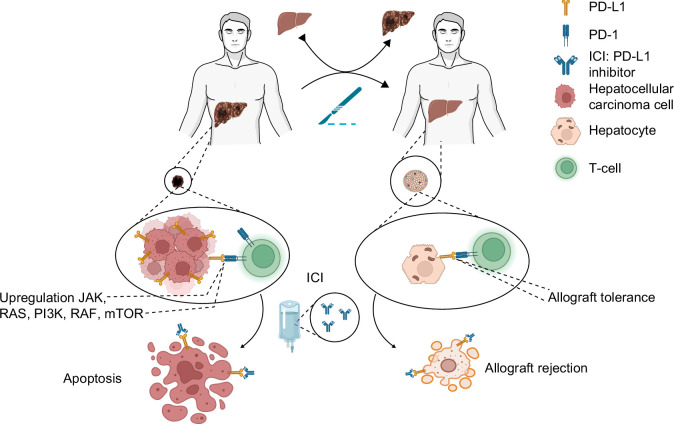
Surgical therapies in patients with early-stage HCC can afford long-term survival but are often limited by the continued risk of recurrence, underscoring an interest in (neo)adjuvant strategies. Prior attempts at adjuvant therapy using tyrosine kinase inhibitors failed to yield significant improvements in recurrence-free survival or overall survival. Advances in the efficacy of systemic therapy options, including the introduction of immune checkpoint inhibitors, have fueled renewed interest in this area. Indeed, the IMBrave050 trial recently demonstrated significant improvements in recurrence-free survival with 1 year of adjuvant atezolizumab plus bevacizumab in high-risk patients undergoing surgical resection or ablation, with several other ongoing trials in this space. There is a strong rationale for consideration of the administration of these therapies in the neoadjuvant setting, supported by early clinical data demonstrating high rates of objective responses, although larger trials examining downstream outcomes are necessary, particularly considering the possible risks of this strategy. In parallel, there has been increased interest in using systemic therapies as a bridging or downstaging strategy for liver transplantation. Current data suggest the short-term safety of this approach, with acceptable rates of rejection, so immunotherapy is not considered a contraindication to transplant; however, larger studies are needed to evaluate the incremental value of this approach over locoregional therapy. Conversely, the use of immunotherapy is currently discouraged after liver transplantation, given the high risk of graft rejection and death. The increasing complexity of HCC management and increased consideration of (neo)adjuvant strategies highlight the critical role of multidisciplinary care when making these decisions.
期刊介绍:
Hepatology Communications is a peer-reviewed, online-only, open access journal for fast dissemination of high quality basic, translational, and clinical research in hepatology. Hepatology Communications maintains high standard and rigorous peer review. Because of its open access nature, authors retain the copyright to their works, all articles are immediately available and free to read and share, and it is fully compliant with funder and institutional mandates. The journal is committed to fast publication and author satisfaction.





 京公网安备 11010802042870号
京ICP备2023020795号-1
京公网安备 11010802042870号
京ICP备2023020795号-1

 分享
分享
 求助内容:
求助内容: 应助结果提醒方式:
 扫码关注我们
