{"title":"A Multi-Color Immunofluorescence Assay to Distinguish Intracellular From External <i>Leishmania</i> Parasites.","authors":"Arani Datta, Umaru Barrie, Dawn M Wetzel","doi":"10.21769/BioProtoc.5009","DOIUrl":null,"url":null,"abstract":"<p><p>Leishmaniasis, a neglected tropical disease, is caused by the intracellular protozoan parasite <i>Leishmania</i>. Upon its transmission through a sandfly bite, <i>Leishmania</i> binds and enters host phagocytic cells, ultimately resulting in a cutaneous or visceral form of the disease. The limited therapeutics available for leishmaniasis, in combination with this parasite's techniques to evade the host immune system, call for exploring various methods to target this infection. To this end, our laboratory has been characterizing how <i>Leishmania</i> is internalized by phagocytic cells through the activation of multiple host cell signaling pathways. This protocol, which we use routinely for our experiments, delineates how to infect mammalian macrophages with either promastigote or amastigote forms of the <i>Leishmania</i> parasite. Subsequently, the number of intracellular parasites, external parasites, and macrophages can be quantified using immunofluorescence microscopy and semi-automated analysis protocols. Studying the pathways that underlie <i>Leishmania</i> uptake by phagocytes will not only improve our understanding of these host-pathogen interactions but may also provide a foundation for discovering additional treatments for leishmaniasis. Key features • This protocol visualizes and quantifies multiple intracellular forms of <i>Leishmania</i>. • It offers flexibility at various points for researchers to introduce modifications according to their study needs.</p>","PeriodicalId":93907,"journal":{"name":"Bio-protocol","volume":"14 11","pages":"e5009"},"PeriodicalIF":1.1000,"publicationDate":"2024-06-05","publicationTypes":"Journal Article","fieldsOfStudy":null,"isOpenAccess":false,"openAccessPdf":"https://www.ncbi.nlm.nih.gov/pmc/articles/PMC11166538/pdf/","citationCount":"0","resultStr":null,"platform":"Semanticscholar","paperid":null,"PeriodicalName":"Bio-protocol","FirstCategoryId":"1085","ListUrlMain":"https://doi.org/10.21769/BioProtoc.5009","RegionNum":0,"RegionCategory":null,"ArticlePicture":[],"TitleCN":null,"AbstractTextCN":null,"PMCID":null,"EPubDate":"","PubModel":"","JCR":"Q3","JCRName":"BIOLOGY","Score":null,"Total":0}
引用次数: 0
Abstract
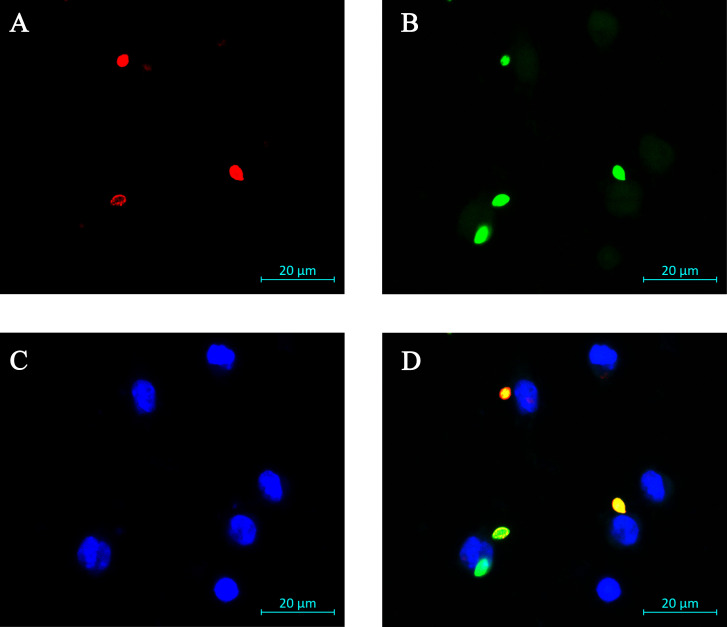
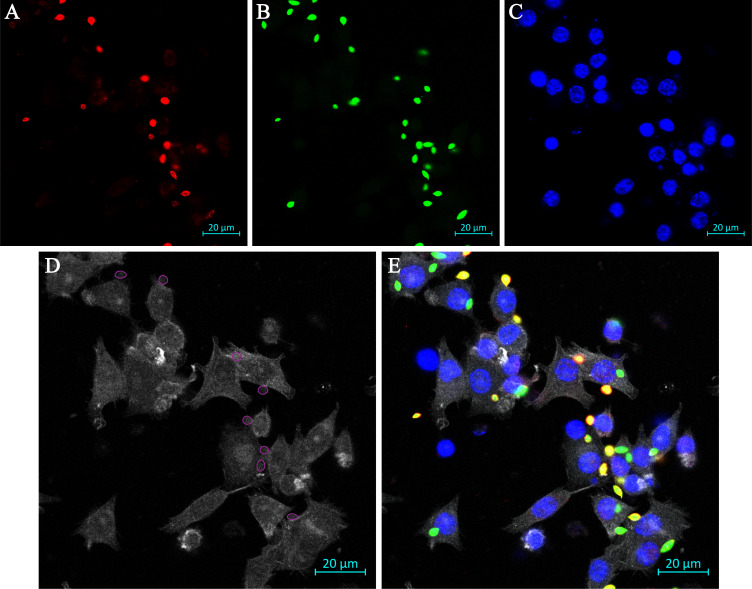
Leishmaniasis, a neglected tropical disease, is caused by the intracellular protozoan parasite Leishmania. Upon its transmission through a sandfly bite, Leishmania binds and enters host phagocytic cells, ultimately resulting in a cutaneous or visceral form of the disease. The limited therapeutics available for leishmaniasis, in combination with this parasite's techniques to evade the host immune system, call for exploring various methods to target this infection. To this end, our laboratory has been characterizing how Leishmania is internalized by phagocytic cells through the activation of multiple host cell signaling pathways. This protocol, which we use routinely for our experiments, delineates how to infect mammalian macrophages with either promastigote or amastigote forms of the Leishmania parasite. Subsequently, the number of intracellular parasites, external parasites, and macrophages can be quantified using immunofluorescence microscopy and semi-automated analysis protocols. Studying the pathways that underlie Leishmania uptake by phagocytes will not only improve our understanding of these host-pathogen interactions but may also provide a foundation for discovering additional treatments for leishmaniasis. Key features • This protocol visualizes and quantifies multiple intracellular forms of Leishmania. • It offers flexibility at various points for researchers to introduce modifications according to their study needs.




 京公网安备 11010802042870号
京ICP备2023020795号-1
京公网安备 11010802042870号
京ICP备2023020795号-1

 分享
分享

 求助内容:
求助内容: 应助结果提醒方式:
 扫码关注我们
