Lize Cai, Yongsheng Liu, Yanyan Li, Bin Liu, YuFei Cao, Wei Yang, Bo Wang, Ting Sun
{"title":"TRIM37 interacts with EZH2 to epigenetically suppress PTCH1 and regulate stemness in glioma stem cells through sonic hedgehog pathway.","authors":"Lize Cai, Yongsheng Liu, Yanyan Li, Bin Liu, YuFei Cao, Wei Yang, Bo Wang, Ting Sun","doi":"10.1007/s11060-024-04726-y","DOIUrl":null,"url":null,"abstract":"<p><strong>Background: </strong>Glioma stem cells (GSCs), which are known for their therapy resistance, play a substantial role in treatment inefficacy for glioblastoma multiforme (GBM). TRIM37, a member of the tripartite motif (TRIM) protein family initially linked to a rare growth disorder, has been recognized for its oncogenic role. However, the mechanism by which TRIM37 regulates tumor growth in glioma and GSCs is unclear.</p><p><strong>Methods: </strong>For the in vitro experiments, gene expression was measured by western blotting, RT-qPCR, and immunofluorescence. Cell viability was detected by CCK-8, and cell apoptosis was detected by flow cytometry. The interaction between Enhancer of Zeste Homolog 2 (EZH2) and TRIM37 was verified by co-immunoprecipitation (Co-IP). The interaction between EZH2 and the PTCH1 promoter was verified using dual-luciferase reporter assay and chromatin immunoprecipitation (ChIP). For the in vivo experiments, an orthotopically implanted glioma mouse model was used to validate tumor growth.</p><p><strong>Results: </strong>The expression of TRIM37 is higher in GSCs compared with matched non-GSCs. TRIM37 knockdown promotes apoptosis, decreased stemness in GSCs, and reduces tumor growth in GSCs xenografts of nude mice. TRIM37 and EZH2 co-localize in the nucleus and interact with each other. TRIM37 knockdown or EZH2 inhibition downregulates the protein expressions associated with the Sonic Hedgehog (SHH) pathway. EZH2 epigenetically downregulates PTCH1 to activate SHH pathway in GSCs.</p><p><strong>Conclusions: </strong>TRIM37 maintains the cell growth and stemness in GSCs through the interaction with EZH2. EZH2 activates SHH stem cell signaling pathway by downregulating the expression of SHH pathway suppressor PTCH1. Our findings suggest that TRIM37 may be a potential therapeutic target for GBM.</p>","PeriodicalId":16425,"journal":{"name":"Journal of Neuro-Oncology","volume":" ","pages":"269-279"},"PeriodicalIF":3.1000,"publicationDate":"2024-09-01","publicationTypes":"Journal Article","fieldsOfStudy":null,"isOpenAccess":false,"openAccessPdf":"","citationCount":"0","resultStr":null,"platform":"Semanticscholar","paperid":null,"PeriodicalName":"Journal of Neuro-Oncology","FirstCategoryId":"3","ListUrlMain":"https://doi.org/10.1007/s11060-024-04726-y","RegionNum":2,"RegionCategory":"医学","ArticlePicture":[],"TitleCN":null,"AbstractTextCN":null,"PMCID":null,"EPubDate":"2024/6/17 0:00:00","PubModel":"Epub","JCR":"Q2","JCRName":"CLINICAL NEUROLOGY","Score":null,"Total":0}
引用次数: 0
Abstract
Background: Glioma stem cells (GSCs), which are known for their therapy resistance, play a substantial role in treatment inefficacy for glioblastoma multiforme (GBM). TRIM37, a member of the tripartite motif (TRIM) protein family initially linked to a rare growth disorder, has been recognized for its oncogenic role. However, the mechanism by which TRIM37 regulates tumor growth in glioma and GSCs is unclear.
Methods: For the in vitro experiments, gene expression was measured by western blotting, RT-qPCR, and immunofluorescence. Cell viability was detected by CCK-8, and cell apoptosis was detected by flow cytometry. The interaction between Enhancer of Zeste Homolog 2 (EZH2) and TRIM37 was verified by co-immunoprecipitation (Co-IP). The interaction between EZH2 and the PTCH1 promoter was verified using dual-luciferase reporter assay and chromatin immunoprecipitation (ChIP). For the in vivo experiments, an orthotopically implanted glioma mouse model was used to validate tumor growth.
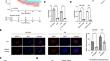
Results: The expression of TRIM37 is higher in GSCs compared with matched non-GSCs. TRIM37 knockdown promotes apoptosis, decreased stemness in GSCs, and reduces tumor growth in GSCs xenografts of nude mice. TRIM37 and EZH2 co-localize in the nucleus and interact with each other. TRIM37 knockdown or EZH2 inhibition downregulates the protein expressions associated with the Sonic Hedgehog (SHH) pathway. EZH2 epigenetically downregulates PTCH1 to activate SHH pathway in GSCs.
Conclusions: TRIM37 maintains the cell growth and stemness in GSCs through the interaction with EZH2. EZH2 activates SHH stem cell signaling pathway by downregulating the expression of SHH pathway suppressor PTCH1. Our findings suggest that TRIM37 may be a potential therapeutic target for GBM.
期刊介绍:
The Journal of Neuro-Oncology is a multi-disciplinary journal encompassing basic, applied, and clinical investigations in all research areas as they relate to cancer and the central nervous system. It provides a single forum for communication among neurologists, neurosurgeons, radiotherapists, medical oncologists, neuropathologists, neurodiagnosticians, and laboratory-based oncologists conducting relevant research. The Journal of Neuro-Oncology does not seek to isolate the field, but rather to focus the efforts of many disciplines in one publication through a format which pulls together these diverse interests. More than any other field of oncology, cancer of the central nervous system requires multi-disciplinary approaches. To alleviate having to scan dozens of journals of cell biology, pathology, laboratory and clinical endeavours, JNO is a periodical in which current, high-quality, relevant research in all aspects of neuro-oncology may be found.




 京公网安备 11010802042870号
京ICP备2023020795号-1
京公网安备 11010802042870号
京ICP备2023020795号-1

 分享
分享
 求助内容:
求助内容: 应助结果提醒方式:
 扫码关注我们
