{"title":"Compressive strength of concrete formulated with waste materials using neural networks","authors":"Ritu Gulati, Samreen Bano, Farheen Bano, Sumit Singh, Vikash Singh","doi":"10.1007/s42107-024-01071-3","DOIUrl":null,"url":null,"abstract":"<div><p>The cement production process contributes significantly to climate change by releasing continuous carbon dioxide emissions, a potent greenhouse gas. This study focuses on replacing cement in concrete with three alternative materials: eggshell powder (ESP), red mud (RM), and Construction and Demolition (C&D) waste. Thorough material assessments confirm their suitability for concrete use. Extensive testing shows that all three waste materials can effectively replace cement while maintaining concrete's strength. Artificial Neural Network (ANN) models validate the findings, with an impressive R<sup>2</sup> score of 0.99183, representing the model's ability to predict concrete strength influenced by ESP, RM, and C&D waste. This research underscores the potential of ANN models in predicting eco-friendly concrete properties and validates predictions through empirical evidence. The compressive strength of concrete using such waste materials were presented through experimental work. Substituting SCMs up to 15% consistently improves strength-related attributes. Microstructural analysis was also conducted through scanning electron microscopy and X-ray diffractions.</p></div>","PeriodicalId":8513,"journal":{"name":"Asian Journal of Civil Engineering","volume":"25 6","pages":"4657 - 4672"},"PeriodicalIF":0.0000,"publicationDate":"2024-06-09","publicationTypes":"Journal Article","fieldsOfStudy":null,"isOpenAccess":false,"openAccessPdf":"","citationCount":"0","resultStr":null,"platform":"Semanticscholar","paperid":null,"PeriodicalName":"Asian Journal of Civil Engineering","FirstCategoryId":"1085","ListUrlMain":"https://link.springer.com/article/10.1007/s42107-024-01071-3","RegionNum":0,"RegionCategory":null,"ArticlePicture":[],"TitleCN":null,"AbstractTextCN":null,"PMCID":null,"EPubDate":"","PubModel":"","JCR":"Q2","JCRName":"Engineering","Score":null,"Total":0}
引用次数: 0
Abstract
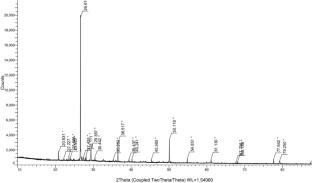
The cement production process contributes significantly to climate change by releasing continuous carbon dioxide emissions, a potent greenhouse gas. This study focuses on replacing cement in concrete with three alternative materials: eggshell powder (ESP), red mud (RM), and Construction and Demolition (C&D) waste. Thorough material assessments confirm their suitability for concrete use. Extensive testing shows that all three waste materials can effectively replace cement while maintaining concrete's strength. Artificial Neural Network (ANN) models validate the findings, with an impressive R2 score of 0.99183, representing the model's ability to predict concrete strength influenced by ESP, RM, and C&D waste. This research underscores the potential of ANN models in predicting eco-friendly concrete properties and validates predictions through empirical evidence. The compressive strength of concrete using such waste materials were presented through experimental work. Substituting SCMs up to 15% consistently improves strength-related attributes. Microstructural analysis was also conducted through scanning electron microscopy and X-ray diffractions.
期刊介绍:
The Asian Journal of Civil Engineering (Building and Housing) welcomes articles and research contributions on topics such as:- Structural analysis and design - Earthquake and structural engineering - New building materials and concrete technology - Sustainable building and energy conservation - Housing and planning - Construction management - Optimal design of structuresPlease note that the journal will not accept papers in the area of hydraulic or geotechnical engineering, traffic/transportation or road making engineering, and on materials relevant to non-structural buildings, e.g. materials for road making and asphalt. Although the journal will publish authoritative papers on theoretical and experimental research works and advanced applications, it may also feature, when appropriate: a) tutorial survey type papers reviewing some fields of civil engineering; b) short communications and research notes; c) book reviews and conference announcements.



 京公网安备 11010802042870号
京ICP备2023020795号-1
京公网安备 11010802042870号
京ICP备2023020795号-1

 分享
分享
 求助内容:
求助内容: 应助结果提醒方式:
 扫码关注我们
