Bi Jia, Qian Cai, Yongjiang Di, Huichao He, Tao Han, Hanmei Jiang, Shiyu Lu, Rong Wang, Yue Shi
{"title":"Magnetic Recyclable Double-Heterojunction SrFe12O19/SnS2/MoS2 Nanophotocatalyst: Synthesis and Visible-Light Catalytic Degradation Performance Study","authors":"Bi Jia, Qian Cai, Yongjiang Di, Huichao He, Tao Han, Hanmei Jiang, Shiyu Lu, Rong Wang, Yue Shi","doi":"10.1007/s11814-024-00204-3","DOIUrl":null,"url":null,"abstract":"<div><p>The development of efficient, recyclable, broad-spectrum photocatalysts was the primary objective in the field of photocatalytic wastewater degradation. Herein, a novel highly efficient ternary magnetic semiconductor composite was synthesized by integrating SrFe<sub>12</sub>O<sub>19</sub>, MoS<sub>2</sub> nanoflower clusters, and SnS<sub>2</sub> nanoflowers using high-temperature calcination and a one-step solvothermal method. The synthesized heterojunction nanocomposite was characterized using numerous analytical techniques, and its photocatalytic activity was evaluated under half sunlight intensity irradiation. The integration of SnS<sub>2</sub> with SrFe<sub>12</sub>O<sub>19</sub> and MoS<sub>2</sub> effectively modified the crystal structure and morphology of SnS<sub>2</sub> nanoflowers, leading to an increase in active sites while overcoming the significant electron–hole recombination rates of the individual components. The SrFe<sub>12</sub>O<sub>19</sub>/SnS<sub>2</sub>/MoS<sub>2</sub> composite achieved 98.69% degradation of MB dye at a suitable pH of 6 and a period of 120 min of irradiation. Additionally, it maintained an excellent magnetic phenomena which contributed to it effortless to collect and reclaim from the residual mixture. After three cycles, the MB dye degradation remained at 84.07%, demonstrating its endurance and resilience. The scavenger test identified the superoxide radical as the primary agent responsible for dye destruction. This work provides study presents a synthesis method for highly efficient photocatalysts using in natural visible-light that can be recovered by simply applying an external magnetic field.</p></div>","PeriodicalId":684,"journal":{"name":"Korean Journal of Chemical Engineering","volume":"41 9","pages":"2581 - 2595"},"PeriodicalIF":3.2000,"publicationDate":"2024-06-07","publicationTypes":"Journal Article","fieldsOfStudy":null,"isOpenAccess":false,"openAccessPdf":"","citationCount":"0","resultStr":null,"platform":"Semanticscholar","paperid":null,"PeriodicalName":"Korean Journal of Chemical Engineering","FirstCategoryId":"5","ListUrlMain":"https://link.springer.com/article/10.1007/s11814-024-00204-3","RegionNum":4,"RegionCategory":"工程技术","ArticlePicture":[],"TitleCN":null,"AbstractTextCN":null,"PMCID":null,"EPubDate":"","PubModel":"","JCR":"Q2","JCRName":"CHEMISTRY, MULTIDISCIPLINARY","Score":null,"Total":0}
引用次数: 0
Abstract
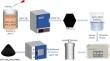
The development of efficient, recyclable, broad-spectrum photocatalysts was the primary objective in the field of photocatalytic wastewater degradation. Herein, a novel highly efficient ternary magnetic semiconductor composite was synthesized by integrating SrFe12O19, MoS2 nanoflower clusters, and SnS2 nanoflowers using high-temperature calcination and a one-step solvothermal method. The synthesized heterojunction nanocomposite was characterized using numerous analytical techniques, and its photocatalytic activity was evaluated under half sunlight intensity irradiation. The integration of SnS2 with SrFe12O19 and MoS2 effectively modified the crystal structure and morphology of SnS2 nanoflowers, leading to an increase in active sites while overcoming the significant electron–hole recombination rates of the individual components. The SrFe12O19/SnS2/MoS2 composite achieved 98.69% degradation of MB dye at a suitable pH of 6 and a period of 120 min of irradiation. Additionally, it maintained an excellent magnetic phenomena which contributed to it effortless to collect and reclaim from the residual mixture. After three cycles, the MB dye degradation remained at 84.07%, demonstrating its endurance and resilience. The scavenger test identified the superoxide radical as the primary agent responsible for dye destruction. This work provides study presents a synthesis method for highly efficient photocatalysts using in natural visible-light that can be recovered by simply applying an external magnetic field.
期刊介绍:
The Korean Journal of Chemical Engineering provides a global forum for the dissemination of research in chemical engineering. The Journal publishes significant research results obtained in the Asia-Pacific region, and simultaneously introduces recent technical progress made in other areas of the world to this region. Submitted research papers must be of potential industrial significance and specifically concerned with chemical engineering. The editors will give preference to papers having a clearly stated practical scope and applicability in the areas of chemical engineering, and to those where new theoretical concepts are supported by new experimental details. The Journal also regularly publishes featured reviews on emerging and industrially important subjects of chemical engineering as well as selected papers presented at international conferences on the subjects.



 京公网安备 11010802042870号
京ICP备2023020795号-1
京公网安备 11010802042870号
京ICP备2023020795号-1

 分享
分享
 求助内容:
求助内容: 应助结果提醒方式:
 扫码关注我们
