Beáta Gavurová, Václav Moravec, Nik Hynek, M. Miovský, Volodymyr Polishchuk, R. Gabrhelík, Miroslav Barták, Benjamin Petruželka, Lenka Stastna
{"title":"THE IMPACT OF DIGITAL DISINFORMATION ON QUALITY OF LIFE: A FUZZY MODEL ASSESSMENT","authors":"Beáta Gavurová, Václav Moravec, Nik Hynek, M. Miovský, Volodymyr Polishchuk, R. Gabrhelík, Miroslav Barták, Benjamin Petruželka, Lenka Stastna","doi":"10.3846/tede.2024.21577","DOIUrl":null,"url":null,"abstract":"Quality of Life (QoL) is a multifaceted concept encompassing economic, social, environmental, psychological, and physical dimensions of an individual’s life, including personal living conditions, happiness, well-being, and life satisfaction. As a vital criterion for sustainable development and active social policy in countries, QoL has been significantly influenced by the dynamic technological evolution of social media. However, the comprehensive impact of social media, including its role in disseminating disinformation – a major social and socio-economic concern – on QoL remains underexplored. This research aims to develop a novel fuzzy model to assess the level of disinformation on digital platforms and its correlation with the population’s QoL. Employing a mathematical approach rooted in expert evaluation, this study leverages intellectual knowledge analysis and fuzzy set theory. Grounded in data from real respondents and knowledge-based models, this study pioneers an information model to evaluate inhabitants’ QoL, incorporating factors such as financial concerns, perception of disinformation, and its influence on digital platforms. The fuzzy estimation model, verified with data from 3,036 respondents, quantitatively assesses citizens’ QoL. An illustrative application of the model demonstrates its effectiveness. The findings are particularly valuable for policymakers, experts in economic and innovative development, aiding the creation of regulatory and monitoring mechanisms to foster sustainable economic growth and devise effective development strategies.","PeriodicalId":4,"journal":{"name":"ACS Applied Energy Materials","volume":"22 8","pages":""},"PeriodicalIF":5.5000,"publicationDate":"2024-06-05","publicationTypes":"Journal Article","fieldsOfStudy":null,"isOpenAccess":false,"openAccessPdf":"","citationCount":"0","resultStr":null,"platform":"Semanticscholar","paperid":null,"PeriodicalName":"ACS Applied Energy Materials","FirstCategoryId":"96","ListUrlMain":"https://doi.org/10.3846/tede.2024.21577","RegionNum":3,"RegionCategory":"材料科学","ArticlePicture":[],"TitleCN":null,"AbstractTextCN":null,"PMCID":null,"EPubDate":"","PubModel":"","JCR":"Q2","JCRName":"CHEMISTRY, PHYSICAL","Score":null,"Total":0}
引用次数: 0
Abstract
Quality of Life (QoL) is a multifaceted concept encompassing economic, social, environmental, psychological, and physical dimensions of an individual’s life, including personal living conditions, happiness, well-being, and life satisfaction. As a vital criterion for sustainable development and active social policy in countries, QoL has been significantly influenced by the dynamic technological evolution of social media. However, the comprehensive impact of social media, including its role in disseminating disinformation – a major social and socio-economic concern – on QoL remains underexplored. This research aims to develop a novel fuzzy model to assess the level of disinformation on digital platforms and its correlation with the population’s QoL. Employing a mathematical approach rooted in expert evaluation, this study leverages intellectual knowledge analysis and fuzzy set theory. Grounded in data from real respondents and knowledge-based models, this study pioneers an information model to evaluate inhabitants’ QoL, incorporating factors such as financial concerns, perception of disinformation, and its influence on digital platforms. The fuzzy estimation model, verified with data from 3,036 respondents, quantitatively assesses citizens’ QoL. An illustrative application of the model demonstrates its effectiveness. The findings are particularly valuable for policymakers, experts in economic and innovative development, aiding the creation of regulatory and monitoring mechanisms to foster sustainable economic growth and devise effective development strategies.
生活质量(QoL)是一个多层面的概念,涵盖个人生活的经济、社会、环境、心理和生理层面,包括个人生活条件、幸福感、福祉和生活满意度。作为各国可持续发展和积极社会政策的重要标准,社交媒体的动态技术发展对 QoL 产生了重大影响。然而,社交媒体对 QoL 的综合影响,包括其在传播虚假信息方面的作用(这是一个主要的社会和社会经济问题),仍未得到充分探索。本研究旨在开发一种新型模糊模型,以评估数字平台上的虚假信息水平及其与人口 QoL 的相关性。本研究采用植根于专家评估的数学方法,利用知识分析和模糊集理论。本研究以真实受访者的数据和基于知识的模型为基础,开创了一种评估居民 QoL 的信息模型,将经济问题、对虚假信息的感知及其对数字平台的影响等因素纳入其中。该模糊估算模型通过对 3,036 名受访者的数据进行验证,对公民的 QoL 进行了定量评估。该模型的示例应用证明了其有效性。研究结果对政策制定者、经济和创新发展专家特别有价值,有助于建立监管和监测机制,促进可持续经济增长,制定有效的发展战略。
期刊介绍:
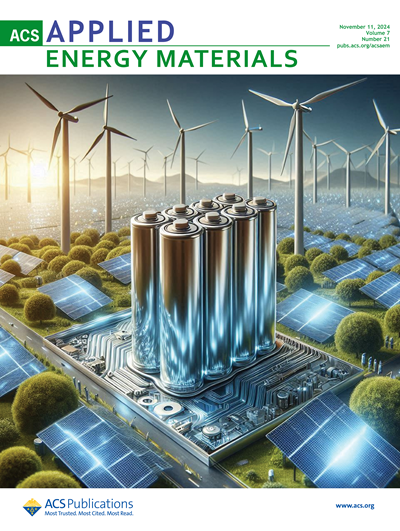
ACS Applied Energy Materials is an interdisciplinary journal publishing original research covering all aspects of materials, engineering, chemistry, physics and biology relevant to energy conversion and storage. The journal is devoted to reports of new and original experimental and theoretical research of an applied nature that integrate knowledge in the areas of materials, engineering, physics, bioscience, and chemistry into important energy applications.



 京公网安备 11010802042870号
京ICP备2023020795号-1
京公网安备 11010802042870号
京ICP备2023020795号-1

 分享
分享
 求助内容:
求助内容: 应助结果提醒方式:
 扫码关注我们
