The mesenchymal stromal cell secretome promotes tissue regeneration and increases macrophage infiltration in acute and methicillin-resistant Staphylococcus aureus-infected skin wounds in vivo
{"title":"The mesenchymal stromal cell secretome promotes tissue regeneration and increases macrophage infiltration in acute and methicillin-resistant Staphylococcus aureus-infected skin wounds in vivo","authors":"","doi":"10.1016/j.jcyt.2024.06.007","DOIUrl":null,"url":null,"abstract":"<div><h3>Background aims</h3><div>The prevalence of chronic wounds continues to be a burden in human medicine. Methicillin-resistant <em>Staphylococcus aureus</em> (MRSA) is commonly isolated from infected wounds. MRSA infections primarily delay healing by impairing local immune cell functions. This study aimed to investigate the potential of mesenchymal stromal cell (MSC)-secreted bioactive factors, defined as the secretome, to improve innate immune responses <em>in vivo</em>. MSCs were isolated from the bone marrow of horses, which serve as valuable translational models for wound healing. The MSC secretome, collected as conditioned medium (CM), was evaluated <em>in vivo</em> using mouse models of acute and MRSA-infected skin wounds<em>.</em></div></div><div><h3>Methods</h3><div>Punch biopsies were used to create two full-thickness skin wounds on the back of each mouse. Acute wounds were treated daily with control medium or bone marrow-derived MSC (BM-MSC) CM. The antibiotic mupirocin was administered as a positive control for the MRSA-infected wound experiments. Wounds were photographed daily, and wound images were measured to determine the rate of closure. Trichrome staining was carried out to examine wound tissue histologically, and immunofluorescence antibody binding was used to assess immune cell infiltration. Wounds in the MRSA-infected model were swabbed for quantification of bacterial load.</div></div><div><h3>Results</h3><div>Acute wounds treated with BM-MSC CM showed accelerated wound closure compared with controls, as illustrated by enhanced granulation tissue formation and resolution, increased vasculature and regeneration of hair follicles. This treatment also led to increased neutrophil and macrophage infiltration. Chronic MRSA-infected wounds treated with BM-MSC CM showed reduced bacterial load accompanied by better resolution of granulation tissue formation and increased infiltration of pro-healing M2 macrophages compared with control-treated infected wounds.</div></div><div><h3>Conclusions</h3><div>Collectively, our findings indicate that BM-MSC CM exerts pro-healing, immunomodulatory and anti-bacterial effects on wound healing <em>in vivo</em>, validating further exploration of the MSC secretome as a novel treatment option to improve healing of both acute and chronic wounds, especially those infected with antibiotic-resistant bacteria.</div></div>","PeriodicalId":50597,"journal":{"name":"Cytotherapy","volume":"26 11","pages":"Pages 1400-1410"},"PeriodicalIF":3.2000,"publicationDate":"2024-11-01","publicationTypes":"Journal Article","fieldsOfStudy":null,"isOpenAccess":false,"openAccessPdf":"","citationCount":"0","resultStr":null,"platform":"Semanticscholar","paperid":null,"PeriodicalName":"Cytotherapy","FirstCategoryId":"3","ListUrlMain":"https://www.sciencedirect.com/science/article/pii/S1465324924007588","RegionNum":3,"RegionCategory":"医学","ArticlePicture":[],"TitleCN":null,"AbstractTextCN":null,"PMCID":null,"EPubDate":"2024/6/12 0:00:00","PubModel":"Epub","JCR":"Q2","JCRName":"BIOTECHNOLOGY & APPLIED MICROBIOLOGY","Score":null,"Total":0}
引用次数: 0
Abstract
Background aims
The prevalence of chronic wounds continues to be a burden in human medicine. Methicillin-resistant Staphylococcus aureus (MRSA) is commonly isolated from infected wounds. MRSA infections primarily delay healing by impairing local immune cell functions. This study aimed to investigate the potential of mesenchymal stromal cell (MSC)-secreted bioactive factors, defined as the secretome, to improve innate immune responses in vivo. MSCs were isolated from the bone marrow of horses, which serve as valuable translational models for wound healing. The MSC secretome, collected as conditioned medium (CM), was evaluated in vivo using mouse models of acute and MRSA-infected skin wounds.
Methods
Punch biopsies were used to create two full-thickness skin wounds on the back of each mouse. Acute wounds were treated daily with control medium or bone marrow-derived MSC (BM-MSC) CM. The antibiotic mupirocin was administered as a positive control for the MRSA-infected wound experiments. Wounds were photographed daily, and wound images were measured to determine the rate of closure. Trichrome staining was carried out to examine wound tissue histologically, and immunofluorescence antibody binding was used to assess immune cell infiltration. Wounds in the MRSA-infected model were swabbed for quantification of bacterial load.
Results
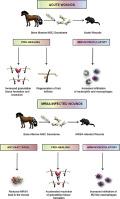
Acute wounds treated with BM-MSC CM showed accelerated wound closure compared with controls, as illustrated by enhanced granulation tissue formation and resolution, increased vasculature and regeneration of hair follicles. This treatment also led to increased neutrophil and macrophage infiltration. Chronic MRSA-infected wounds treated with BM-MSC CM showed reduced bacterial load accompanied by better resolution of granulation tissue formation and increased infiltration of pro-healing M2 macrophages compared with control-treated infected wounds.
Conclusions
Collectively, our findings indicate that BM-MSC CM exerts pro-healing, immunomodulatory and anti-bacterial effects on wound healing in vivo, validating further exploration of the MSC secretome as a novel treatment option to improve healing of both acute and chronic wounds, especially those infected with antibiotic-resistant bacteria.
期刊介绍:
The journal brings readers the latest developments in the fast moving field of cellular therapy in man. This includes cell therapy for cancer, immune disorders, inherited diseases, tissue repair and regenerative medicine. The journal covers the science, translational development and treatment with variety of cell types including hematopoietic stem cells, immune cells (dendritic cells, NK, cells, T cells, antigen presenting cells) mesenchymal stromal cells, adipose cells, nerve, muscle, vascular and endothelial cells, and induced pluripotential stem cells. We also welcome manuscripts on subcellular derivatives such as exosomes. A specific focus is on translational research that brings cell therapy to the clinic. Cytotherapy publishes original papers, reviews, position papers editorials, commentaries and letters to the editor. We welcome "Protocols in Cytotherapy" bringing standard operating procedure for production specific cell types for clinical use within the reach of the readership.



 京公网安备 11010802042870号
京ICP备2023020795号-1
京公网安备 11010802042870号
京ICP备2023020795号-1

 分享
分享
 求助内容:
求助内容: 应助结果提醒方式:
 扫码关注我们
