{"title":"Gastrointestinal: Esophageal complications of cardiac interventions","authors":"B Sarraf, R Apostolov, J Yeoh, GR Wong","doi":"10.1111/jgh.16653","DOIUrl":null,"url":null,"abstract":"<p>A 74-year-old woman developed hematemesis 5 h after pulmonary vein isolation (PVI) for atrial fibrillation (AF). Her regular medications included pantoprazole and dabigatran for stroke prevention, which were continued pre-procedurally. The PVI procedure was completed routinely. Therapeutic heparin was administered for thromboprophylaxis. A trans-esophageal echocardiogram probe provided anatomical guidance. A second esophageal probe for temperature monitoring was inserted. Acute procedural success was achieved without immediate complications.</p><p>The hematemesis of 200ml was associated with moderate upper abdominal pain. Hemodynamics remained stable. Bedside transthoracic echocardiogram was unremarkable. Urgent computed tomography (CT) imaging of the thorax with intravenous (IV) contrast demonstrated an extensive 25 cm hematoma in the posterior wall of the esophagus (Fig. 1). There was no pneumomediastinum or effusions in the pleural and mediastinal space to suggest esophageal rupture. There was no IV contrast in the esophagus, which is a cardinal feature of an atrioesophageal fistula (AEF). A contrast (<i>Gastrografin</i>) swallow showed free passage of contrast without evidence of a leak or fistula. A transmural esophageal rupture was therefore thought to be.</p><p>She was kept nil by mouth and commenced on IV pantoprazole. Anticoagulation was ceased. Interval CT imaging at days two and seven showed stable hematoma size. Puree diet was well tolerated on day nine. CT imaging at 1 month showed significant reduction in hematoma size and full diet was tolerated without sequelae. A gastroscopy performed at 3 months noted a 10 cm linear scar in the mid to lower esophageal mucosa (Fig. 2). The final impression was esophageal injury secondary to instrumentation with the esophageal probes in the setting of anticoagulation.</p><p>AF is primarily triggered by electrical discharges in the pulmonary veins. PVI is a percutaneous procedure that aims to reduce AF burden by isolating the pulmonary veins from the left atrium by circumferentially ablating the surrounding myocardium, typically using radiofrequency or cryothermal energy. Esophageal injury occurs due to mechanical or thermal damage. A transoesophageal echocardiogram probe is required to visualize the interatrial septum to guide transeptal puncture access from the right to left atrium (LA). An esophageal temperature probe (Fig. 3) is also commonly used to monitor the intraluminal temperature during directly overlying posterior LA ablation and mitigate the risk of esophageal thermal injury and progression to ulcerative AEF following ablation. A recent randomized prospective trial of temperature probes in PVI did not demonstrate a reduction in esophageal complications, and one study found an increased incidence of complications in the temperature probe cohort. Novel ablative energy sources utilizing cardio-selective pulsed field electroporation are promising strategies to dramatically reduce AEF.</p><p>Esophageal hematoma (OH) is a rare disorder of hemorrhage in the submucosal layer of the esophagus without a full thickness perforation. This hematoma may remain contained or precipitate a mucosal tear and extension into the esophageal lumen, typically resulting in hematemesis. OH is distinct to the Mallory-Weiss syndrome, a self-limiting mucosal tear, and Boerhaave syndrome, which is a transmural rupture of the esophagus with high mortality. The pathophysiology of OH is poorly understood. Primary OH can occur spontaneously, often in the context of sudden pressure change in the esophagus, such as Valsalva maneuver or severe vomiting. In idiopathic cases, occult malignancy requires exclusion. Secondary OH occurs due to direct or indirect esophageal trauma, including procedural instrumentation. Symptoms include retrosternal chest pain, dysphagia and hematemesis. Large hematomas may exert mass effect with various impacts, such as dysphonia secondary to vocal cord compression, or hemodynamic instability secondary to atrial compression. Long-term complications of dysphonia, dysphagia and esophageal stenosis have been reported.</p><p>In suspected esophageal injury, CT imaging with IV and oral contrast is the recommended first line investigation. This facilitates rapid exclusion of transmural esophageal rupture and AEF, both of which require urgent surgical consideration. Notably, AEF presents subacutely, typically one to 6 weeks after ablation with chest pain, fever, and neurological sequelae. In contrast, OH presents acutely and is generally managed conservatively with supportive care and favorable prognosis. Endoscopy has a limited role in acute uncomplicated OH, but should be considered if CT imaging is unremarkable to investigate other causes of hematemesis. However, caution is advised as gas insufflation can further complicate an AEF via air embolization.</p><p>Esophageal complications of cardiac interventions require urgent consideration and multi-disciplinary input. Familiarity with the procedural aspects and complications of these increasingly performed cardiac procedures allows for appropriate investigation and management.</p>","PeriodicalId":15877,"journal":{"name":"Journal of Gastroenterology and Hepatology","volume":"39 12","pages":"2475-2476"},"PeriodicalIF":3.5000,"publicationDate":"2024-06-19","publicationTypes":"Journal Article","fieldsOfStudy":null,"isOpenAccess":false,"openAccessPdf":"https://onlinelibrary.wiley.com/doi/epdf/10.1111/jgh.16653","citationCount":"0","resultStr":null,"platform":"Semanticscholar","paperid":null,"PeriodicalName":"Journal of Gastroenterology and Hepatology","FirstCategoryId":"3","ListUrlMain":"https://onlinelibrary.wiley.com/doi/10.1111/jgh.16653","RegionNum":3,"RegionCategory":"医学","ArticlePicture":[],"TitleCN":null,"AbstractTextCN":null,"PMCID":null,"EPubDate":"","PubModel":"","JCR":"Q2","JCRName":"GASTROENTEROLOGY & HEPATOLOGY","Score":null,"Total":0}
引用次数: 0
Abstract
A 74-year-old woman developed hematemesis 5 h after pulmonary vein isolation (PVI) for atrial fibrillation (AF). Her regular medications included pantoprazole and dabigatran for stroke prevention, which were continued pre-procedurally. The PVI procedure was completed routinely. Therapeutic heparin was administered for thromboprophylaxis. A trans-esophageal echocardiogram probe provided anatomical guidance. A second esophageal probe for temperature monitoring was inserted. Acute procedural success was achieved without immediate complications.
The hematemesis of 200ml was associated with moderate upper abdominal pain. Hemodynamics remained stable. Bedside transthoracic echocardiogram was unremarkable. Urgent computed tomography (CT) imaging of the thorax with intravenous (IV) contrast demonstrated an extensive 25 cm hematoma in the posterior wall of the esophagus (Fig. 1). There was no pneumomediastinum or effusions in the pleural and mediastinal space to suggest esophageal rupture. There was no IV contrast in the esophagus, which is a cardinal feature of an atrioesophageal fistula (AEF). A contrast (Gastrografin) swallow showed free passage of contrast without evidence of a leak or fistula. A transmural esophageal rupture was therefore thought to be.
She was kept nil by mouth and commenced on IV pantoprazole. Anticoagulation was ceased. Interval CT imaging at days two and seven showed stable hematoma size. Puree diet was well tolerated on day nine. CT imaging at 1 month showed significant reduction in hematoma size and full diet was tolerated without sequelae. A gastroscopy performed at 3 months noted a 10 cm linear scar in the mid to lower esophageal mucosa (Fig. 2). The final impression was esophageal injury secondary to instrumentation with the esophageal probes in the setting of anticoagulation.
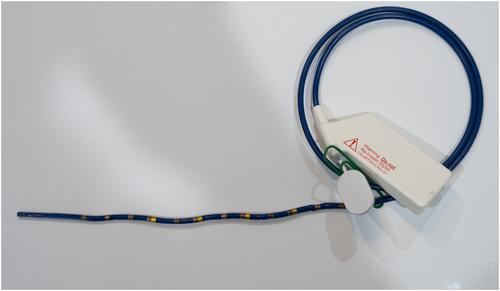
AF is primarily triggered by electrical discharges in the pulmonary veins. PVI is a percutaneous procedure that aims to reduce AF burden by isolating the pulmonary veins from the left atrium by circumferentially ablating the surrounding myocardium, typically using radiofrequency or cryothermal energy. Esophageal injury occurs due to mechanical or thermal damage. A transoesophageal echocardiogram probe is required to visualize the interatrial septum to guide transeptal puncture access from the right to left atrium (LA). An esophageal temperature probe (Fig. 3) is also commonly used to monitor the intraluminal temperature during directly overlying posterior LA ablation and mitigate the risk of esophageal thermal injury and progression to ulcerative AEF following ablation. A recent randomized prospective trial of temperature probes in PVI did not demonstrate a reduction in esophageal complications, and one study found an increased incidence of complications in the temperature probe cohort. Novel ablative energy sources utilizing cardio-selective pulsed field electroporation are promising strategies to dramatically reduce AEF.
Esophageal hematoma (OH) is a rare disorder of hemorrhage in the submucosal layer of the esophagus without a full thickness perforation. This hematoma may remain contained or precipitate a mucosal tear and extension into the esophageal lumen, typically resulting in hematemesis. OH is distinct to the Mallory-Weiss syndrome, a self-limiting mucosal tear, and Boerhaave syndrome, which is a transmural rupture of the esophagus with high mortality. The pathophysiology of OH is poorly understood. Primary OH can occur spontaneously, often in the context of sudden pressure change in the esophagus, such as Valsalva maneuver or severe vomiting. In idiopathic cases, occult malignancy requires exclusion. Secondary OH occurs due to direct or indirect esophageal trauma, including procedural instrumentation. Symptoms include retrosternal chest pain, dysphagia and hematemesis. Large hematomas may exert mass effect with various impacts, such as dysphonia secondary to vocal cord compression, or hemodynamic instability secondary to atrial compression. Long-term complications of dysphonia, dysphagia and esophageal stenosis have been reported.
In suspected esophageal injury, CT imaging with IV and oral contrast is the recommended first line investigation. This facilitates rapid exclusion of transmural esophageal rupture and AEF, both of which require urgent surgical consideration. Notably, AEF presents subacutely, typically one to 6 weeks after ablation with chest pain, fever, and neurological sequelae. In contrast, OH presents acutely and is generally managed conservatively with supportive care and favorable prognosis. Endoscopy has a limited role in acute uncomplicated OH, but should be considered if CT imaging is unremarkable to investigate other causes of hematemesis. However, caution is advised as gas insufflation can further complicate an AEF via air embolization.
Esophageal complications of cardiac interventions require urgent consideration and multi-disciplinary input. Familiarity with the procedural aspects and complications of these increasingly performed cardiac procedures allows for appropriate investigation and management.
期刊介绍:
Journal of Gastroenterology and Hepatology is produced 12 times per year and publishes peer-reviewed original papers, reviews and editorials concerned with clinical practice and research in the fields of hepatology, gastroenterology and endoscopy. Papers cover the medical, radiological, pathological, biochemical, physiological and historical aspects of the subject areas. All submitted papers are reviewed by at least two referees expert in the field of the submitted paper.




 京公网安备 11010802042870号
京ICP备2023020795号-1
京公网安备 11010802042870号
京ICP备2023020795号-1

 分享
分享
 求助内容:
求助内容: 应助结果提醒方式:
 扫码关注我们
