David Gomez, Jeffrey J Feng, Stephanie Cheok, Ishan Shah, Holly Dicharry, David J Cote, Robert G Briggs, Gage A Guerra, Racheal Peterson, Bodour Salhia, Josh Neman, Frank Attenello, Frances Chow, Erion K Musabelliu, Gabriel Zada
{"title":"Incidence of brain metastasis according to patient race and primary cancer origin: a systematic review.","authors":"David Gomez, Jeffrey J Feng, Stephanie Cheok, Ishan Shah, Holly Dicharry, David J Cote, Robert G Briggs, Gage A Guerra, Racheal Peterson, Bodour Salhia, Josh Neman, Frank Attenello, Frances Chow, Erion K Musabelliu, Gabriel Zada","doi":"10.1007/s11060-024-04748-6","DOIUrl":null,"url":null,"abstract":"<p><strong>Purpose: </strong>A systematic review was conducted to investigate differences in incidence and primary origin of synchronous brain metastasis (sBM) in varying racial groups with different primary cancers.</p><p><strong>Methods: </strong>Adhering to PRISMA 2020 guidelines a search was conducted using PubMed and Ovid databases for publications from January 2000 to January 2023, with search terms including combinations of \"brain metastasis,\" \"race,\" \"ethnicity,\" and \"incidence.\" Three independent reviewers screened for inclusion criteria encompassing studies clearly reporting primary cancer sites, patient demographics including race, and synchronous BM (sBM) incidence.</p><p><strong>Results: </strong>Of 806 articles, 10 studies comprised of mainly adult patients from the United States met final inclusion for data analysis. Higher sBM incidence proportions were observed in American Indian/Alaska native patients for primary breast (p < 0.001), colorectal (p = 0.015), and esophageal cancers (p = 0.024) as well as in Asian or Pacific islanders for primary stomach (p < 0.001), thyroid (p = 0.006), and lung/bronchus cancers (p < 0.001) yet higher proportions in White patients for malignant melanoma (p < 0.001). Compared to White patients, Black patients had higher sBM incidence likelihood in breast cancer (OR = 1.27, p = 0.01) but lower likelihood in renal (OR = 0.46, p < 0.001) and esophageal cancers (OR = 0.31, p = 0.005). American Indian/Alaska native patients had a higher sBM likelihood (OR = 3.78, p = 0.004) relative to White patients in esophageal cancer.</p><p><strong>Conclusions: </strong>These findings reveal several comparative racial differences in sBM incidence arising from different primary cancer origins, underscoring a need for further research to explain these variations. Identifying the factors contributing to these disparities holds the potential to promote greater equity in oncological care according to cancer type.</p>","PeriodicalId":16425,"journal":{"name":"Journal of Neuro-Oncology","volume":" ","pages":"457-467"},"PeriodicalIF":3.1000,"publicationDate":"2024-09-01","publicationTypes":"Journal Article","fieldsOfStudy":null,"isOpenAccess":false,"openAccessPdf":"https://www.ncbi.nlm.nih.gov/pmc/articles/PMC11341633/pdf/","citationCount":"0","resultStr":null,"platform":"Semanticscholar","paperid":null,"PeriodicalName":"Journal of Neuro-Oncology","FirstCategoryId":"3","ListUrlMain":"https://doi.org/10.1007/s11060-024-04748-6","RegionNum":2,"RegionCategory":"医学","ArticlePicture":[],"TitleCN":null,"AbstractTextCN":null,"PMCID":null,"EPubDate":"2024/6/19 0:00:00","PubModel":"Epub","JCR":"Q2","JCRName":"CLINICAL NEUROLOGY","Score":null,"Total":0}
引用次数: 0
Abstract
Purpose: A systematic review was conducted to investigate differences in incidence and primary origin of synchronous brain metastasis (sBM) in varying racial groups with different primary cancers.
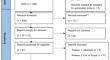
Methods: Adhering to PRISMA 2020 guidelines a search was conducted using PubMed and Ovid databases for publications from January 2000 to January 2023, with search terms including combinations of "brain metastasis," "race," "ethnicity," and "incidence." Three independent reviewers screened for inclusion criteria encompassing studies clearly reporting primary cancer sites, patient demographics including race, and synchronous BM (sBM) incidence.
Results: Of 806 articles, 10 studies comprised of mainly adult patients from the United States met final inclusion for data analysis. Higher sBM incidence proportions were observed in American Indian/Alaska native patients for primary breast (p < 0.001), colorectal (p = 0.015), and esophageal cancers (p = 0.024) as well as in Asian or Pacific islanders for primary stomach (p < 0.001), thyroid (p = 0.006), and lung/bronchus cancers (p < 0.001) yet higher proportions in White patients for malignant melanoma (p < 0.001). Compared to White patients, Black patients had higher sBM incidence likelihood in breast cancer (OR = 1.27, p = 0.01) but lower likelihood in renal (OR = 0.46, p < 0.001) and esophageal cancers (OR = 0.31, p = 0.005). American Indian/Alaska native patients had a higher sBM likelihood (OR = 3.78, p = 0.004) relative to White patients in esophageal cancer.
Conclusions: These findings reveal several comparative racial differences in sBM incidence arising from different primary cancer origins, underscoring a need for further research to explain these variations. Identifying the factors contributing to these disparities holds the potential to promote greater equity in oncological care according to cancer type.
期刊介绍:
The Journal of Neuro-Oncology is a multi-disciplinary journal encompassing basic, applied, and clinical investigations in all research areas as they relate to cancer and the central nervous system. It provides a single forum for communication among neurologists, neurosurgeons, radiotherapists, medical oncologists, neuropathologists, neurodiagnosticians, and laboratory-based oncologists conducting relevant research. The Journal of Neuro-Oncology does not seek to isolate the field, but rather to focus the efforts of many disciplines in one publication through a format which pulls together these diverse interests. More than any other field of oncology, cancer of the central nervous system requires multi-disciplinary approaches. To alleviate having to scan dozens of journals of cell biology, pathology, laboratory and clinical endeavours, JNO is a periodical in which current, high-quality, relevant research in all aspects of neuro-oncology may be found.




 京公网安备 11010802042870号
京ICP备2023020795号-1
京公网安备 11010802042870号
京ICP备2023020795号-1

 分享
分享
 求助内容:
求助内容: 应助结果提醒方式:
 扫码关注我们
