JeongMan Park, Yu Jin Kim, Minwook Lee, Dongkil Kim, JeongMin Sim, Kyunggi Cho, Ju Hyung Moon, Kyoung Su Sung, Dong Hyeon Lee, Jaejoon Lim
{"title":"Correlation of LLT-1 and NLRC4 inflammasome and its effect on glioblastoma prognosis.","authors":"JeongMan Park, Yu Jin Kim, Minwook Lee, Dongkil Kim, JeongMin Sim, Kyunggi Cho, Ju Hyung Moon, Kyoung Su Sung, Dong Hyeon Lee, Jaejoon Lim","doi":"10.1007/s11060-024-04750-y","DOIUrl":null,"url":null,"abstract":"<p><strong>Purpose: </strong>LLT-1 is a well-known ligand for the natural killer (NK) cell inhibitory receptor NKRP1A. Here, we examined NLRC4 inflammasome components and LLT-1 expression in glioblastoma (GBM) tissues to elucidate potential associations and interactions between these factors.</p><p><strong>Methods: </strong>GBM tissues were collected for RNA sequencing (RNA-seq) and Immunofluorescent experiments. Colocalization of LLT-1 and other proteins was assessed by immunofluorescence. Computational analyses utilized RNA-seq data from 296 to 52 patients from the Chinese Glioma Genome Atlas and CHA medical records, respectively. These data were subjected to survival, non-negative matrix factorization clustering, Gene Ontology enrichment, and protein-protein interaction analyses. Receptor-ligand interactions between tumor and immune cells were confirmed by single-cell RNA-seq analysis.</p><p><strong>Results: </strong>In GBM tissues, LLT-1 was predominantly colocalized with glial fibrillary acidic protein (GFAP)-expressing astrocytes, but not with microglial markers like Iba-1. Additionally, LLT-1 and activated NLRC4 inflammasomes were mainly co-expressed in intratumoral astrocytes, suggesting an association between LLT-1, NLRC4, and glioma malignancy. High LLT-1 expression correlates with poor prognosis, particularly in the mesenchymal subtype, and is associated with TNF and NOD-like receptor signaling pathway enrichment, indicating a potential role in tumor inflammation and progression. At the single-cell level, mesenchymal-like malignant cells showed high NF, NLR, and IL-1 signaling pathway enrichment compared to other malignant cell types.</p><p><strong>Conclusion: </strong>We revealed an association between NLRC4 inflammasome activity and LLT-1 expression, suggesting a novel regulatory pathway involving TNF, inflammasomes, and IL-1, potentially offering new NK-cell-mediated anti-glioma approaches.</p>","PeriodicalId":16425,"journal":{"name":"Journal of Neuro-Oncology","volume":" ","pages":"543-553"},"PeriodicalIF":3.1000,"publicationDate":"2024-09-01","publicationTypes":"Journal Article","fieldsOfStudy":null,"isOpenAccess":false,"openAccessPdf":"","citationCount":"0","resultStr":null,"platform":"Semanticscholar","paperid":null,"PeriodicalName":"Journal of Neuro-Oncology","FirstCategoryId":"3","ListUrlMain":"https://doi.org/10.1007/s11060-024-04750-y","RegionNum":2,"RegionCategory":"医学","ArticlePicture":[],"TitleCN":null,"AbstractTextCN":null,"PMCID":null,"EPubDate":"2024/6/22 0:00:00","PubModel":"Epub","JCR":"Q2","JCRName":"CLINICAL NEUROLOGY","Score":null,"Total":0}
引用次数: 0
Abstract
Purpose: LLT-1 is a well-known ligand for the natural killer (NK) cell inhibitory receptor NKRP1A. Here, we examined NLRC4 inflammasome components and LLT-1 expression in glioblastoma (GBM) tissues to elucidate potential associations and interactions between these factors.
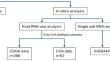
Methods: GBM tissues were collected for RNA sequencing (RNA-seq) and Immunofluorescent experiments. Colocalization of LLT-1 and other proteins was assessed by immunofluorescence. Computational analyses utilized RNA-seq data from 296 to 52 patients from the Chinese Glioma Genome Atlas and CHA medical records, respectively. These data were subjected to survival, non-negative matrix factorization clustering, Gene Ontology enrichment, and protein-protein interaction analyses. Receptor-ligand interactions between tumor and immune cells were confirmed by single-cell RNA-seq analysis.
Results: In GBM tissues, LLT-1 was predominantly colocalized with glial fibrillary acidic protein (GFAP)-expressing astrocytes, but not with microglial markers like Iba-1. Additionally, LLT-1 and activated NLRC4 inflammasomes were mainly co-expressed in intratumoral astrocytes, suggesting an association between LLT-1, NLRC4, and glioma malignancy. High LLT-1 expression correlates with poor prognosis, particularly in the mesenchymal subtype, and is associated with TNF and NOD-like receptor signaling pathway enrichment, indicating a potential role in tumor inflammation and progression. At the single-cell level, mesenchymal-like malignant cells showed high NF, NLR, and IL-1 signaling pathway enrichment compared to other malignant cell types.
Conclusion: We revealed an association between NLRC4 inflammasome activity and LLT-1 expression, suggesting a novel regulatory pathway involving TNF, inflammasomes, and IL-1, potentially offering new NK-cell-mediated anti-glioma approaches.
期刊介绍:
The Journal of Neuro-Oncology is a multi-disciplinary journal encompassing basic, applied, and clinical investigations in all research areas as they relate to cancer and the central nervous system. It provides a single forum for communication among neurologists, neurosurgeons, radiotherapists, medical oncologists, neuropathologists, neurodiagnosticians, and laboratory-based oncologists conducting relevant research. The Journal of Neuro-Oncology does not seek to isolate the field, but rather to focus the efforts of many disciplines in one publication through a format which pulls together these diverse interests. More than any other field of oncology, cancer of the central nervous system requires multi-disciplinary approaches. To alleviate having to scan dozens of journals of cell biology, pathology, laboratory and clinical endeavours, JNO is a periodical in which current, high-quality, relevant research in all aspects of neuro-oncology may be found.




 京公网安备 11010802042870号
京ICP备2023020795号-1
京公网安备 11010802042870号
京ICP备2023020795号-1

 分享
分享
 求助内容:
求助内容: 应助结果提醒方式:
 扫码关注我们
