Identification of a biomarker for Bacillus thuringiensis strains with high toxicity against Spodoptera frugiperda based on insecticidal gene linkage analysis
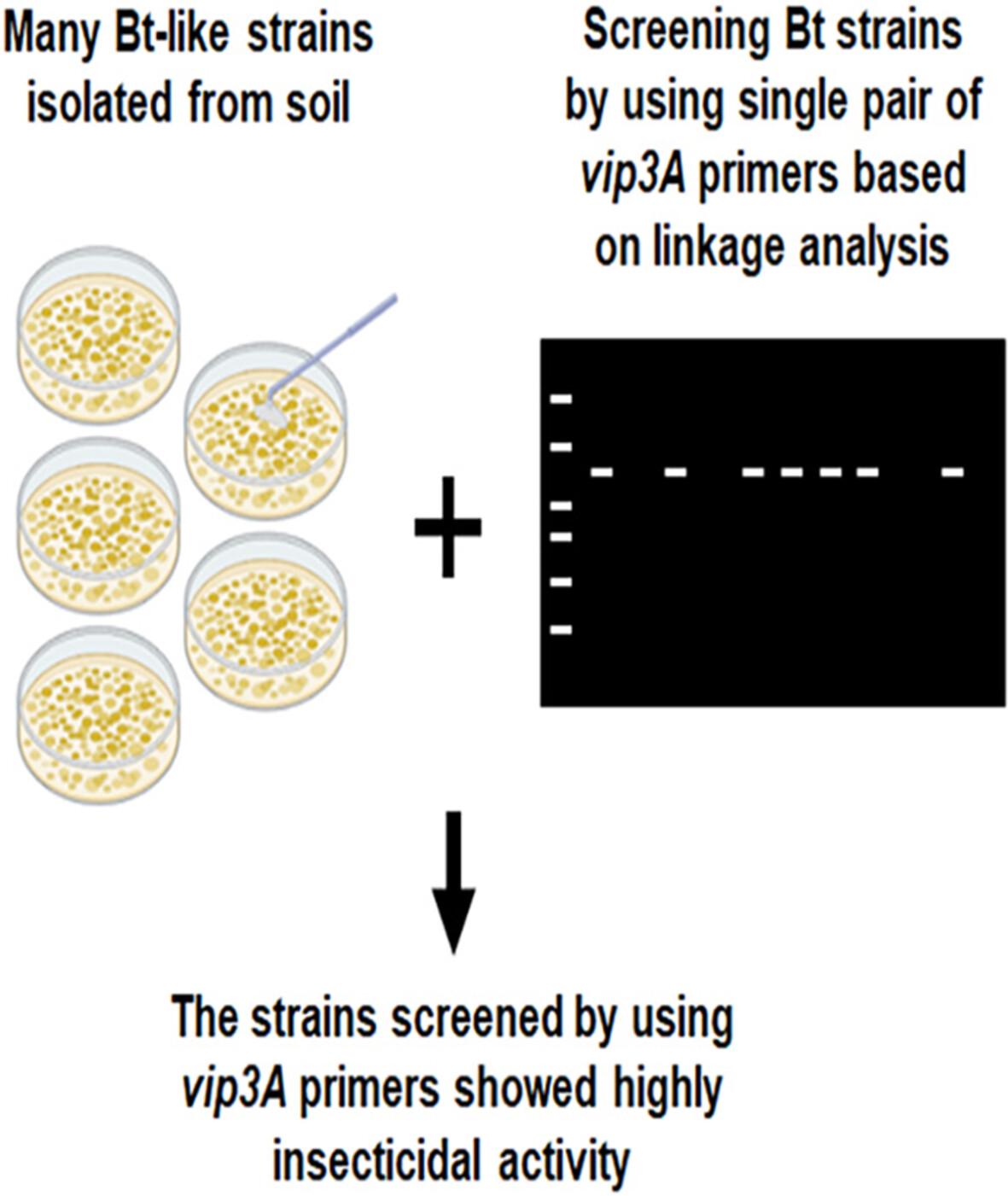
Bacillus thuringiensis (Bt) is a Gram-positive bacterium that produces various insecticidal proteins used to control insect pests. Spodoptera frugiperda is a global insect pest which causes serious damage to crops, but bio-insecticides currently available to control this pest have limited activity and so new ones are always being sought. In this study we have tested the hypothesis that a biomarker for strain toxicity could be found that would greatly facilitate the identification of new potential products.
RESULTS
Using genomic sequencing data we constructed a linkage network of insecticidal genes from 1957 Bt genomes and found that four gene families, namely cry1A, cry1I, cry2A and vip3A, showed strong linkage. For 95 strains isolated from soil samples we assayed them for toxicity towards S. frugiperda and for the presence of the above gene families. All of the strains that showed high toxicity also contained a member of the vip3A gene family. Two of them were more toxic than a commercially available strain and genomic sequencing identified a number of potentially novel toxin-encoding genes.
期刊介绍:
Pest Management Science is the international journal of research and development in crop protection and pest control. Since its launch in 1970, the journal has become the premier forum for papers on the discovery, application, and impact on the environment of products and strategies designed for pest management.
Published for SCI by John Wiley & Sons Ltd.




 京公网安备 11010802042870号
京ICP备2023020795号-1
京公网安备 11010802042870号
京ICP备2023020795号-1

 分享
分享
 求助内容:
求助内容: 应助结果提醒方式:
 扫码关注我们
