Souhir Guidara, Antoine Seyve, Delphine Poncet, Camille Leonce, Pierre-Paul Bringuier, Anne McLeer, Dominik Sturm, Stéphanie Cartalat, Thiebaud Picart, Anthony Ferrari, Jürgen Hench, Stephan Frank, David Meyronet, François Ducray, Marc Barritault
{"title":"Characteristics of H3K27M-mutant diffuse gliomas with a non-midline location.","authors":"Souhir Guidara, Antoine Seyve, Delphine Poncet, Camille Leonce, Pierre-Paul Bringuier, Anne McLeer, Dominik Sturm, Stéphanie Cartalat, Thiebaud Picart, Anthony Ferrari, Jürgen Hench, Stephan Frank, David Meyronet, François Ducray, Marc Barritault","doi":"10.1007/s11060-024-04733-z","DOIUrl":null,"url":null,"abstract":"<p><strong>Purpose: </strong>Diffuse midline gliomas (DMG) with H3K27 alterations (H3K27M-DMG) are a highly aggressive form of brain cancer. In rare cases, H3K27 mutations have been observed in diffuse non-midline gliomas (DNMG). It is currently unclear how these tumors should be classified. Herein, we analyze the characteristics of DNMG with H3K27M mutations.</p><p><strong>Methods: </strong>We reviewed the clinical, radiological and histological characteristics of all patients with an H3K27M mutated diffuse glioma diagnosed in our institution, between 2016 and 2023, to identify cases with a non-midline location. We then performed a molecular characterization (DNA methylation profiling, whole genome and transcriptome sequencing or targeted sequencing) of patients with an H3K27M-mutant DNMG and reviewed previously reported cases.</p><p><strong>Results: </strong>Among 51 patients (18 children and 33 adults) diagnosed with an H3K27M diffuse glioma, we identified two patients (4%) who had a non-midline location. Including our two patients, 39 patients were reported in the literature with an H3K27M-mutant DNMG. Tumors were most frequently located in the temporal lobe (48%), affected adolescents and adults, and were associated with a poor outcome (median overall survival was 10.3 months (0.1-84)). Median age at diagnosis was 19.1 years. Tumors frequently harbored TP53 mutations (74%), ATRX mutations (71%) and PDGFRA mutations or amplifications (44%). In DNA methylation analysis, H3K27M-mutant DNMG clustered within or close to the reference group of H3K27M-mutant DMG. Compared to their midline counterpart, non-midline gliomas with H3K27M mutations seemed more frequently associated with PDGFRA alterations.</p><p><strong>Conclusion: </strong>DNMG with H3K27M mutations share many similarities with their midline counterpart, suggesting that they correspond to a rare anatomical presentation of these tumors. This is of paramount importance, as they may benefit from new therapeutic approaches such as ONC201.</p>","PeriodicalId":16425,"journal":{"name":"Journal of Neuro-Oncology","volume":" ","pages":"391-398"},"PeriodicalIF":3.1000,"publicationDate":"2024-09-01","publicationTypes":"Journal Article","fieldsOfStudy":null,"isOpenAccess":false,"openAccessPdf":"","citationCount":"0","resultStr":null,"platform":"Semanticscholar","paperid":null,"PeriodicalName":"Journal of Neuro-Oncology","FirstCategoryId":"3","ListUrlMain":"https://doi.org/10.1007/s11060-024-04733-z","RegionNum":2,"RegionCategory":"医学","ArticlePicture":[],"TitleCN":null,"AbstractTextCN":null,"PMCID":null,"EPubDate":"2024/6/27 0:00:00","PubModel":"Epub","JCR":"Q2","JCRName":"CLINICAL NEUROLOGY","Score":null,"Total":0}
引用次数: 0
Abstract
Purpose: Diffuse midline gliomas (DMG) with H3K27 alterations (H3K27M-DMG) are a highly aggressive form of brain cancer. In rare cases, H3K27 mutations have been observed in diffuse non-midline gliomas (DNMG). It is currently unclear how these tumors should be classified. Herein, we analyze the characteristics of DNMG with H3K27M mutations.
Methods: We reviewed the clinical, radiological and histological characteristics of all patients with an H3K27M mutated diffuse glioma diagnosed in our institution, between 2016 and 2023, to identify cases with a non-midline location. We then performed a molecular characterization (DNA methylation profiling, whole genome and transcriptome sequencing or targeted sequencing) of patients with an H3K27M-mutant DNMG and reviewed previously reported cases.
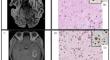
Results: Among 51 patients (18 children and 33 adults) diagnosed with an H3K27M diffuse glioma, we identified two patients (4%) who had a non-midline location. Including our two patients, 39 patients were reported in the literature with an H3K27M-mutant DNMG. Tumors were most frequently located in the temporal lobe (48%), affected adolescents and adults, and were associated with a poor outcome (median overall survival was 10.3 months (0.1-84)). Median age at diagnosis was 19.1 years. Tumors frequently harbored TP53 mutations (74%), ATRX mutations (71%) and PDGFRA mutations or amplifications (44%). In DNA methylation analysis, H3K27M-mutant DNMG clustered within or close to the reference group of H3K27M-mutant DMG. Compared to their midline counterpart, non-midline gliomas with H3K27M mutations seemed more frequently associated with PDGFRA alterations.
Conclusion: DNMG with H3K27M mutations share many similarities with their midline counterpart, suggesting that they correspond to a rare anatomical presentation of these tumors. This is of paramount importance, as they may benefit from new therapeutic approaches such as ONC201.
期刊介绍:
The Journal of Neuro-Oncology is a multi-disciplinary journal encompassing basic, applied, and clinical investigations in all research areas as they relate to cancer and the central nervous system. It provides a single forum for communication among neurologists, neurosurgeons, radiotherapists, medical oncologists, neuropathologists, neurodiagnosticians, and laboratory-based oncologists conducting relevant research. The Journal of Neuro-Oncology does not seek to isolate the field, but rather to focus the efforts of many disciplines in one publication through a format which pulls together these diverse interests. More than any other field of oncology, cancer of the central nervous system requires multi-disciplinary approaches. To alleviate having to scan dozens of journals of cell biology, pathology, laboratory and clinical endeavours, JNO is a periodical in which current, high-quality, relevant research in all aspects of neuro-oncology may be found.



 京公网安备 11010802042870号
京ICP备2023020795号-1
京公网安备 11010802042870号
京ICP备2023020795号-1

 分享
分享
 求助内容:
求助内容: 应助结果提醒方式:
 扫码关注我们
