{"title":"Analyzing muscle thickness changes in lateral abdominal muscles while exercising using virtual reality.","authors":"Masashi Kitano, Masami Nakamoto, Kengo Kawanishi, Masahiko Hara, Shintarou Kudo","doi":"10.1589/jpts.36.372","DOIUrl":null,"url":null,"abstract":"<p><p>[Purpose] Virtual reality (VR) rehabilitation has become popular in the medical field. VR-guided exercises (VR-ge) have demonstrated positive effects on gait and trunk control. Trunk muscle activation, particularly that of the transversus abdominis (TrA), is responsible for these improvements. However, the difference in muscle activation between VR and real space remains unclear. Therefore, this study aimed to clarify the differences in trunk muscle activation during exercise therapy performed in VR and real space. [Participants and Methods] A total of 22 healthy male volunteers were divided into two equal groups: VR-ge and Control exercise (C-e) groups. Both groups performed reaching exercises in a seated position. Ultrasound imaging was used to measure the thicknesses of the right external oblique, internal oblique, and TrA muscles, both at rest and during the reaching exercises performed in six different directions. [Results] No significant differences were observed in TrA muscle thickness changes between the groups before the intervention. However, after the intervention, the VR-ge group showed significantly greater TrA muscle thickness changes during reaching compared to that of the C-e group. [Conclusion] VR-ge increased TrA activation during reaching compared to exercising in real space.</p>","PeriodicalId":16834,"journal":{"name":"Journal of Physical Therapy Science","volume":"36 7","pages":"372-377"},"PeriodicalIF":0.0000,"publicationDate":"2024-07-01","publicationTypes":"Journal Article","fieldsOfStudy":null,"isOpenAccess":false,"openAccessPdf":"https://www.ncbi.nlm.nih.gov/pmc/articles/PMC11214813/pdf/","citationCount":"0","resultStr":null,"platform":"Semanticscholar","paperid":null,"PeriodicalName":"Journal of Physical Therapy Science","FirstCategoryId":"1085","ListUrlMain":"https://doi.org/10.1589/jpts.36.372","RegionNum":0,"RegionCategory":null,"ArticlePicture":[],"TitleCN":null,"AbstractTextCN":null,"PMCID":null,"EPubDate":"","PubModel":"","JCR":"","JCRName":"","Score":null,"Total":0}
引用次数: 0
Abstract
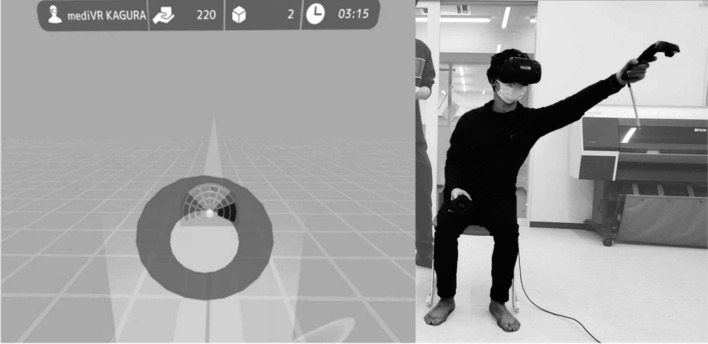
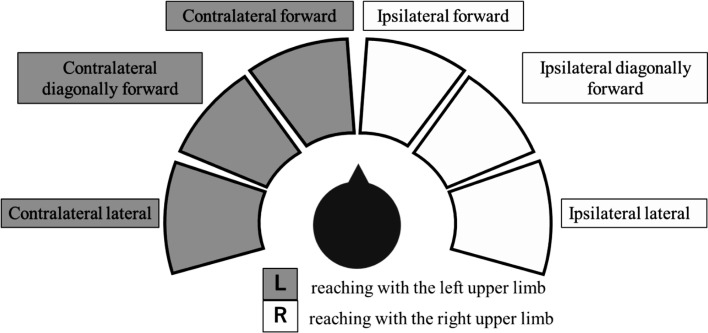
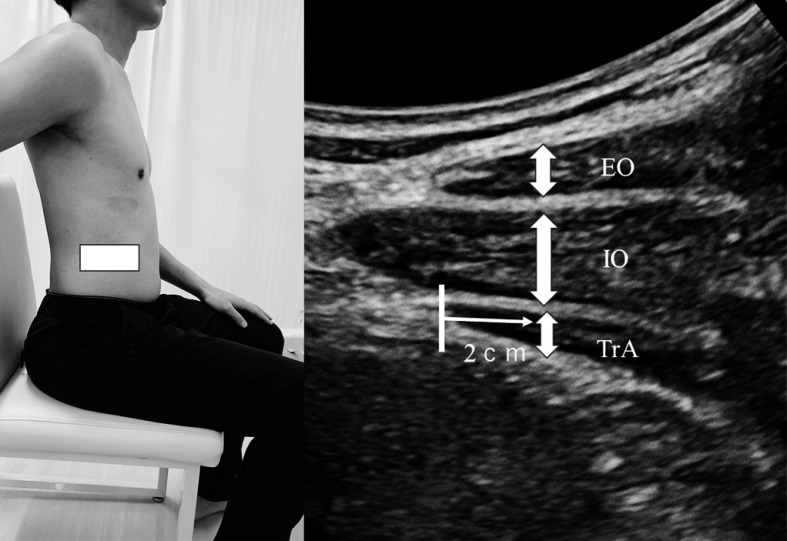
[Purpose] Virtual reality (VR) rehabilitation has become popular in the medical field. VR-guided exercises (VR-ge) have demonstrated positive effects on gait and trunk control. Trunk muscle activation, particularly that of the transversus abdominis (TrA), is responsible for these improvements. However, the difference in muscle activation between VR and real space remains unclear. Therefore, this study aimed to clarify the differences in trunk muscle activation during exercise therapy performed in VR and real space. [Participants and Methods] A total of 22 healthy male volunteers were divided into two equal groups: VR-ge and Control exercise (C-e) groups. Both groups performed reaching exercises in a seated position. Ultrasound imaging was used to measure the thicknesses of the right external oblique, internal oblique, and TrA muscles, both at rest and during the reaching exercises performed in six different directions. [Results] No significant differences were observed in TrA muscle thickness changes between the groups before the intervention. However, after the intervention, the VR-ge group showed significantly greater TrA muscle thickness changes during reaching compared to that of the C-e group. [Conclusion] VR-ge increased TrA activation during reaching compared to exercising in real space.



 京公网安备 11010802042870号
京ICP备2023020795号-1
京公网安备 11010802042870号
京ICP备2023020795号-1

 分享
分享
 求助内容:
求助内容: 应助结果提醒方式:
 扫码关注我们
