Pablo Cruces, Jaime Retamal, Andrés Damián, Graciela Lago, Fernanda Blasina, Vanessa Oviedo, Tania Medina, Agustín Pérez, Lucía Vaamonde, Rosina Dapueto, Sebastian González-Dambrauskas, Alberto Serra, Nicolas Monteverde-Fernandez, Mauro Namías, Javier Martínez, Daniel E Hurtado
{"title":"A machine-learning regional clustering approach to understand ventilator-induced lung injury: a proof-of-concept experimental study.","authors":"Pablo Cruces, Jaime Retamal, Andrés Damián, Graciela Lago, Fernanda Blasina, Vanessa Oviedo, Tania Medina, Agustín Pérez, Lucía Vaamonde, Rosina Dapueto, Sebastian González-Dambrauskas, Alberto Serra, Nicolas Monteverde-Fernandez, Mauro Namías, Javier Martínez, Daniel E Hurtado","doi":"10.1186/s40635-024-00641-8","DOIUrl":null,"url":null,"abstract":"<p><strong>Background: </strong>The spatiotemporal progression and patterns of tissue deformation in ventilator-induced lung injury (VILI) remain understudied. Our aim was to identify lung clusters based on their regional mechanical behavior over space and time in lungs subjected to VILI using machine-learning techniques.</p><p><strong>Results: </strong>Ten anesthetized pigs (27 ± 2 kg) were studied. Eight subjects were analyzed. End-inspiratory and end-expiratory lung computed tomography scans were performed at the beginning and after 12 h of one-hit VILI model. Regional image-based biomechanical analysis was used to determine end-expiratory aeration, tidal recruitment, and volumetric strain for both early and late stages. Clustering analysis was performed using principal component analysis and K-Means algorithms. We identified three different clusters of lung tissue: Stable, Recruitable Unstable, and Non-Recruitable Unstable. End-expiratory aeration, tidal recruitment, and volumetric strain were significantly different between clusters at early stage. At late stage, we found a step loss of end-expiratory aeration among clusters, lowest in Stable, followed by Unstable Recruitable, and highest in the Unstable Non-Recruitable cluster. Volumetric strain remaining unchanged in the Stable cluster, with slight increases in the Recruitable cluster, and strong reduction in the Unstable Non-Recruitable cluster.</p><p><strong>Conclusions: </strong>VILI is a regional and dynamic phenomenon. Using unbiased machine-learning techniques we can identify the coexistence of three functional lung tissue compartments with different spatiotemporal regional biomechanical behavior.</p>","PeriodicalId":13750,"journal":{"name":"Intensive Care Medicine Experimental","volume":"12 1","pages":"60"},"PeriodicalIF":2.8000,"publicationDate":"2024-07-02","publicationTypes":"Journal Article","fieldsOfStudy":null,"isOpenAccess":false,"openAccessPdf":"https://www.ncbi.nlm.nih.gov/pmc/articles/PMC11220131/pdf/","citationCount":"0","resultStr":null,"platform":"Semanticscholar","paperid":null,"PeriodicalName":"Intensive Care Medicine Experimental","FirstCategoryId":"1085","ListUrlMain":"https://doi.org/10.1186/s40635-024-00641-8","RegionNum":0,"RegionCategory":null,"ArticlePicture":[],"TitleCN":null,"AbstractTextCN":null,"PMCID":null,"EPubDate":"","PubModel":"","JCR":"Q2","JCRName":"CRITICAL CARE MEDICINE","Score":null,"Total":0}
引用次数: 0
Abstract
Background: The spatiotemporal progression and patterns of tissue deformation in ventilator-induced lung injury (VILI) remain understudied. Our aim was to identify lung clusters based on their regional mechanical behavior over space and time in lungs subjected to VILI using machine-learning techniques.
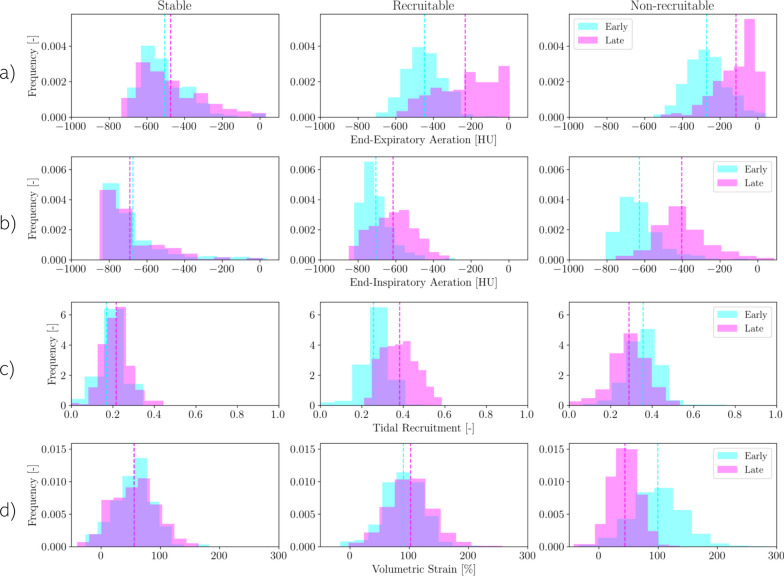
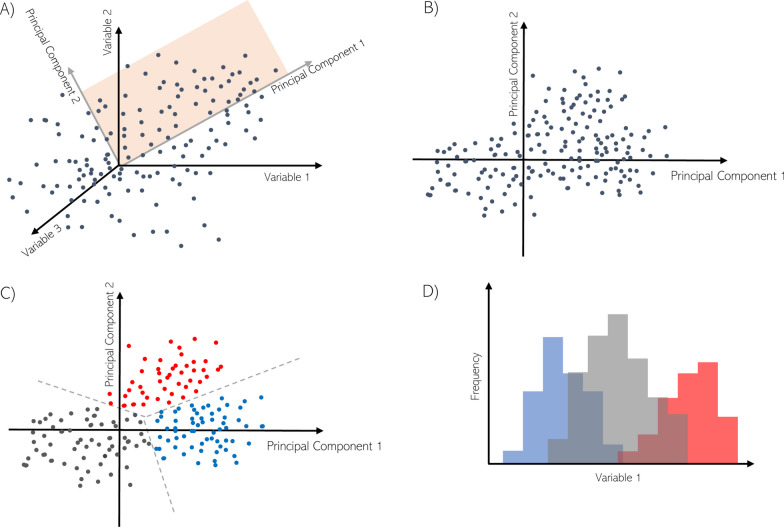
Results: Ten anesthetized pigs (27 ± 2 kg) were studied. Eight subjects were analyzed. End-inspiratory and end-expiratory lung computed tomography scans were performed at the beginning and after 12 h of one-hit VILI model. Regional image-based biomechanical analysis was used to determine end-expiratory aeration, tidal recruitment, and volumetric strain for both early and late stages. Clustering analysis was performed using principal component analysis and K-Means algorithms. We identified three different clusters of lung tissue: Stable, Recruitable Unstable, and Non-Recruitable Unstable. End-expiratory aeration, tidal recruitment, and volumetric strain were significantly different between clusters at early stage. At late stage, we found a step loss of end-expiratory aeration among clusters, lowest in Stable, followed by Unstable Recruitable, and highest in the Unstable Non-Recruitable cluster. Volumetric strain remaining unchanged in the Stable cluster, with slight increases in the Recruitable cluster, and strong reduction in the Unstable Non-Recruitable cluster.
Conclusions: VILI is a regional and dynamic phenomenon. Using unbiased machine-learning techniques we can identify the coexistence of three functional lung tissue compartments with different spatiotemporal regional biomechanical behavior.




 京公网安备 11010802042870号
京ICP备2023020795号-1
京公网安备 11010802042870号
京ICP备2023020795号-1

 分享
分享
 求助内容:
求助内容: 应助结果提醒方式:
 扫码关注我们
