Patricia O Ukegbu, Beulah Ortutu, Uche P Chinaza, Alice Ojwang
{"title":"Socio-demographic characteristics and dietary pattern of community-dwelling adults in Abia State, Nigeria.","authors":"Patricia O Ukegbu, Beulah Ortutu, Uche P Chinaza, Alice Ojwang","doi":"10.4314/gmj.v57i3.12","DOIUrl":null,"url":null,"abstract":"<p><strong>Objective: </strong>Identification of dietary patterns and their association with socio-demographic factors.</p><p><strong>Design: </strong>Community-based cross-sectional study design.</p><p><strong>Setting: </strong>Urban and rural communities in Abia State, Nigeria.</p><p><strong>Participants: </strong>Eight hundred and sixty-eight (868) male and female adults aged 20 to 59 years.</p><p><strong>Methods: </strong>Identification of Dietary patterns (DP) by Principal Component Analysis (PCA) based on the consumption of 10 food groups, assessed using a 7-day qualitative food frequency questionnaire. Bivariate and multivariate logistic regression analyses evaluated the association between identified patterns and socio-economic factors.</p><p><strong>Results: </strong>Two dietary patterns 'traditional and convenience DPs were identified, explaining 52% of the total variance. The traditional DP was loaded with starchy staples, vegetable soups/sauces, and animal proteins. The convenience DP was characterised by high factor loading of processed cereals, carbonated drinks and alcoholic beverages. Larger households (>3) had lower odds of adhering to high traditional DP [AOR =0.633; 95% CI (0.429-0.934); p = 0.021]. Females [AOR =1.586; 95% CI (1.104-2.279); p = 0.013] and middle-aged adults (AOR = 1.750; 95% CI (1.075-2.848);p = 0.024] were more likely to adhere to the convenience DP, whereas, the odds of adhering to the convenience pattern was lower among adults residing in rural areas [AOR =0.3161.586; 95% CI (0.219-0.456); p = 0.001].</p><p><strong>Conclusion: </strong>Socio-economic variables (age, gender, household size and place of residence) were associated with dietary patterns among community dwellers in Nigeria.</p><p><strong>Funding: </strong>None declared.</p>","PeriodicalId":94319,"journal":{"name":"Ghana medical journal","volume":"57 3","pages":"241-249"},"PeriodicalIF":0.0000,"publicationDate":"2023-09-01","publicationTypes":"Journal Article","fieldsOfStudy":null,"isOpenAccess":false,"openAccessPdf":"https://www.ncbi.nlm.nih.gov/pmc/articles/PMC11216734/pdf/","citationCount":"0","resultStr":null,"platform":"Semanticscholar","paperid":null,"PeriodicalName":"Ghana medical journal","FirstCategoryId":"1085","ListUrlMain":"https://doi.org/10.4314/gmj.v57i3.12","RegionNum":0,"RegionCategory":null,"ArticlePicture":[],"TitleCN":null,"AbstractTextCN":null,"PMCID":null,"EPubDate":"","PubModel":"","JCR":"","JCRName":"","Score":null,"Total":0}
引用次数: 0
Abstract
Objective: Identification of dietary patterns and their association with socio-demographic factors.
Design: Community-based cross-sectional study design.
Setting: Urban and rural communities in Abia State, Nigeria.
Participants: Eight hundred and sixty-eight (868) male and female adults aged 20 to 59 years.
Methods: Identification of Dietary patterns (DP) by Principal Component Analysis (PCA) based on the consumption of 10 food groups, assessed using a 7-day qualitative food frequency questionnaire. Bivariate and multivariate logistic regression analyses evaluated the association between identified patterns and socio-economic factors.
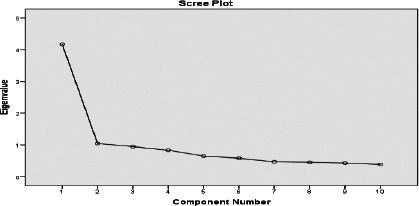
Results: Two dietary patterns 'traditional and convenience DPs were identified, explaining 52% of the total variance. The traditional DP was loaded with starchy staples, vegetable soups/sauces, and animal proteins. The convenience DP was characterised by high factor loading of processed cereals, carbonated drinks and alcoholic beverages. Larger households (>3) had lower odds of adhering to high traditional DP [AOR =0.633; 95% CI (0.429-0.934); p = 0.021]. Females [AOR =1.586; 95% CI (1.104-2.279); p = 0.013] and middle-aged adults (AOR = 1.750; 95% CI (1.075-2.848);p = 0.024] were more likely to adhere to the convenience DP, whereas, the odds of adhering to the convenience pattern was lower among adults residing in rural areas [AOR =0.3161.586; 95% CI (0.219-0.456); p = 0.001].
Conclusion: Socio-economic variables (age, gender, household size and place of residence) were associated with dietary patterns among community dwellers in Nigeria.



 京公网安备 11010802042870号
京ICP备2023020795号-1
京公网安备 11010802042870号
京ICP备2023020795号-1

 分享
分享

 求助内容:
求助内容: 应助结果提醒方式:
 扫码关注我们
