Ayman Hyder, Basma Sheta, Manar Eissa, Jürgen Schrezenmeir
{"title":"Silencing the FABP3 gene in insulin-secreting cells reduces fatty acid uptake and protects against lipotoxicity","authors":"Ayman Hyder, Basma Sheta, Manar Eissa, Jürgen Schrezenmeir","doi":"10.1007/s00592-024-02325-x","DOIUrl":null,"url":null,"abstract":"<div><h3>Background</h3><p>Long-term exposure of pancreatic islets to fatty acids (FAs), common in obesity, metabolic syndrome, and type 2 diabetes, leads to a compensatory hyperactivity followed by inflammation, apoptosis, dysfunctional beta cells, and results in insulin dependence of the patient. Restriction of fatty uptake by islet beta cells may protect them from lipotoxicity.</p><h3>Purpose</h3><p>Pancreatic islet beta cells express the fatty acid binding protein 3 (FABP3) to bind FAs and to orchestrate lipid signals. Based on this, we investigated whether downregulation of FABP3, by <i>Fabp3</i> silencing, might slow lipid metabolism and protect against lipotoxicity in insulin-secreting cells.</p><h3>Results</h3><p>Neither <i>Fabp3</i> silencing, nor overexpression affected the glucose-stimulated insulin secretion in absence of FAs. <i>Fabp3</i> silencing decreased FA-uptake, lipid droplets formation, and the expression of the lipid accumulation-regulating gene <i>Dgat1</i> in Ins1E cells. It reduced FA-induced inflammation by deactivation of NF-κB, which was associated with upregulation of IκBα and deactivation of the NF-κB p65 nuclear translocation, and the downregulation of the cytokines ILl-6, IL-1β, and TNFα. Ins1E cells were protected from the FA-induced apoptosis as assessed by different parameters including DNA degradation and cleaved caspase-3 immunoblotting. Furthermore, FABP3 silencing improved the viability, <i>Pdx1</i> gene expression, and the insulin-secreting function in cells long-term cultured with palmitic acid. All results were confirmed by the opposite action rendered by FABP3 overexpression.</p><h3>Conclusion</h3><p>The present data reveals that pancreatic beta cells can be protected from lipotoxicity by inhibition of FA-uptake, intracellular utilization and accumulation. FABP3 inhibition, hence, may be a useful pharmaceutical approach in obesity, metabolic syndrome, and type 2 diabetes.</p></div>","PeriodicalId":6921,"journal":{"name":"Acta Diabetologica","volume":"61 12","pages":"1577 - 1588"},"PeriodicalIF":2.9000,"publicationDate":"2024-07-04","publicationTypes":"Journal Article","fieldsOfStudy":null,"isOpenAccess":false,"openAccessPdf":"https://link.springer.com/content/pdf/10.1007/s00592-024-02325-x.pdf","citationCount":"0","resultStr":null,"platform":"Semanticscholar","paperid":null,"PeriodicalName":"Acta Diabetologica","FirstCategoryId":"3","ListUrlMain":"https://link.springer.com/article/10.1007/s00592-024-02325-x","RegionNum":3,"RegionCategory":"医学","ArticlePicture":[],"TitleCN":null,"AbstractTextCN":null,"PMCID":null,"EPubDate":"","PubModel":"","JCR":"Q2","JCRName":"ENDOCRINOLOGY & METABOLISM","Score":null,"Total":0}
引用次数: 0
Abstract
Background
Long-term exposure of pancreatic islets to fatty acids (FAs), common in obesity, metabolic syndrome, and type 2 diabetes, leads to a compensatory hyperactivity followed by inflammation, apoptosis, dysfunctional beta cells, and results in insulin dependence of the patient. Restriction of fatty uptake by islet beta cells may protect them from lipotoxicity.
Purpose
Pancreatic islet beta cells express the fatty acid binding protein 3 (FABP3) to bind FAs and to orchestrate lipid signals. Based on this, we investigated whether downregulation of FABP3, by Fabp3 silencing, might slow lipid metabolism and protect against lipotoxicity in insulin-secreting cells.
Results
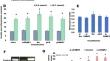
Neither Fabp3 silencing, nor overexpression affected the glucose-stimulated insulin secretion in absence of FAs. Fabp3 silencing decreased FA-uptake, lipid droplets formation, and the expression of the lipid accumulation-regulating gene Dgat1 in Ins1E cells. It reduced FA-induced inflammation by deactivation of NF-κB, which was associated with upregulation of IκBα and deactivation of the NF-κB p65 nuclear translocation, and the downregulation of the cytokines ILl-6, IL-1β, and TNFα. Ins1E cells were protected from the FA-induced apoptosis as assessed by different parameters including DNA degradation and cleaved caspase-3 immunoblotting. Furthermore, FABP3 silencing improved the viability, Pdx1 gene expression, and the insulin-secreting function in cells long-term cultured with palmitic acid. All results were confirmed by the opposite action rendered by FABP3 overexpression.
Conclusion
The present data reveals that pancreatic beta cells can be protected from lipotoxicity by inhibition of FA-uptake, intracellular utilization and accumulation. FABP3 inhibition, hence, may be a useful pharmaceutical approach in obesity, metabolic syndrome, and type 2 diabetes.
期刊介绍:
Acta Diabetologica is a journal that publishes reports of experimental and clinical research on diabetes mellitus and related metabolic diseases. Original contributions on biochemical, physiological, pathophysiological and clinical aspects of research on diabetes and metabolic diseases are welcome. Reports are published in the form of original articles, short communications and letters to the editor. Invited reviews and editorials are also published. A Methodology forum, which publishes contributions on methodological aspects of diabetes in vivo and in vitro, is also available. The Editor-in-chief will be pleased to consider articles describing new techniques (e.g., new transplantation methods, metabolic models), of innovative importance in the field of diabetes/metabolism. Finally, workshop reports are also welcome in Acta Diabetologica.



 京公网安备 11010802042870号
京ICP备2023020795号-1
京公网安备 11010802042870号
京ICP备2023020795号-1

 分享
分享
 求助内容:
求助内容: 应助结果提醒方式:
 扫码关注我们
