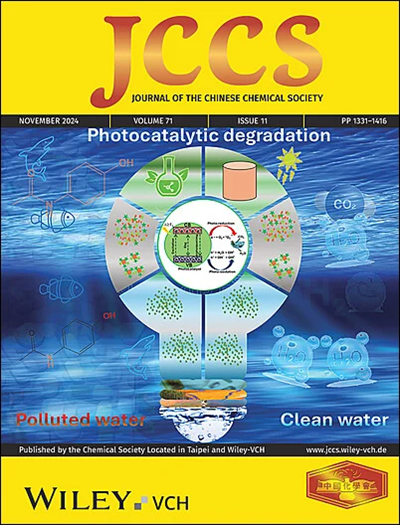
Harvesting surface (interfacial) energy for tribocatalytic degradation of hazardous dye pollutants using nanostructured materials: A review

IF 1.5 4区 化学 Q3 CHEMISTRY, MULTIDISCIPLINARY Journal of The Chinese Chemical Society Pub Date : 2024-07-02 DOI:10.1002/jccs.202400157
Stephen Sunday Emmanuel, Ademidun Adeola Adesibikan
{"title":"Harvesting surface (interfacial) energy for tribocatalytic degradation of hazardous dye pollutants using nanostructured materials: A review","authors":"Stephen Sunday Emmanuel,&nbsp;Ademidun Adeola Adesibikan","doi":"10.1002/jccs.202400157","DOIUrl":null,"url":null,"abstract":"<div>\n \n \n <section>\n \n <h3> Introduction</h3>\n \n <p>Tribocatalysis, an emerging cutting-edge technique that uses frictional mechanical energy to activate the catalytic operation of a reaction or material including nanomaterials has garnered the interest of the research community in recent times.</p>\n </section>\n \n <section>\n \n <h3> Aim</h3>\n \n <p>This study aimed to critically review original research works directed toward tribocatalytic degradation of various hazardous dye pollutants. Notably, in this review, various nanomaterials and their composites with outstanding tailored degradation profiles are explored for their tribocatalytic degradation efficiency for various dye pollutants. In addition, the effect of various operating factors that are of importance to engineers, industries, and investors for optimization purposes was pragmatically discussed. Also, the effect of electron trapping and radical scavengers alongside the mechanism of tribocatalytic degradation was empirically analyzed.</p>\n </section>\n \n <section>\n \n <h3> Results</h3>\n \n <p>From this work, it was found that the maximum tribocatalytic degradation efficiency was &gt;80% in most cases at an optimum temperature of 20–40°C, time taken of 0.5-48 hours, and stirring speed of 500-1000rmp. It was discovered that magnetic stirring enhances the production of •OH, O<sub>2</sub>•, and h+ by the nanomaterials that are mechanistically responsible for the degradation of the dye pollutants. Also, it was revealed that expended tribocatalyst can be eluted mostly using H<sub>2O</sub> and can be reused up to 3–10 times while still sustaining degradation efficiency of &gt;80% in most cases and this suggests the industrial scalability and eco-friendliness potential of this approach.</p>\n </section>\n \n <section>\n \n <h3> Conclusion</h3>\n \n <p>In the end, challenges and research gaps that can pave the way for method improvement and also serve as future research hotspots for researchers were presented.</p>\n </section>\n </div>","PeriodicalId":17262,"journal":{"name":"Journal of The Chinese Chemical Society","volume":"71 9","pages":"944-977"},"PeriodicalIF":1.5000,"publicationDate":"2024-07-02","publicationTypes":"Journal Article","fieldsOfStudy":null,"isOpenAccess":false,"openAccessPdf":"","citationCount":"0","resultStr":null,"platform":"Semanticscholar","paperid":null,"PeriodicalName":"Journal of The Chinese Chemical Society","FirstCategoryId":"92","ListUrlMain":"https://onlinelibrary.wiley.com/doi/10.1002/jccs.202400157","RegionNum":4,"RegionCategory":"化学","ArticlePicture":[],"TitleCN":null,"AbstractTextCN":null,"PMCID":null,"EPubDate":"","PubModel":"","JCR":"Q3","JCRName":"CHEMISTRY, MULTIDISCIPLINARY","Score":null,"Total":0}
引用次数: 0

Abstract

Introduction

Tribocatalysis, an emerging cutting-edge technique that uses frictional mechanical energy to activate the catalytic operation of a reaction or material including nanomaterials has garnered the interest of the research community in recent times.

Aim

This study aimed to critically review original research works directed toward tribocatalytic degradation of various hazardous dye pollutants. Notably, in this review, various nanomaterials and their composites with outstanding tailored degradation profiles are explored for their tribocatalytic degradation efficiency for various dye pollutants. In addition, the effect of various operating factors that are of importance to engineers, industries, and investors for optimization purposes was pragmatically discussed. Also, the effect of electron trapping and radical scavengers alongside the mechanism of tribocatalytic degradation was empirically analyzed.

Results

From this work, it was found that the maximum tribocatalytic degradation efficiency was >80% in most cases at an optimum temperature of 20–40°C, time taken of 0.5-48 hours, and stirring speed of 500-1000rmp. It was discovered that magnetic stirring enhances the production of •OH, O2•, and h+ by the nanomaterials that are mechanistically responsible for the degradation of the dye pollutants. Also, it was revealed that expended tribocatalyst can be eluted mostly using H2O and can be reused up to 3–10 times while still sustaining degradation efficiency of >80% in most cases and this suggests the industrial scalability and eco-friendliness potential of this approach.

Conclusion

In the end, challenges and research gaps that can pave the way for method improvement and also serve as future research hotspots for researchers were presented.
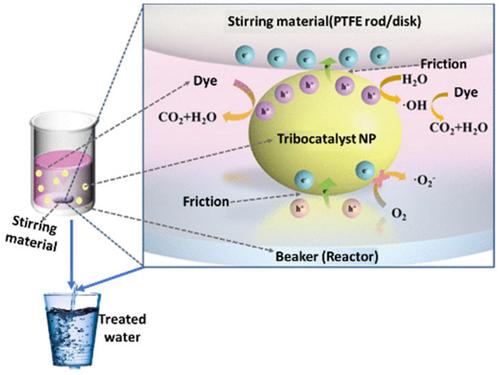
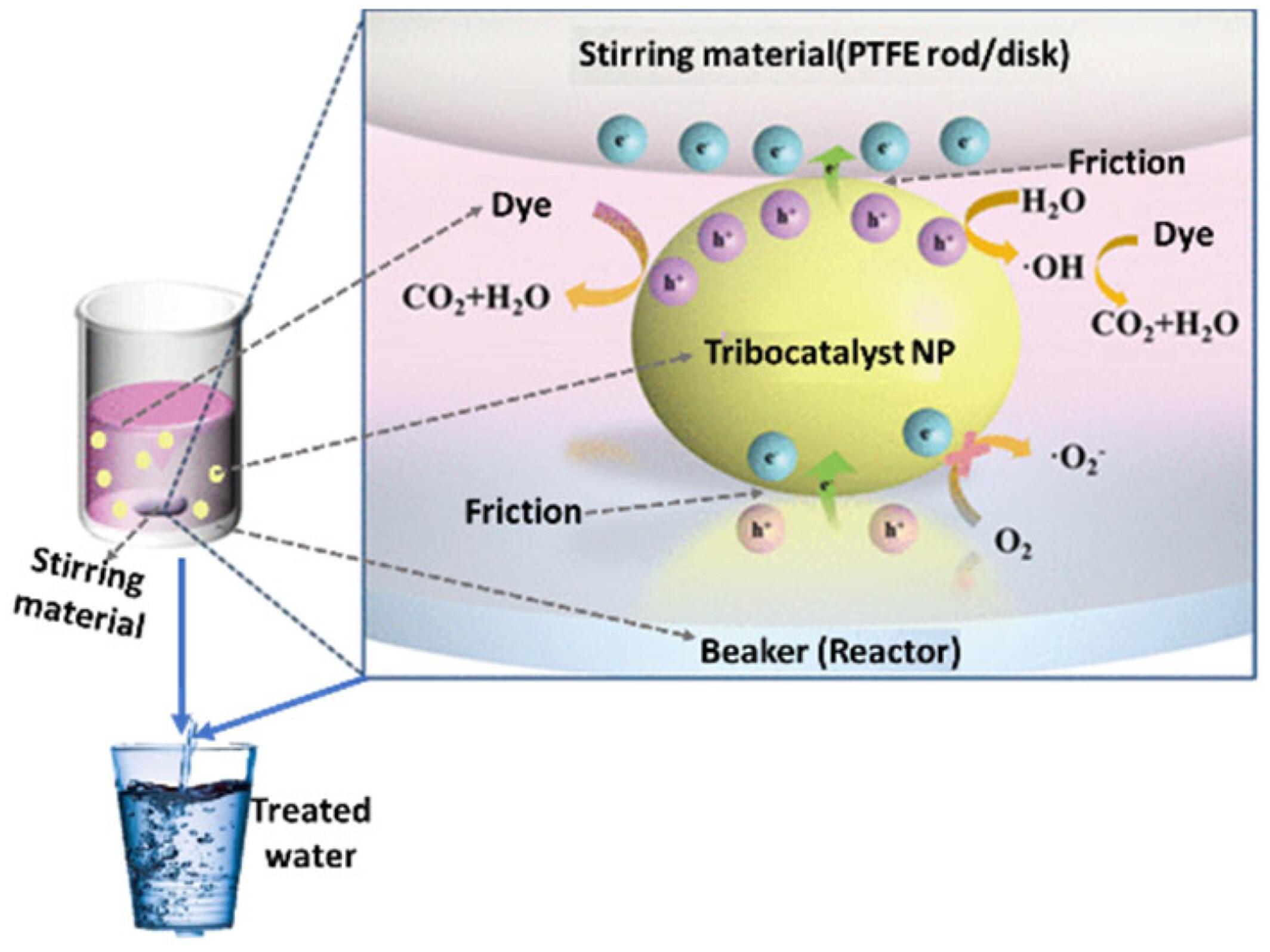
Abstract Image

Abstract Image

查看原文
分享 分享
微信好友 朋友圈 QQ好友 复制链接
本刊更多论文
利用纳米结构材料收集表面(界面)能量,对有害染料污染物进行摩擦催化降解:综述
导言摩擦催化是一种新兴的前沿技术,它利用摩擦机械能激活反应或材料(包括纳米材料)的催化运行,近来已引起了研究界的兴趣。值得注意的是,在这篇综述中,探讨了各种纳米材料及其复合材料对各种染料污染物的摩擦催化降解效率,这些纳米材料及其复合材料具有出色的定制降解特性。此外,还务实地讨论了对工程师、工业和投资者具有重要意义的各种操作因素对优化目的的影响。此外,还对电子捕获和自由基清除剂对摩擦催化降解机理的影响进行了实证分析。结果从这项工作中发现,在最佳温度为 20-40°C、所用时间为 0.5-48 小时、搅拌速度为 500-1000rmp 的条件下,大多数情况下摩擦催化降解效率最高可达 80%。研究发现,磁力搅拌可促进纳米材料产生-OH、O2-和 h+,而这些物质正是降解染料污染物的机理所在。此外,研究还发现,消耗掉的摩擦催化剂大部分可以用 H2O 洗脱,并可重复使用 3-10 次,同时在大多数情况下仍能保持 80% 的降解效率,这表明这种方法具有工业可扩展性和生态友好性潜力。
本文章由计算机程序翻译,如有差异,请以英文原文为准。
求助全文
约1分钟内获得全文 去求助
来源期刊
CiteScore
3.40
自引率
11.10%
发文量
216
审稿时长
7.5 months
期刊介绍: The Journal of the Chinese Chemical Society was founded by The Chemical Society Located in Taipei in 1954, and is the oldest general chemistry journal in Taiwan. It is strictly peer-reviewed and welcomes review articles, full papers, notes and communications written in English. The scope of the Journal of the Chinese Chemical Society covers all major areas of chemistry: organic chemistry, inorganic chemistry, analytical chemistry, biochemistry, physical chemistry, and materials science.
期刊最新文献
Ultrasound-enhanced delivery of donepezil and poly (β-amino ester) nanoparticles via astrocyte-derived exosomes in promoting amyloid-β clearance and supporting neuronal regeneration A reactive molecular dynamic study on the decomposition mechanisms of TNT/1-nitronaphthalene cocrystal at high temperatures Development of an electrochemical sensor based on LDH for the highly sensitive determination of Pb2+ Preparation of a bio-based eco-friendly flame-retardant from rapeseed meal, and its durability for cotton fibers Impact of different chemical techniques on the structural and photoluminescence properties of Zn4B6O13: Sm3+ phosphor
×
引用
GB/T 7714-2015
复制
MLA
复制
APA
复制
导出至
BibTeX EndNote RefMan NoteFirst NoteExpress
×
×
提示
您的信息不完整,为了账户安全,请先补充。
现在去补充
×
提示
您因"违规操作"
具体请查看互助需知
我知道了
×
提示
现在去查看 取消
×
提示
确定
0
微信
客服QQ
Book学术公众号 扫码关注我们
反馈
×
意见反馈
请填写您的意见或建议
请填写您的手机或邮箱
已复制链接
已复制链接
快去分享给好友吧!
我知道了
×
扫码分享
扫码分享
Book学术官方微信
Book学术文献互助
Book学术文献互助群
群 号:604180095
Book学术
文献互助 智能选刊 最新文献 互助须知 联系我们:info@booksci.cn
Book学术提供免费学术资源搜索服务,方便国内外学者检索中英文文献。致力于提供最便捷和优质的服务体验。
Copyright © 2023 Book学术 All rights reserved.
ghs 京公网安备 11010802042870号 京ICP备2023020795号-1