{"title":"The biological characteristics and infection dynamics of a novel H3N2 canine influenza virus genotype in beagles.","authors":"Fei-Fei Ge, Hai-Xiao Shen, De-Quan Yang, Xian-Chao Yang, Xin Li, Jian Wang, Shixin Huang","doi":"10.1186/s12985-024-02422-x","DOIUrl":null,"url":null,"abstract":"<p><strong>Background: </strong>The canine influenza virus (CIV) outbreak has garnered considerable attention as it poses a significant threat to dog health. During the H3N2 CIV evolution in beagles, the virus formed a new clade after 2019 and gradually became more adaptable to other mammals. Therefore, successfully elucidating the biological characteristics and constructing a canine influenza infection model is required for CIV characterization.</p><p><strong>Methods: </strong>We performed genetic analyses to examine the biological characteristics and infection dynamics of CIV.</p><p><strong>Results: </strong>The genotype of our H3N2 CIV strain (from 2019 in Shanghai) belonged to the 5.1 clade, which is now prevalent in China. Using MDCK cells, we investigated viral cytopathic effects. Virus size and morphology were observed using transmission electron microscopy. Beagles were also infected with 10<sup>4</sup>, 10<sup>5</sup>, and 10<sup>6</sup> 50% egg-infectious doses (EID<sub>50</sub>). When compared with the other groups, the 10<sup>6</sup> EID<sub>50</sub> group showed the most obvious clinical symptoms, the highest virus titers, and typical lung pathological changes. Our results suggested that the other two treatments caused mild clinical manifestations and pathological changes. Subsequently, CIV distribution in the 10<sup>6</sup> EID<sub>50</sub> group was detected by hematoxylin and eosin (H&E) and immunofluorescence (IF) staining, which indicated that CIV primarily infected the lungs.</p><p><strong>Conclusions: </strong>The framework established in this study will guide further CIV prevention strategies.</p>","PeriodicalId":23616,"journal":{"name":"Virology Journal","volume":"21 1","pages":"151"},"PeriodicalIF":4.0000,"publicationDate":"2024-07-04","publicationTypes":"Journal Article","fieldsOfStudy":null,"isOpenAccess":false,"openAccessPdf":"https://www.ncbi.nlm.nih.gov/pmc/articles/PMC11225329/pdf/","citationCount":"0","resultStr":null,"platform":"Semanticscholar","paperid":null,"PeriodicalName":"Virology Journal","FirstCategoryId":"3","ListUrlMain":"https://doi.org/10.1186/s12985-024-02422-x","RegionNum":3,"RegionCategory":"医学","ArticlePicture":[],"TitleCN":null,"AbstractTextCN":null,"PMCID":null,"EPubDate":"","PubModel":"","JCR":"Q2","JCRName":"VIROLOGY","Score":null,"Total":0}
引用次数: 0
Abstract
Background: The canine influenza virus (CIV) outbreak has garnered considerable attention as it poses a significant threat to dog health. During the H3N2 CIV evolution in beagles, the virus formed a new clade after 2019 and gradually became more adaptable to other mammals. Therefore, successfully elucidating the biological characteristics and constructing a canine influenza infection model is required for CIV characterization.
Methods: We performed genetic analyses to examine the biological characteristics and infection dynamics of CIV.
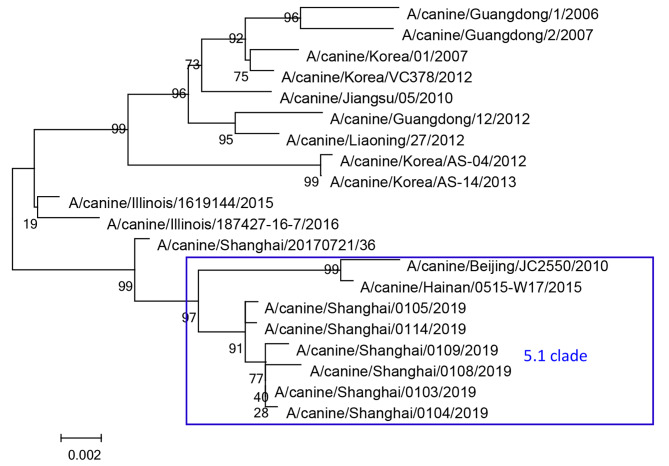
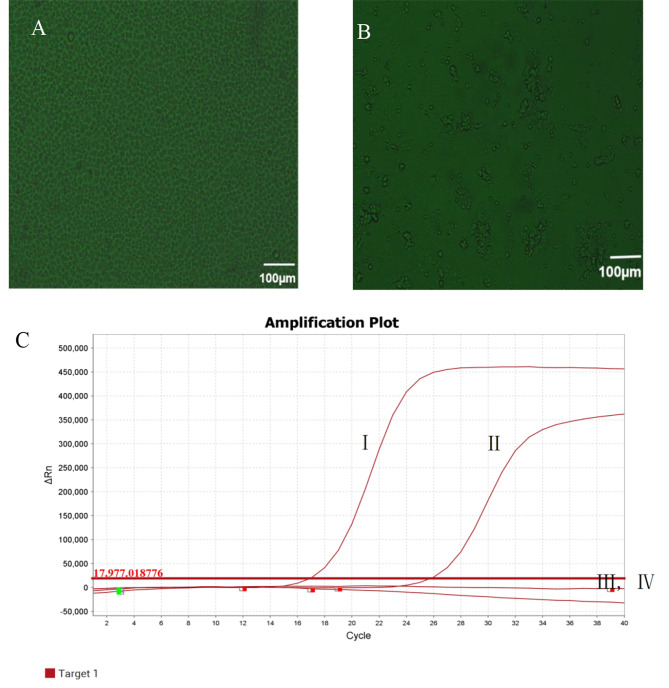
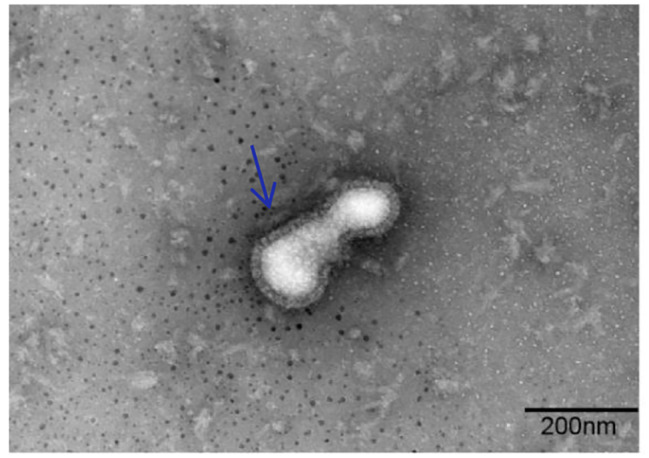
Results: The genotype of our H3N2 CIV strain (from 2019 in Shanghai) belonged to the 5.1 clade, which is now prevalent in China. Using MDCK cells, we investigated viral cytopathic effects. Virus size and morphology were observed using transmission electron microscopy. Beagles were also infected with 104, 105, and 106 50% egg-infectious doses (EID50). When compared with the other groups, the 106 EID50 group showed the most obvious clinical symptoms, the highest virus titers, and typical lung pathological changes. Our results suggested that the other two treatments caused mild clinical manifestations and pathological changes. Subsequently, CIV distribution in the 106 EID50 group was detected by hematoxylin and eosin (H&E) and immunofluorescence (IF) staining, which indicated that CIV primarily infected the lungs.
Conclusions: The framework established in this study will guide further CIV prevention strategies.
期刊介绍:
Virology Journal is an open access, peer reviewed journal that considers articles on all aspects of virology, including research on the viruses of animals, plants and microbes. The journal welcomes basic research as well as pre-clinical and clinical studies of novel diagnostic tools, vaccines and anti-viral therapies.
The Editorial policy of Virology Journal is to publish all research which is assessed by peer reviewers to be a coherent and sound addition to the scientific literature, and puts less emphasis on interest levels or perceived impact.



 京公网安备 11010802042870号
京ICP备2023020795号-1
京公网安备 11010802042870号
京ICP备2023020795号-1

 分享
分享
 求助内容:
求助内容: 应助结果提醒方式:
 扫码关注我们
