Zhongling Liang, Yingchan Guo, Abhisheak Sharma, Christopher R McCurdy, Boone M Prentice
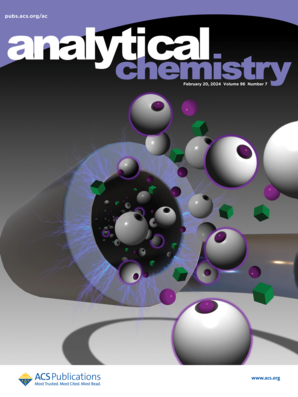
{"title":"Multimodal Image Fusion Workflow Incorporating MALDI Imaging Mass Spectrometry and Microscopy for the Study of Small Pharmaceutical Compounds.","authors":"Zhongling Liang, Yingchan Guo, Abhisheak Sharma, Christopher R McCurdy, Boone M Prentice","doi":"10.1021/acs.analchem.4c01553","DOIUrl":null,"url":null,"abstract":"<p><p>Multimodal imaging analyses of dosed tissue samples can provide more comprehensive insights into the effects of a therapeutically active compound on a target tissue compared to single-modal imaging. For example, simultaneous spatial mapping of pharmaceutical compounds and endogenous macromolecule receptors is difficult to achieve in a single imaging experiment. Herein, we present a multimodal workflow combining imaging mass spectrometry with immunohistochemistry (IHC) fluorescence imaging and brightfield microscopy imaging. Imaging mass spectrometry enables direct mapping of pharmaceutical compounds and metabolites, IHC fluorescence imaging can visualize large proteins, and brightfield microscopy imaging provides tissue morphology information. Single-cell resolution images are generally difficult to acquire using imaging mass spectrometry but are readily acquired with IHC fluorescence and brightfield microscopy imaging. Spatial sharpening of mass spectrometry images would thus allow for higher fidelity coregistration with other higher-resolution microscopy images. Imaging mass spectrometry spatial resolution can be predicted to a finer value via a computational image fusion workflow, which models the relationship between the intensity values in the mass spectrometry image and the features of a high-spatial resolution microscopy image. As a proof of concept, our multimodal workflow was applied to brain tissue extracted from a Sprague-Dawley rat dosed with a kratom alkaloid, corynantheidine. Four candidate mathematical models, including linear regression, partial least-squares regression, random forest regression, and two-dimensional convolutional neural network (2-D CNN), were tested. The random forest and 2-D CNN models most accurately predicted the intensity values at each pixel as well as the overall patterns of the mass spectrometry images, while also providing the best spatial resolution enhancements. Herein, image fusion enabled predicted mass spectrometry images of corynantheidine, GABA, and glutamine to approximately 2.5 μm spatial resolutions, a significant improvement compared to the original images acquired at 25 μm spatial resolution. The predicted mass spectrometry images were then coregistered with an H&E image and IHC fluorescence image of the μ-opioid receptor to assess colocalization of corynantheidine with brain cells. Our study also provides insights into the different evaluation parameters to consider when utilizing image fusion for biological applications.</p>","PeriodicalId":27,"journal":{"name":"Analytical Chemistry","volume":" ","pages":"11869-11880"},"PeriodicalIF":6.7000,"publicationDate":"2024-07-23","publicationTypes":"Journal Article","fieldsOfStudy":null,"isOpenAccess":false,"openAccessPdf":"https://www.ncbi.nlm.nih.gov/pmc/articles/PMC11649305/pdf/","citationCount":"0","resultStr":null,"platform":"Semanticscholar","paperid":null,"PeriodicalName":"Analytical Chemistry","FirstCategoryId":"92","ListUrlMain":"https://doi.org/10.1021/acs.analchem.4c01553","RegionNum":1,"RegionCategory":"化学","ArticlePicture":[],"TitleCN":null,"AbstractTextCN":null,"PMCID":null,"EPubDate":"2024/7/10 0:00:00","PubModel":"Epub","JCR":"Q1","JCRName":"CHEMISTRY, ANALYTICAL","Score":null,"Total":0}
引用次数: 0
Abstract
Multimodal imaging analyses of dosed tissue samples can provide more comprehensive insights into the effects of a therapeutically active compound on a target tissue compared to single-modal imaging. For example, simultaneous spatial mapping of pharmaceutical compounds and endogenous macromolecule receptors is difficult to achieve in a single imaging experiment. Herein, we present a multimodal workflow combining imaging mass spectrometry with immunohistochemistry (IHC) fluorescence imaging and brightfield microscopy imaging. Imaging mass spectrometry enables direct mapping of pharmaceutical compounds and metabolites, IHC fluorescence imaging can visualize large proteins, and brightfield microscopy imaging provides tissue morphology information. Single-cell resolution images are generally difficult to acquire using imaging mass spectrometry but are readily acquired with IHC fluorescence and brightfield microscopy imaging. Spatial sharpening of mass spectrometry images would thus allow for higher fidelity coregistration with other higher-resolution microscopy images. Imaging mass spectrometry spatial resolution can be predicted to a finer value via a computational image fusion workflow, which models the relationship between the intensity values in the mass spectrometry image and the features of a high-spatial resolution microscopy image. As a proof of concept, our multimodal workflow was applied to brain tissue extracted from a Sprague-Dawley rat dosed with a kratom alkaloid, corynantheidine. Four candidate mathematical models, including linear regression, partial least-squares regression, random forest regression, and two-dimensional convolutional neural network (2-D CNN), were tested. The random forest and 2-D CNN models most accurately predicted the intensity values at each pixel as well as the overall patterns of the mass spectrometry images, while also providing the best spatial resolution enhancements. Herein, image fusion enabled predicted mass spectrometry images of corynantheidine, GABA, and glutamine to approximately 2.5 μm spatial resolutions, a significant improvement compared to the original images acquired at 25 μm spatial resolution. The predicted mass spectrometry images were then coregistered with an H&E image and IHC fluorescence image of the μ-opioid receptor to assess colocalization of corynantheidine with brain cells. Our study also provides insights into the different evaluation parameters to consider when utilizing image fusion for biological applications.
期刊介绍:
Analytical Chemistry, a peer-reviewed research journal, focuses on disseminating new and original knowledge across all branches of analytical chemistry. Fundamental articles may explore general principles of chemical measurement science and need not directly address existing or potential analytical methodology. They can be entirely theoretical or report experimental results. Contributions may cover various phases of analytical operations, including sampling, bioanalysis, electrochemistry, mass spectrometry, microscale and nanoscale systems, environmental analysis, separations, spectroscopy, chemical reactions and selectivity, instrumentation, imaging, surface analysis, and data processing. Papers discussing known analytical methods should present a significant, original application of the method, a notable improvement, or results on an important analyte.




 京公网安备 11010802042870号
京ICP备2023020795号-1
京公网安备 11010802042870号
京ICP备2023020795号-1

 分享
分享
 求助内容:
求助内容: 应助结果提醒方式:
 扫码关注我们
