Silvio E. Quincozes, Célio Albuquerque, Diego G. Passos, Daniel Mossé
{"title":"ERENO: A Framework for Generating Realistic IEC–61850 Intrusion Detection Datasets for Smart Grids","authors":"Silvio E. Quincozes, Célio Albuquerque, Diego G. Passos, Daniel Mossé","doi":"10.1109/TDSC.2023.3336857","DOIUrl":null,"url":null,"abstract":"Connected and digital electricity substations based on IEC–61850 standards enable novel applications. On the other hand, such connectivity also creates an extended attack surface. Therefore, Intrusion Detection Systems (IDSs) have become an essential component of safeguarding substations from malicious activities. However, in contrast to traditional information technology systems, there is a serious lack of realistic data for training, testing, and evaluating IDSs in smart grid scenarios. Many existing substation IDSs rely on datasets from other contexts or on proprietary datasets that do not allow reproducibility, validation, or performance comparison with competing algorithms. To address this issue, we propose the Efficacious Reproducer Engine for Network Operations (ERENO) synthetic traffic generation framework based on the IEC–61850 standard specifications. As an additional contribution, and as a proof-of-concept, we create and make available a suite of realistic IEC–61850 datasets that model 8 use cases, namely traffic for seven common attacks and one for normal network traffic. Based on those datasets, we further evaluate how enriched features combining raw data from the substation can significantly improve intrusion detection performance. Our results suggest that it can improve F1-Score up to 47.22% for masquerade attacks.","PeriodicalId":7,"journal":{"name":"ACS Applied Polymer Materials","volume":"65 8","pages":"3851-3865"},"PeriodicalIF":4.7000,"publicationDate":"2024-07-01","publicationTypes":"Journal Article","fieldsOfStudy":null,"isOpenAccess":false,"openAccessPdf":"","citationCount":"3","resultStr":null,"platform":"Semanticscholar","paperid":null,"PeriodicalName":"ACS Applied Polymer Materials","FirstCategoryId":"94","ListUrlMain":"https://doi.org/10.1109/TDSC.2023.3336857","RegionNum":2,"RegionCategory":"化学","ArticlePicture":[],"TitleCN":null,"AbstractTextCN":null,"PMCID":null,"EPubDate":"","PubModel":"","JCR":"Q2","JCRName":"MATERIALS SCIENCE, MULTIDISCIPLINARY","Score":null,"Total":0}
引用次数: 3
Abstract
Connected and digital electricity substations based on IEC–61850 standards enable novel applications. On the other hand, such connectivity also creates an extended attack surface. Therefore, Intrusion Detection Systems (IDSs) have become an essential component of safeguarding substations from malicious activities. However, in contrast to traditional information technology systems, there is a serious lack of realistic data for training, testing, and evaluating IDSs in smart grid scenarios. Many existing substation IDSs rely on datasets from other contexts or on proprietary datasets that do not allow reproducibility, validation, or performance comparison with competing algorithms. To address this issue, we propose the Efficacious Reproducer Engine for Network Operations (ERENO) synthetic traffic generation framework based on the IEC–61850 standard specifications. As an additional contribution, and as a proof-of-concept, we create and make available a suite of realistic IEC–61850 datasets that model 8 use cases, namely traffic for seven common attacks and one for normal network traffic. Based on those datasets, we further evaluate how enriched features combining raw data from the substation can significantly improve intrusion detection performance. Our results suggest that it can improve F1-Score up to 47.22% for masquerade attacks.
期刊介绍:
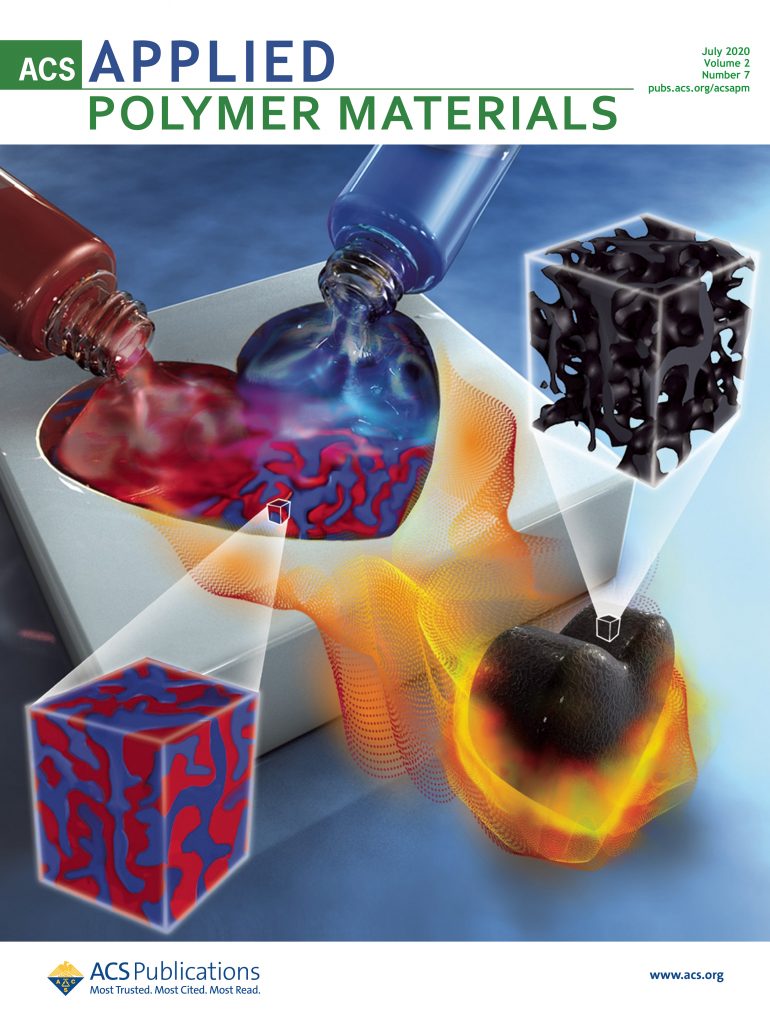
ACS Applied Polymer Materials is an interdisciplinary journal publishing original research covering all aspects of engineering, chemistry, physics, and biology relevant to applications of polymers.
The journal is devoted to reports of new and original experimental and theoretical research of an applied nature that integrates fundamental knowledge in the areas of materials, engineering, physics, bioscience, polymer science and chemistry into important polymer applications. The journal is specifically interested in work that addresses relationships among structure, processing, morphology, chemistry, properties, and function as well as work that provide insights into mechanisms critical to the performance of the polymer for applications.



 京公网安备 11010802042870号
京ICP备2023020795号-1
京公网安备 11010802042870号
京ICP备2023020795号-1

 分享
分享
 求助内容:
求助内容: 应助结果提醒方式:
 扫码关注我们
